Garden bird guide
What do wrens eat? Food, identification and garden habitat
Discover what a UK wren finds in leaf litter, how to recognise its cocked tail and when a few mealworms are more suitable than a seed feeder.
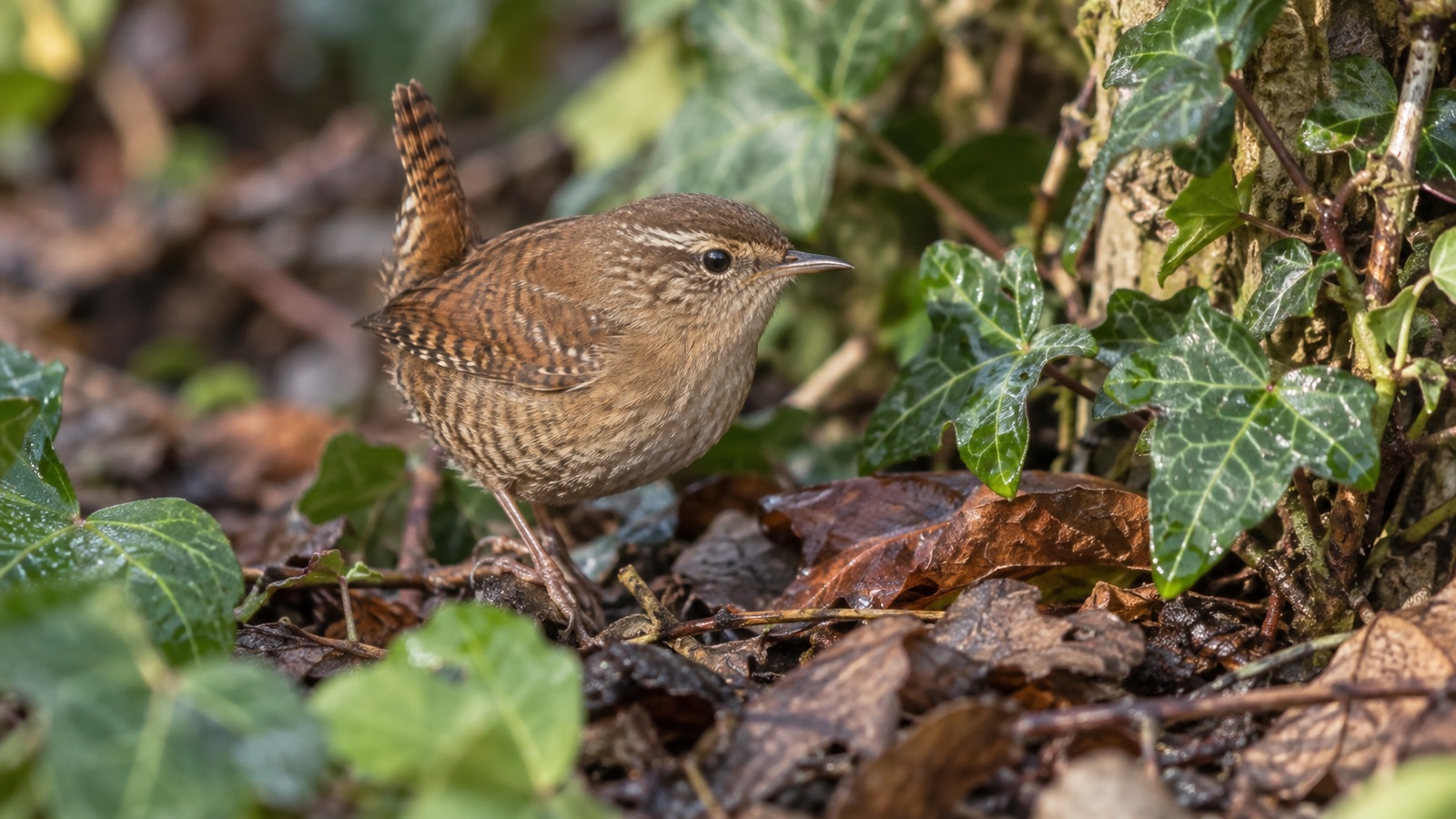
What do wrens eat? They search close cover for insects, spiders and other small invertebrates. A wren may also take some berries or seeds in winter, but a conventional hanging seed tube is not its natural feeding station. The RSPB wren profile describes how these small birds work through undergrowth, crevices and trees; the RSPB natural-food advice emphasises the invertebrate-rich habitat that helps them year-round.
If one darts along the foot of a hedge, let it forage. Avoid tidying every leaf from beneath the shrubs or cutting back all dense growth in one go. A small, sheltered patch can hold prey without becoming an untended, pest-attracting feeding area.
How can you tell a wren from another small brown bird?
Look for a tiny rounded body, fine pointed bill and a very short tail often held upright. The brown wings show subtle barring and a pale eyebrow can be visible close up. A dunnock is larger, longer-tailed and grey-faced. A female house sparrow has a much thicker bill. The wren's unexpectedly loud song is another clue, often heard before the bird emerges from cover.
Watch a bird move for a few seconds rather than identifying it from a single brown blur. Wrens flit low, pause on a root or fence, and vanish again. The RSPB photographs and sound recordings are a better field reference than the illustrative hero image on this page.
Should you put mealworms out for a wren?
You can try a small amount of suitable mealworms, but only where you can remove leftovers promptly. The RSPB's nesting-season food advice includes wrens among species that may take mealworms. Soaking dried worms can add moisture, particularly when birds might feed young, but do not leave soaked food sitting through warm weather. Our dried-mealworm guide covers pack sizes and handling; a contained mealworm-feeder guide is relevant only if the bird actually uses one.
A permanently stocked ground tray is not the answer. Flat surfaces accumulate food and droppings, and spilled food can bring rodents. If you make a brief offering, clear it by dusk and clean the spot. The RSPB's feeding Q&A distinguishes a few short-lived mealworms from scattering seed over the ground.
Will a wren eat seed or fat balls?
Occasionally a wren may pick up fallen crumbs, but do not plan a seed station around that possibility. Under the current BTO feeding FAQ, supplementary seed and peanuts are offered November–April and paused May–October for the whole garden. That rule still applies even if your main interest is a wren. Small amounts of suitable suet or mealworms may continue with strict freshness and cleaning.
If you already have a feeding station, clean beneath it rather than allowing a persistent spill patch that appears to benefit one bird. A wren is far better served by living prey in leaves and vegetation.
Where do wrens nest and shelter?
The RSPB species account describes nests in nooks and crannies of vegetation, walls and banks. This is not a bird you can reliably accommodate with a standard blue-tit box. A deeply sheltered open-front box may offer another option; compare our wren nest-box choices before buying. Keep suitable dense cover, avoid disturbing a nest and plan hedge work outside active nesting. During severe cold, sheltered spots also matter because tiny birds lose heat quickly.
Fresh, shallow water is useful if you can replace it daily and keep the container clean. Our winter-water guide explains how to avoid a frozen or dirty bowl during a cold snap.
What if you hear a wren but never see it?
That is common. Stand still near cover and listen for a loud burst of high notes ending in a trill. A fleeting view may be all you get. Do not pull apart a hedge or approach a possible nest to improve the view. If birds at any feeding point look ill, remove the offered food and follow BTO hygiene advice.
Are wrens garden birds all year?
Yes, though they may be harder to notice outside the singing season and can be hit by prolonged cold weather. A quiet garden is not proof the species has disappeared.
What feeder is best for wrens?
No feeder guarantees a wren. Where one already visits, a brief, clean mealworm offering is more plausible than buying a large seed tube or leaving food on an open table.
Helpful products
A small mealworm option, if it is useful
This is an occasional supplement, not a daily ration. Start with what a wren will actually take and clear anything left.
Supa dried mealworms (1L tub)
Best for: A very small, short-lived supplementary insect-food portion
Dried mealworms in a reusable one-litre bucket, sized for smaller portions and straightforward storage.
Keep in mind: Soak dried worms when appropriate, clear leftovers by dusk and prioritise natural invertebrates.