Garden bird guide
What do robins eat and how should you feed them?
What UK robins eat naturally, when mealworms help, where to offer food safely and how to recognise an adult or young robin.
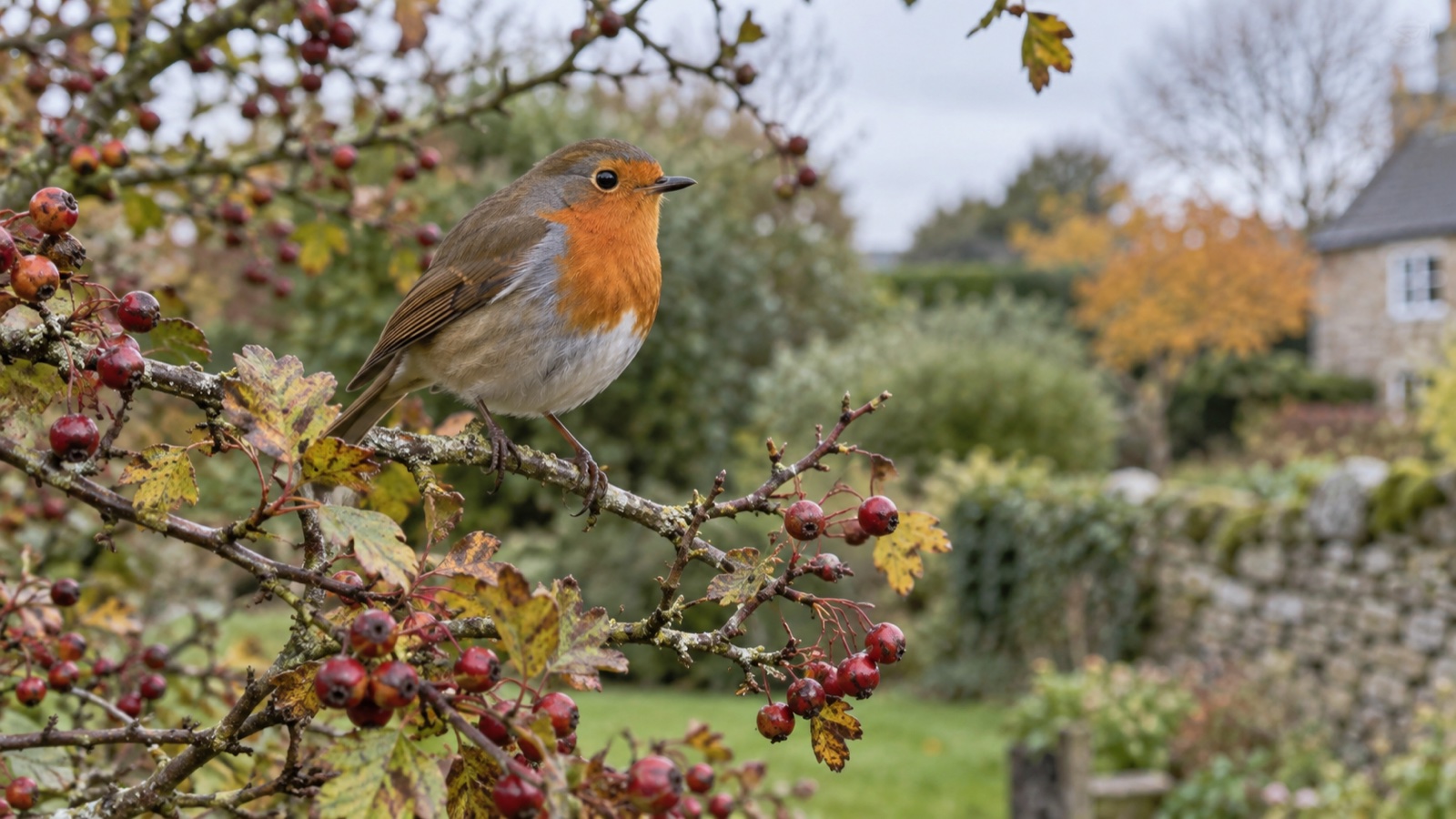
What do robins eat? In a British garden, a robin searches for worms, insects, spiders and other small invertebrates. It can also take fruit and berries. If you want to supplement that natural diet, offer only a few fresh or good-quality dried mealworms at a time and remove any that remain by dusk. The RSPB's feeding advice identifies mealworms as a food robins readily take; it does not mean every robin needs a daily handout.
You will often see one following a gardener who has turned over soil. That bird is watching for exposed prey, not asking for bread. Leaving some leaf litter beneath shrubs and avoiding unnecessary pesticide use can make the garden useful long after a small food portion has gone.
Where should you offer food to a robin?
Choose a place you can see and clean, with a clear escape route and no hidden cat approach. A small amount of mealworms in a clean, temporary spot is more sensible than a permanently stocked open tray. The RSPB's current health advice discourages flat feeding surfaces where food and droppings collect together. If you place a few mealworms on the ground, take away what is left the same day; the RSPB's feeding Q&A specifically distinguishes this short-lived use from scattering seed.
Do not put food immediately under dense cover where a cat could wait. Equally, a completely exposed patch gives a robin little protection. A sheltered edge with a clear view is a better compromise. If you already have a feeder, keep its spill area clean rather than letting dropped food become an accidental ground station.
Do robins use bird feeders?
Some robins learn to use a suitable mealworm or suet feeder, but many prefer to pick food from a low point or forage among leaves. A seed tube with narrow perches is designed for a different feeding posture and is not a reliable robin solution. Compare mealworm-feeder formats if you need a contained option; look for one you can dismantle and clean, not a product promising that only robins will visit.
Current BTO seasonal guidance asks all UK garden feeders to pause seed and peanuts from May through October, even if finches are not obvious visitors. Mealworms and suitable suet can continue, provided food does not spoil and the feeding point stays hygienic. In November to April, a robin may take some seed, but it is still better to think first about invertebrate-rich habitat and a manageable portion. Our winter-feeding guide explains the whole-garden routine.
How do you identify a robin?
An adult has an orange-red face and breast, brown upperparts and a pale belly. The orange extends to the face, unlike a simple red patch on the chest. Male and female adults look much alike, so colour alone will not tell you the sex. A young robin is spotted brown without the adult red breast; that can surprise anyone expecting a miniature copy of the parent. The RSPB robin profile has photographs and calls worth comparing with your visitor.
Robins sing through much of the year and defend territories strongly. Two at the same spot may chase each other rather than feed peacefully side by side. If a bird is quiet or absent for a few weeks, it does not prove it has left your garden permanently. Watch for movement in cover as well as at the feeding point.
For a product comparison, see our robin-feeder guide. It focuses on hanging food rather than a flat ground tray, and explains why some robins may still prefer natural foraging.
Would a robin use a nest box?
Robins favour an open-front box, not a blue-tit-style box with a small round entrance. Put it in a quiet, concealed place with a safe approach, away from feeders and routine disturbance. The RSPB species guide explains that open-front design; our robin-box comparison covers practical construction and positioning. A box is an invitation, never a guarantee that a robin will nest.
Do not peer into or move a box once birds are using it. Plan the position before the breeding season, and follow nest-box placement advice rather than putting it wherever the robin currently takes food. Feeding and nesting are different needs.
When should you stop offering food?
Stop immediately if a bird appears sick or food becomes wet, mouldy or contaminated. Clean the equipment and follow the latest BTO hygiene guidance. Otherwise, let the robin's actual use determine how much you offer. A portion that disappears quickly is easier to manage than a heap left through rain and overnight visitors. Fresh shallow water, changed daily, is another useful provision; see our bird-bath placement guide.
Can you feed robins bread?
Bread is not a good way to support a robin. It displaces the small invertebrates and appropriate supplementary foods that suit the bird's diet, and leftovers can attract pests. Keep any offered food simple, fresh and modest.
Why is a robin following me in the garden?
Digging exposes worms and other invertebrates. The robin is exploiting that opportunity, not necessarily behaving like a tame pet. Let it choose its distance and avoid trying to hand-feed it.
Helpful products
Useful options for a robin-friendly garden
A small mealworm pack is easier to use fresh than a bulk tub. An open-front nest box is a separate habitat choice, not a feeding accessory.
Supa dried mealworms (1L tub)
Best for: An occasional, measured mealworm portion
Dried mealworms in a reusable one-litre bucket, sized for smaller portions and straightforward storage.
Keep in mind: Remove uneaten worms the same day; natural invertebrates matter more than a permanent feeding spot.
Gardman open-front robin nest box
Best for: A sheltered, concealed nesting site
An FSC timber open-front box with a removable floor for off-season cleaning.
Keep in mind: A box does not guarantee occupation and should never be placed beside a busy feeder.