Seasonal feeding
Feeding garden birds in spring
What to offer garden birds in spring in the UK, including the 1 May seed-and-peanut pause, nesting-season portions, water and feeder hygiene.
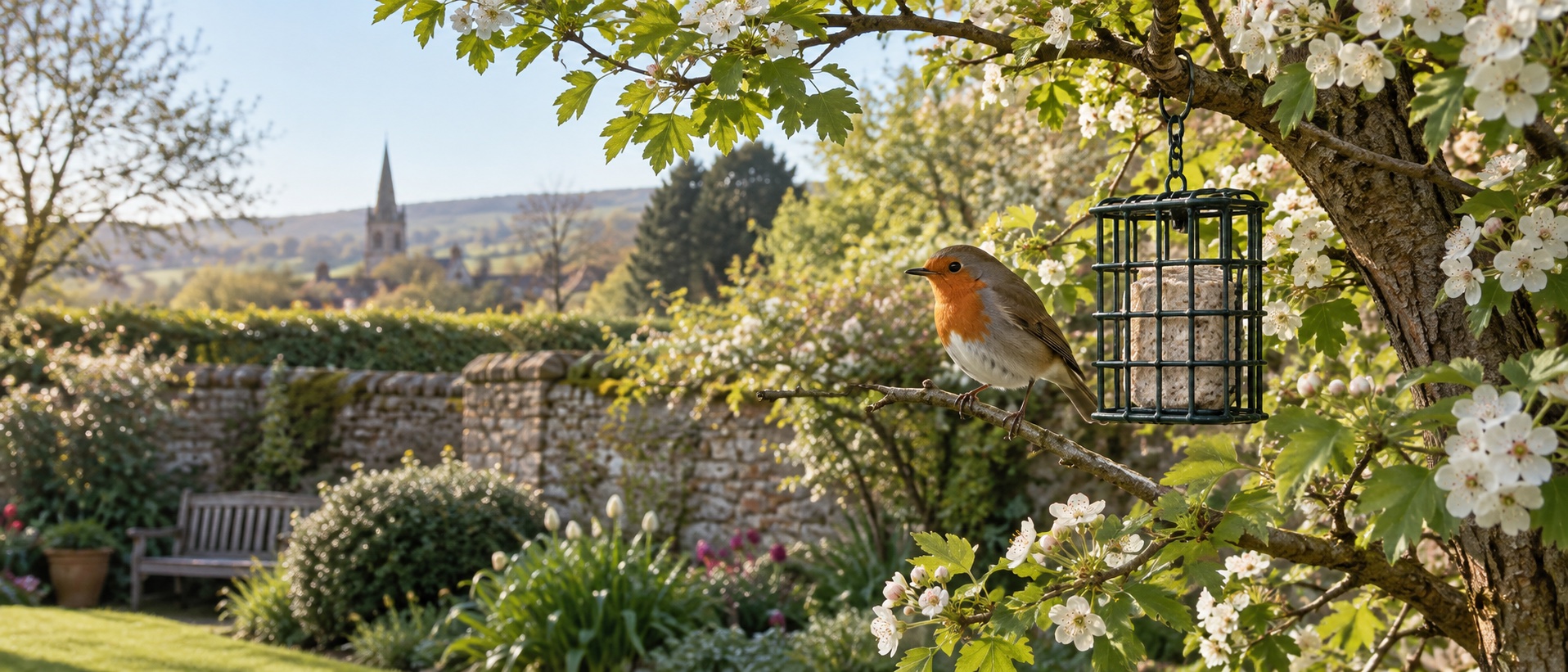
Seeds and peanuts are paused from 1 May to 31 October under current UK guidance.
Put out only a little food and remove leftovers before they spoil.
Keep water fresh and avoid disturbing occupied nests.
What should you feed garden birds in spring? The answer changes during the season. In March and April, seeds and peanuts remain within the current November–April feeding period. From 1 May to 31 October, the RSPB's 2026 advice and BTO feeding guidance say to pause them. If you continue supplementary feeding, offer only small fresh amounts of suitable mealworms or suet and keep equipment scrupulously clean. A shallow supply of fresh water is useful throughout.
March and April: use what birds actually take
Do not assume every arriving bird needs a full feeder. Start with a small fill in a contained, easily dismantled feeder, check it daily and remove any wet or rejected food. A pair of tits visiting a feeder is not a reason to buy a large sack. If you offer whole peanuts during these two months, use an appropriate rigid-mesh feeder, not a loose pile. Our quantity guide explains how to adjust portions to local demand.
Clean feeders at least weekly and move them periodically. Clean the ground beneath as well: spilled food and droppings can turn a tidy hanging station into an unhygienic feeding area. The BTO hygiene checklist is a useful reference. If a bird looks sick, pause feeding and follow the current disease advice rather than simply topping up.
From 1 May: change the menu
The new May–October pause applies to seeds and peanuts, not automatically to every food. Modest amounts of mealworms or suitable suet can still be offered if you can prevent spoilage and keep the feeding point clean. In warmer weather, check fat products for softening and remove them if they deteriorate. Avoid conventional flat bird tables or food spread on the ground where birds and droppings gather together.
If feeding is hard to maintain, it is reasonable to stop and focus on water and natural food. This is particularly sensible when disease is suspected. Our breeding-season guide looks more closely at adult birds and chicks; the summer guide covers hot-weather storage and spoilage.
Build natural food around the feeding point
Spring flowers and leaves bring insects that adults can find for their young. A mixed hedge, flowering plants, undisturbed leaf litter and reduced pesticide use do more than an extra feeder can. Let a section of the garden be slightly untidy, and leave occupied nesting cover alone. Read how to feed birds naturally without feeders and the native-plant guide for realistic starting points.
Offer shallow water in a stable, clean container. Replace it daily; scrub and rinse the bath at least weekly, more often if fouled. Place it where birds can see danger and move to cover. The RHS garden-bird advice also stresses fresh water and hygiene.
Quick spring checklist
- Check the date before offering seed or peanuts: finish by 30 April under current guidance.
- Keep any permitted food fresh and portions small; do not add new food over leftovers.
- Change water each day and wash feeding equipment at least weekly.
- Check garden work for occupied nests before cutting or moving vegetation; active nests are legally protected.
- If you find a young bird on the ground, read the fledgling guide before intervening.
Common spring questions
Should I stop feeding as soon as birds start nesting?
Not solely because a bird is nesting. Change what you offer when the May pause starts, use small fresh portions, and stop if disease or poor hygiene makes feeding unsafe. Do not put feeders beside an occupied nest.
Can I put out mealworms for robins?
Yes, a modest fresh portion can be suitable. Remove uneaten food promptly and keep the feeding point clean. Adult robins also collect natural invertebrates; supplementary food is not a substitute for insect-rich habitat. See what robins eat for the wider picture.
Is spring bird feeding essential?
No. A clean shallow water point and a garden that supports insects, seedheads and cover are valuable even if you choose not to use a feeder.
Helpful products
Two modest aids for spring feeding
Mealworms only make sense if you can offer a small fresh portion; the brush helps maintain any feeder you keep in use. Neither replaces natural insect habitat.
Supa dried mealworms (1L tub)
Dried mealworms in a reusable one-litre bucket, sized for smaller portions and straightforward storage.
Best small reusable tub. Drawback: the listing states volume rather than net weight, so price-per-weight comparisons are limited.
Jacobi Jayne long bird feeder cleaning brush
A long-handled natural-bristle brush made for reaching inside bottle-shaped and tubular bird feeders.
Best for cleaning the length of feeder tubes. Drawback: a smaller detail brush may still be useful around ports and threads.