Garden bird guide
What do blackbirds eat and where do they feed?
Natural food, winter fruit and sensible mealworm or suet portions for UK blackbirds, plus identification and safe garden feeding positions.
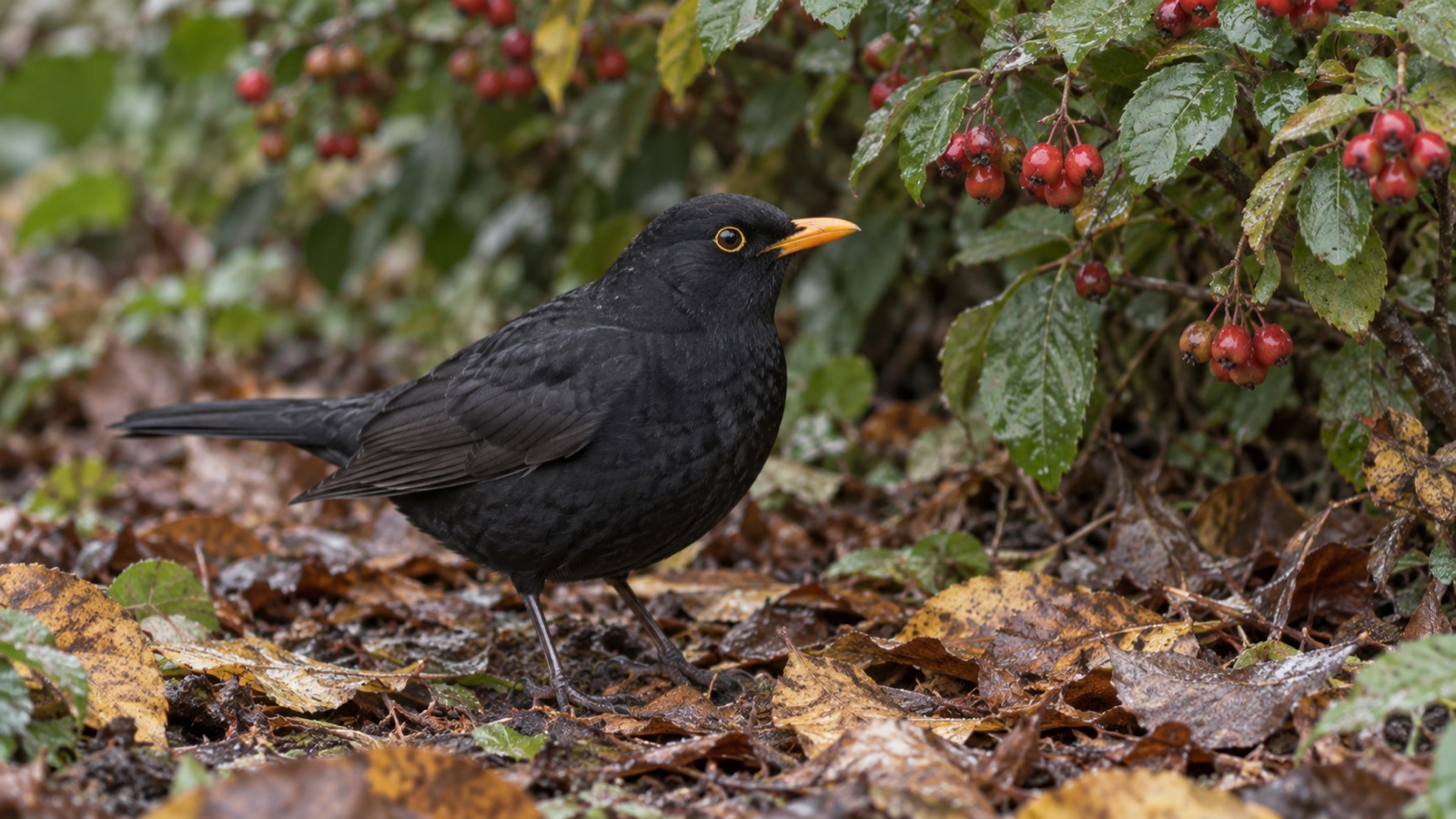
What do blackbirds eat? Worms, insects and other invertebrates form a large part of their natural food; they also take berries and fruit. In winter a blackbird may investigate fresh apple or pear, mealworms and appropriate suet pellets. The RSPB's feeding guide names fruit, suet pellets and mealworms for blackbirds. Offer a little, see what is taken and remove the rest before it spoils.
Blackbirds are not simply "ground-feeding seed birds". A lawn after rain, leaf litter under shrubs or a fruiting hedge may be more important to them than another feeder. When you do put food out, the main question is whether the site can remain clean and safe from cats.
Where do blackbirds feed in a garden?
Watch the lawn, border edges and underneath shrubs. Blackbirds often turn leaves and probe damp soil, moving between open ground and nearby cover. If the ground is bone dry, you may see less probing even though the bird still lives locally. A varied planting scheme and undisturbed patches of leaf litter help support the small animals it hunts.
A blackbird can take food from a low feeding point, but an open tray left stocked all day is a poor default. Current RSPB garden-bird health advice warns against flat surfaces where droppings mix with food. If you offer a few mealworms on a clean patch, follow the RSPB's ground-feeding Q&A: clear what is not eaten by dusk. Do not create a permanent spill field beneath a hanging feeder; our under-feeder cleaning guide explains why.
What can you offer in winter?
Fresh apple or pear in small pieces can help when natural fruit is scarce. Place pieces in more than one safe, observable spot rather than piling them on a communal tray. Remove mouldy or heavily fermented fruit. If dogs or cats share the space, avoid raisins, sultanas and grapes; dried vine fruits are hazardous to pets. Our winter-thrush food guide also covers redwings and fieldfares, which are more likely to appear during a cold spell.
Mealworms are another practical option. Use only a few at first and clear any that become wet or ignored. Suet pellets can be useful in cold weather, but loose food must not be left to accumulate in soil or under a feeder. The best product is the pack size you can use while fresh, not necessarily the cheapest large tub. If you need a full seasonal routine, begin with feeding garden birds in winter.
Seed and peanuts deserve a separate rule. Under the BTO's 2026 seasonal advice, UK gardens should offer them November to April and pause May to October to reduce finch trichomonosis risk. That applies even if you are trying to help blackbirds rather than finches. It is not a reason to switch to a seed-scattering patch for blackbirds in winter.
How do you tell a male from a female blackbird?
An adult male is mostly black, with an orange-yellow bill and a yellow eye-ring. A female is brown, often with streaks or mottling on her breast, and her bill can vary from brown to yellow. Young birds are brown and more heavily spotted. The RSPB blackbird profile shows those differences. A brown bird on the lawn is not necessarily a different species; watch its shape, movement and bill as well as colour.
Blackbirds can be territorial, so one bird may chase another from fruit. A few spaced, small portions are better than one large pile if more than one visitor arrives. Winter visitors from elsewhere may add to the birds already present, but a garden count does not tell you where an individual bird was born.
Do blackbirds need a bird feeder or nest box?
They do not need a tube feeder. Invertebrate-rich soil, shrubs, berries and water are a stronger starting point. A shallow bird bath placed with a safe escape route can be valuable, provided you change the water daily and clean the vessel regularly. If cats visit, avoid putting food or water directly beside dense ambush cover.
Blackbirds normally build an open cup nest in suitable vegetation rather than use a small-hole tit box. Do not put up a blue-tit box and expect a blackbird to occupy it. Protect existing nesting cover and avoid disturbance when birds are breeding. If you want to add housing for other species, see the nest-box hub for designs that fit their actual users.
If you want to compare optional products, our blackbird and ground-forager feeder guide weighs hanging fruit holders against natural habitat. The broader ground-feeder guide explains why we do not recommend a flat tray.
What if a blackbird looks unwell?
Do not respond by offering extra food. Stop supplementary feeding, remove food and water, keep the area clear and check current BTO hygiene guidance. Disease can affect birds beyond finches, so a blackbird's presence does not exempt the garden from careful cleaning. Refill only when the setup can be kept fresh and safe.
Can blackbirds eat apples?
Yes. Offer a few fresh pieces or leave sound windfalls where birds can reach them safely. Remove spoiled remains promptly rather than letting a large fruit pile build up.
Why does a blackbird ignore my seed feeder?
Its usual feeding style is to forage on the ground or among shrubs. A narrow hanging seed tube suits clinging and perching species better. Improve habitat and food hygiene before buying a different feeder solely to attract blackbirds.
Helpful products
Small food portions for visiting blackbirds
These are optional supplements for a garden that already offers foraging cover. Start with little enough to clear and clean easily.
RSPB high-energy suet pellets (500g)
Best for: A short-lived, measured supplement in cold weather
A small 500g pack of suet pellets with elderberries, nyjer and sunflower hearts for trying the format.
Keep in mind: Do not leave pellets on a permanent flat feeding surface; clear leftovers promptly.
RSPB dried mealworms (500g)
Best for: Offering a few worms at a time where you can observe and clear them
A 500g pack of dried mealworms in a resealable pouch, offering a clear weight for comparison and portion planning.
Keep in mind: A large pack is unnecessary if local birds do not take the food quickly.