Winter water
How to provide water for birds in winter
Keep a shallow garden water source fresh through frost without unsafe antifreeze, salt or damaged bird baths.
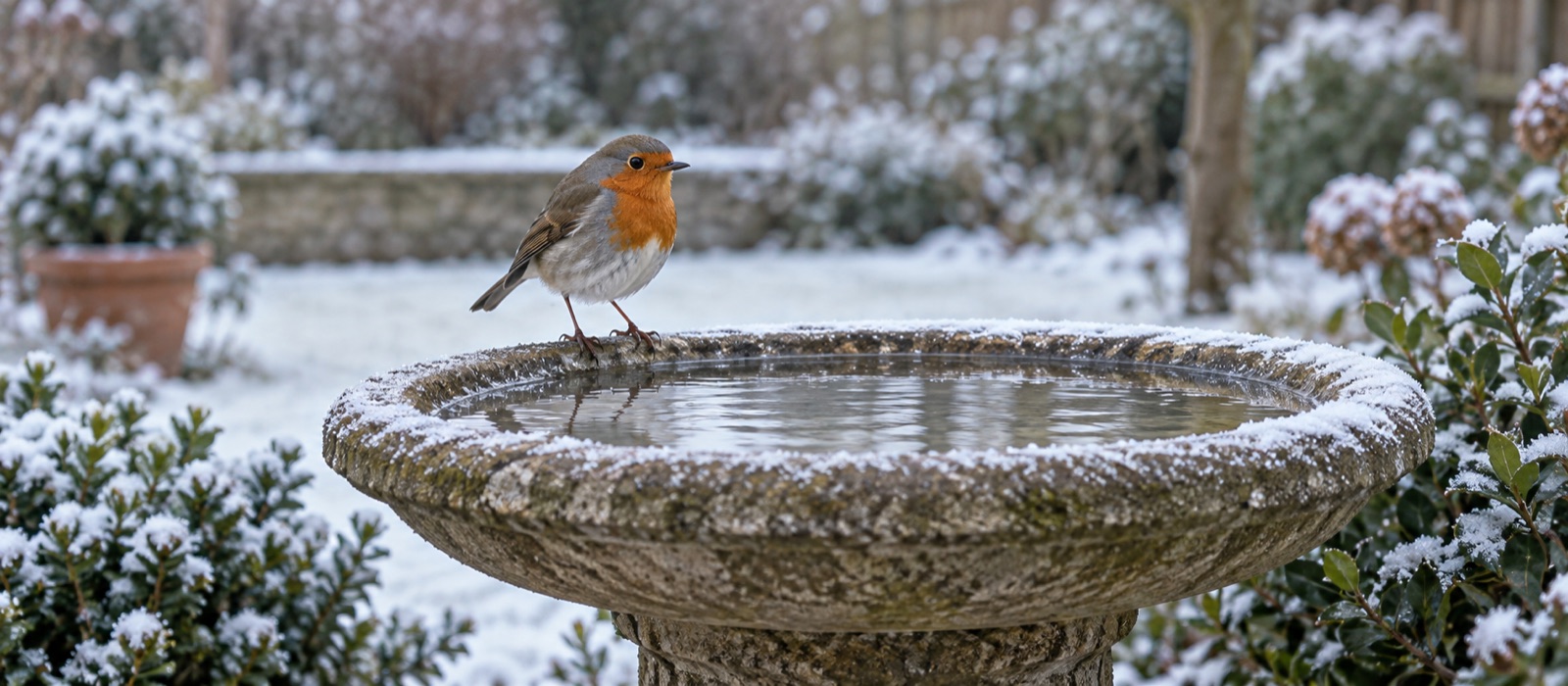
A small shallow bowl is easier to service in frost than a heavy ornate bath.
Remove ice gently; avoid cracking cold terracotta with boiling water.
Keep drinking water clean even when birds are also offered food.
How do you give birds water in freezing weather? Put out a shallow, easy-to-clean bath or bowl, replace its water daily, and check again when frost returns. If ice forms, remove it gently and refill with fresh water. Do not use salt, glycerine, antifreeze or other additives: birds may drink or bathe in the water. A small container you can service twice on a cold day is better than a large basin left frozen.
The BTO feeding FAQ says provided water should be replaced daily and bowls or trays cleaned weekly. It also notes that an accessible shallow pond may make a separate water station unnecessary unless it is dry or frozen. The RSPB bird-bath guidance cautions against chemical de-icers.
Set up a winter water point
Choose a shallow container with a gently sloping or grippable edge. A smooth deep bucket is not a bird bath. Place it where you can reach it without slipping on frozen ground, birds can see the approach, and a cat cannot ambush from immediate cover. If the vessel is lightweight, make sure it cannot tip in wind or when a larger bird lands.
Good access matters more than a decorative stand. You will need to empty, refill, rinse and clean it regularly. Our bird-bath placement guide covers escape cover, windows and cats in more detail; bath depth explains why shallow margins matter.
What to do when the water freezes
Remove an ice disc if it lifts easily. A small amount of warm, not boiling, water can help loosen ice or temporarily restore a drinking surface. Then refill with fresh water. On a persistent freezing day, check again later instead of assuming a morning refill will last until dusk.
Do not strike a frozen ceramic bath with a hammer or pour boiling water into cold terracotta: sudden temperature change or impact may crack it. A removable shallow bowl may be easier to bring indoors to thaw, clean and return. If a bath is damaged, stop using it until sharp edges are dealt with.
Some bird-bath heaters or low-voltage products are sold for frost, but they need weatherproof, appropriately installed power and ongoing hygiene. An ordinary indoor extension lead across wet ground is not a sensible shortcut. Our guide to stopping a bird bath freezing separates safe daily routines from equipment claims.
Cleaning in winter
Replace water every day, even if it looks clear. Remove droppings, leaves, old seed and visible dirt promptly. At least weekly, scrub the vessel using the current BTO good-hygiene advice, rinse it thoroughly and allow it to dry when practical before refilling. Keep cleaning equipment separate from household food utensils and wash your hands afterwards.
Water can become contaminated near a busy feeder. If crumbs continually fall into the bath, move one or the other. Do not place a drink bowl directly beneath food ports just because that position is convenient.
Is a pond enough?
If a wildlife pond has a genuinely shallow, accessible edge and stays unfrozen, birds may use it. A steep-sided ornamental pond is not equivalent to a shallow drinking dish, and a pond completely sealed by ice offers no liquid water. If you add a bowl, keep it small enough to replace and clean rather than duplicating a large water feature unnecessarily.
Frequently asked questions
Can I add salt to a bird bath to stop it freezing?
No. Do not add salt, antifreeze, glycerine or household de-icers to water birds may drink or bathe in. Replace frozen water with fresh water instead.
Is warm water safe for a frozen bath?
Gently warm water can help loosen ice and restore a drinkable surface. Avoid boiling water and sudden temperature shock to terracotta or brittle materials, and expect the bath to refreeze in prolonged frost.
Do birds need water if I put out food?
Yes. Food and water serve different needs. A shallow clean water source can be valuable when natural sources are dry or frozen, regardless of whether you also feed.
For the complete cold-weather routine, see feeding garden birds in winter and feeding during snow and ice.
Helpful products
A bath you can actually service in frost
A simple shallow bowl and a purpose-made bath both need clean water and regular washing; choose the format you can safely reach.
Fallen Fruits FB378 hanging bath
Best for: A small, accessible water-only point
A compact hanging bowl listed at 28.5 by 16 by 16cm, designed for use as either a water bath or a feeding tray.
What stands out
- Can be emptied for cleaning
- Hangs above ground level
Keep in mind
- Support must be secure
- Water may freeze again quickly
- Hanging bowl
- Water only
Christow resin pedestal bird bath
Best for: A garden with room for a secured freestanding bath
A 60cm resin pedestal bath with a 43cm bowl, lawn pegs and a hollow base that can be ballasted with sand or pebbles on a hard surface.
What stands out
- 43cm bowl
- Can be pegged or ballasted
- Resin rather than brittle terracotta
Keep in mind
- Needs secure installation
- Depth must be checked and adjusted for safe shallow access
- 43cm bowl
- Resin
- Secure base