Winter feeding
Feeding garden birds in winter
A practical UK winter feeding routine: what to offer from November, how much to put out, keeping feeders clean and making water available in frost.
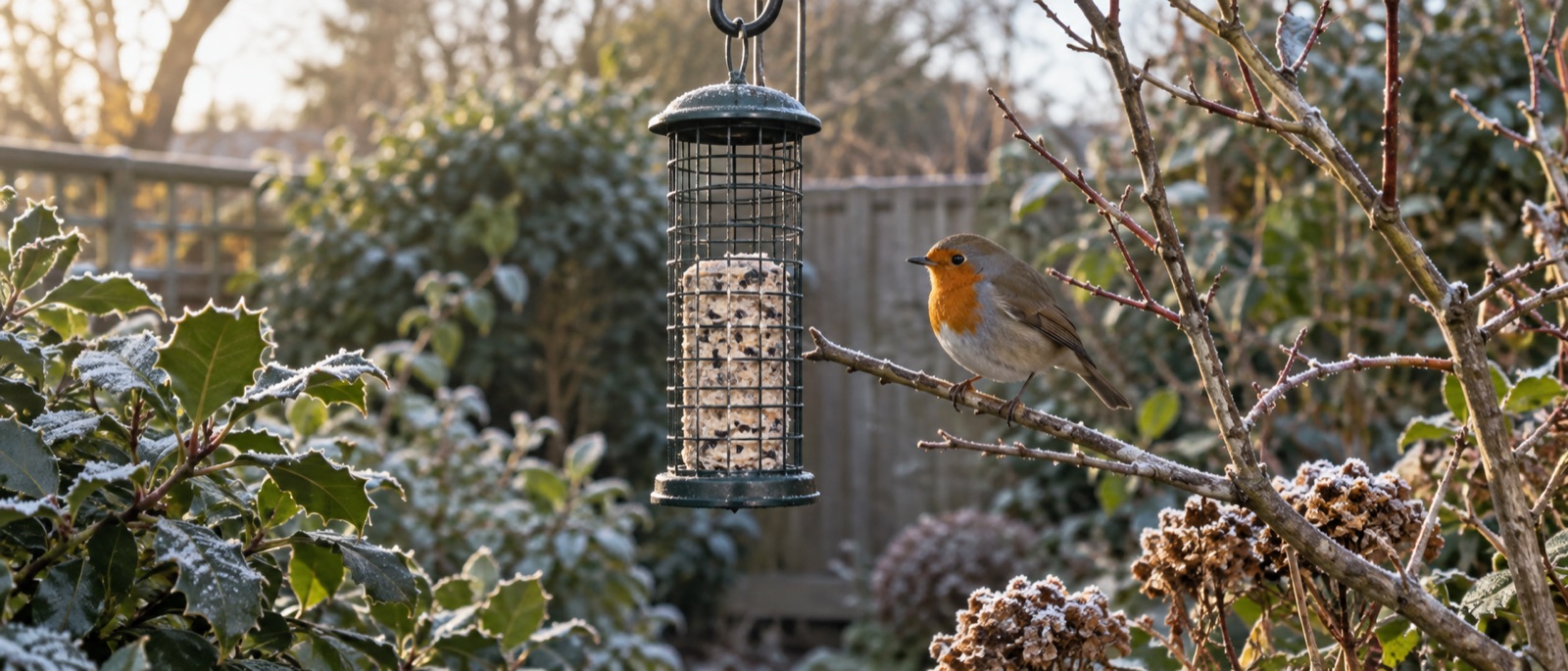
Seeds and peanuts return on 1 November; suitable suet and mealworms have different seasonal guidance.
Put out only what birds are likely to clear within a day or two.
Change provided water daily and clean bowls or baths at least weekly.
What should you feed garden birds in winter? Start with one clean contained feeder and a small, fresh supply of suitable food. From 1 November to 30 April, current RSPB guidance and BTO advice allow seeds and peanuts again after the May–October pause. Suet products and mealworms are also options, provided you can keep portions fresh and the feeding point clean. Fresh, shallow water deserves as much attention as food in freezing weather.
You do not need a crowded station or a different food for every species. One well-managed feeder is more useful than several that hold damp, ageing leftovers.
A simple winter routine
- Before 1 November: clean and dry the feeder, check its fixing and buy a manageable first pack. Keep the seasonal seed-and-peanut pause until the end of October; our restart guide explains the change.
- At the first fill: offer enough food to reach the feeding ports, not a full reservoir. Use a suitable rigid-mesh feeder for whole peanuts and a net-free holder for fat balls or suet blocks.
- Every day: check what remains, remove wet or dirty food and replace drinking water. On frosty days, check the bath again if it freezes.
- At least weekly: empty and dismantle feeders, wash and disinfect them following current guidance, rinse and dry them thoroughly, clean the bath, and move the feeding position periodically.
- If birds look unwell: stop feeding and consult current RSPB/BTO guidance. Do not simply add fresh food to an affected station.
The BTO hygiene guidance advises removing uneaten food after 24–48 hours. It also warns against adding fresh food on top of old. In a quiet garden, this may mean using a much smaller feeder than you expected.
Which foods are worth offering?
| Food | Suitable winter use | What to watch |
|---|---|---|
| Sunflower hearts | A simple seed option in a contained tube feeder from November to April | Small fills; discard damp or clumped hearts |
| Seed mixes | Useful if birds eat most ingredients rather than throwing them out | Look below for rejected grain and waste |
| Whole peanuts | Offer from November to April in a suitable rigid-mesh feeder | Never present loose whole nuts on a flat tray |
| Fat balls and suet blocks | A fat-food option in rigid, net-free holders | Remove packaging and inspect softening, smell and mould |
| Suet pellets | Small loose pieces suited to an appropriate mesh feeder | Avoid scattering a large amount or leaving residue on a flat surface |
| Mealworms | Offer a modest contained portion | Clear leftovers promptly, especially in damp weather |
| Apples and pears | Particularly relevant to winter thrushes | Use small fresh amounts and remove spoiled remains |
Our high-energy winter food comparison helps you choose between the main formats without assuming that the biggest pack is the best buy. For more detail on a particular food, read the sunflower-hearts, seed-mix, peanut, fat-ball, suet-block and suet-pellet guides.
How much food in cold weather?
Let the birds' actual use set the amount. Check the feeder after a day. If much is left, use less next time. If it is regularly cleared early and stays clean and dry, increase the next fresh fill slightly. A run of cold nights can change demand, but it does not make stale food safe. Our portion guide gives a fuller routine.
RSPB guidance suggests seeds should be eaten in one to two days and suet within seven days; these are outer limits, not goals. Wet, mouldy, foul-smelling or soiled food should go immediately. Food stored indoors should remain cool, dry and inaccessible to rodents. If a feeder fills with rain, deal with the leak or position before refilling it; see how to keep bird seed dry.
Where should the feeding point go?
Choose a position you can reach safely for daily checks and weekly cleaning. Give birds a clear view of their approach and escape route, with useful cover nearby but not so close that a cat can hide immediately beside the food. Check fixings after wind and leave clearance around weight-operated squirrel mechanisms.
Current disease advice cautions against conventional bird tables and other flat feeding surfaces where food mixes with droppings. Use contained feeders that can be taken apart, washed and dried. Sweep accumulated spill beneath them; otherwise the ground becomes a second, uncontrolled feeding area. If mice appear, follow our spill-and-storage steps.
Water matters through winter
A shallow bath or bowl of fresh water helps when other sources are frozen or dry. Replace provided water daily, clean the vessel at least weekly and rinse it well. Do not add salt, antifreeze, glycerine or other chemicals to prevent freezing. Gentle warm water can help remove ice; then refill with fresh water and check again if temperatures remain below zero. Read how to provide water for birds in winter for the full routine and how to stop a bird bath freezing for equipment choices.
During heavy snow, clear access to feeders and water without creating a dirty, permanent flat feeding patch. Keep portions small and check for thawing, clumping and refreezing. Our snow-and-ice checklist covers the changes worth making on a cold morning.
Make room for birds that do not use a seed tube
Blackbirds, redwings and fieldfares may take fruit, particularly when natural supplies are scarce. Leave suitable windfalls where practical, or offer small pieces of fresh apple or pear in more than one clean, safe spot and remove leftovers promptly. Avoid a large permanent tray that concentrates birds and droppings. Our winter-thrush guide explains the difference between garden-resident blackbirds and visiting flocks.
Shrubs, berries, seedheads and leaf litter can also contribute natural food and shelter. Supplementary feeding is not a substitute for a garden with varied habitat.
Frequently asked questions
When should I start feeding birds in autumn 2026?
Under the current RSPB/BTO advice, restart seeds and peanuts on 1 November, not during October. Clean and dry equipment beforehand. If guidance changes, follow the latest official advice rather than a fixed article date.
Should I feed birds every winter day?
If you choose to feed, maintain a clean and fresh routine rather than leaving food out indefinitely. Adjust the portion to what visitors actually take. Birds also use natural food; there is no reason to keep a full feeder simply for appearances.
What should I do if I find a sick bird?
Stop feeding, remove food and water, keep other animals away and follow the latest RSPB/BTO disease instructions. Do not handle a bird unnecessarily or resume feeding just because a feeder has been rinsed.
Helpful products
A manageable way to start winter feeding
A small fat-food pack and a modest seed feeder are enough to establish demand. Buy larger food packs only when you know how quickly they will be used.
RSPB fat balls (six-pack)
Best for: Trying net-free fat feeding without a bulk purchase
A small pack of six suet balls made with a blend that includes wheat flour, ground peanuts and seeds.
What stands out
- Six-ball pack
- Can start with one ball
- Suitable for a rigid fat-ball holder
Keep in mind
- Holder sold separately
- Contains peanuts and cereals
- 6 balls
- Suet food
- Net-free holder needed
RSPB Classic easy-clean seed feeder (small)
Best for: Small November-to-April seed fills that are easy to monitor
A simple 500ml, two-port feeder with a polycarbonate tube and plastic fittings that come apart without tools.
What stands out
- 500ml clear tube
- Two ports
- Comes apart without tools
Keep in mind
- Seed is paused May–October under current guidance
- Plastic fittings can be damaged
- 500ml
- Two ports
- Seed feeder