Practical advice
Contains affiliate links
How to attract birds to a small urban garden
Turn a compact UK courtyard or city garden into useful bird habitat with layered planting, clean water and safer boundaries.
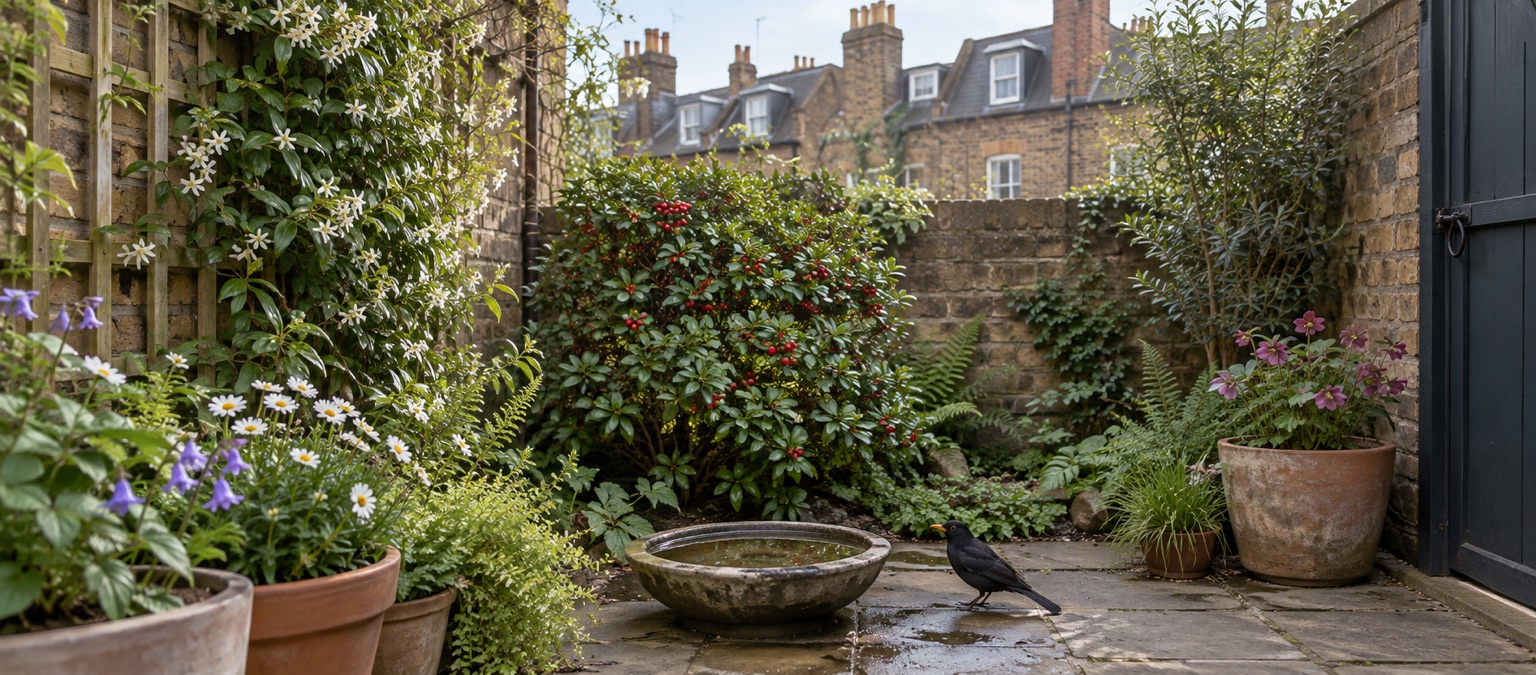
Add height, flowers and ground habitat in layers.
Keep a clean water source within easy reach.
Preserve safe flight lines and access for maintenance.
You can attract birds to a small urban garden by making a few square metres do several different jobs. A shrub or climber provides height and shelter, flowers bring insects, a patch of leaf litter or standing stems offers more foraging, and clean water provides a reliable stop. You do not need a lawn, a large pond or a row of feeders. What visits will depend as much on neighbouring trees, streets and parks as on your own plot.
The RHS wildlife-garden guidance explains why layers of plants and varied small habitats matter, while its container advice suits paved courtyards. A small space can be useful without being overloaded; leave room to water, clean and inspect it.
Give each part of the plot a job
| Part of the space | Useful role | Avoid |
|---|---|---|
| Boundary | Compact shrub, climber or living screen | A tree or hedge that will outgrow its allotted width |
| Sunny pot cluster | Flowers and insects; some later seeds | More pots than you can keep watered |
| Quiet corner | Leaves, sound stems or a little ground habitat | Damp rubbish or uncontrolled food waste |
| Open position | Shallow drinking and bathing water | A cat ambush point beside the dish |
| House-facing side | Visible glass and clear flight route | Reflections that look like open garden |
Start with the largest useful feature the space can comfortably hold. It might be a shrub rather than a tree. Our native-plant guide includes space checks, while berry-producing shrubs may suit an in-ground border or a genuinely large container.
Make planting work vertically—but safely
Walls and fences can carry climbers if the structure and permission allow it. Ivy can offer cover and late-season resources, but keep it away from vulnerable building fabric and inspect before trimming. On a rented plot, moveable pots and freestanding supports are often easier; see bird-friendly rented gardens.
Group pots with different forms and flowering times. If you leave some seed heads, check that stems do not block a narrow path or blow into windows. A pot-friendly wildflower mix may be a practical start, but flowers mainly build habitat over time; do not mistake a packet for a guaranteed bird visit.
Water is the highest-value small addition
Place a shallow dish where birds can see an approaching cat and reach cover without landing directly beside a hiding place. Change the water daily and clean the bowl at least weekly, as the RHS advises. A bowl already in the house may work if it is stable, grippy and shallow. Our bath placement guide explains the trade-offs and small-garden bath guide compares products if you need one.
Do not make a tiny pond on a raised ledge simply because it fits. Water weight, drainage, children and other wildlife need consideration. In a narrow garden with cats, planting and a safer bath site may be more valuable than trying to fit a pond.
Check the three urban hazards
First, look at glass: reflective patio doors and large windows can be mistaken for a flight path. Use closely spaced external markings where the pane is risky. Second, review cat routes along walls and fences; our cat-safer garden guide helps you separate refuge from ambush points. Third, consider neighbours: avoid spillage, noise from poorly fixed equipment and plants overhanging shared access.
Frequently asked questions
Is a feeder necessary in a small garden?
No. Natural food without feeders may be a better first project. If you later add food, follow current seasonal guidance and keep the setup hygienic.
How long until birds visit?
There is no dependable timetable. Established neighbouring habitat, local birds and seasonal movement all matter. Watch quietly, maintain water and plants, and judge success by habitat quality as well as sightings.
Helpful products
If you are starting with paving
These are optional small-space additions. A pot seed mix helps flowers establish, and a low dish supplies water; neither is useful if the space cannot support watering, safe placement and routine cleaning.
RSPB wildflowers for pots seed pack
A seed mix intended for pots, including bird's-foot trefoil, self-heal, poppy and other flowering plants that can support small-space wildlife.
For a suitable sunny container, not a guaranteed bird-food crop. Check sowing directions, light, watering and whether each species suits the setting.
Seedball Urban Meadow — 20 wildflower seed balls
A container-friendly wildflower seed-ball mix intended to add flowers and insect habitat in a small outdoor space.
For soil-filled pots or a suitable garden bed; the maker says one pack can cover three to five medium pots. It is not guaranteed bird food, and the mix needs appropriate light and care.
Jacobi Jayne AnyPlace ceramic bird bath
A low ceramic dish with sloping sides, a stated 35cm diameter and 1-litre capacity.
For a wide, low water dish on a stable surface. Its listed 35mm overall height is not a measured water depth; check grip and usable shallows before filling.