Garden bird guide
What do goldfinches eat? Nyjer, sunflower hearts and feeders
Goldfinch identification, natural seed sources and how to offer nyjer or sunflower hearts safely under current UK seasonal feeding advice.
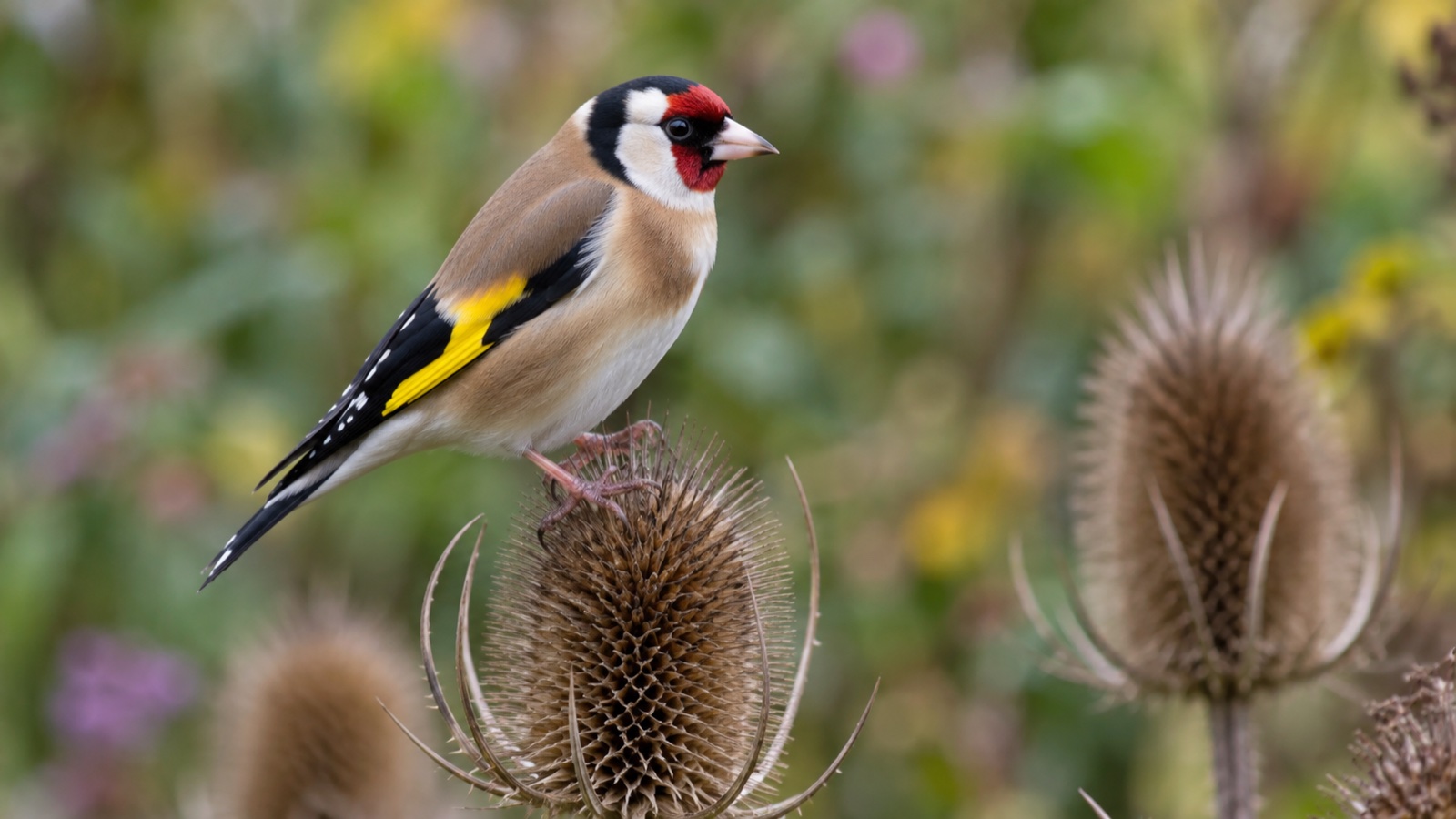
What do goldfinches eat? Mainly small seeds. In the wild, their fine pointed bills reach into teasels, thistles, dandelions and other seedheads. That is why leaving plants to set seed is the most lasting way to support them. In a UK garden feeder, nyjer seed or sunflower hearts can be useful from November to April, according to the RSPB's goldfinch food guidance. The 2026 BTO seasonal advice asks gardens to pause seed and peanuts during May–October.
Offering a specialist seed does not guarantee visitors. Goldfinches move through gardens in groups and may already have abundant natural seed nearby. Watch what they actually use before buying a large bag.
How do you recognise a goldfinch?
An adult has a red face, black-and-white head and a bright yellow wing bar on otherwise dark wings. The body is warm brown and buff. A young goldfinch lacks the adult red face, but the yellow wing marking can still help. The RSPB species profile has photographs and calls to compare if your view is brief.
Goldfinches are sociable and may arrive in a small group. Their light, twittering contact calls often reveal them before the colours become clear. Do not confuse a greenfinch at a distance simply because both show yellow in the wings: a greenfinch is stockier, has a heavier bill and lacks the red face.
Nyjer or sunflower hearts: which should you try?
Nyjer is tiny and needs a purpose-made feeder with fine ports. In a standard seed tube it can pour out or collect in unsuitable places. A small fill is sensible because nyjer can spoil if it stays damp or is left long after birds lose interest. Our nyjer-feeder guide explains sizes and cleaning, including the alternative spelling "niger" found on products.
Sunflower hearts are easier to serve in an ordinary small seed tube and leave no husks. They may also attract many other species, so they are not a goldfinch-only food. The sunflower-hearts guide covers portion size and storage. In either case, buy the smallest sensible pack while you learn demand. A large bargain bag is wasteful when a specialist feeder has only occasional visitors.
The seasonal distinction is important: naturally available seedheads can stay in the garden, but supplementary seed and peanut feeding is paused May–October. Fat or suet may be offered for other birds, yet the RSPB notes goldfinches rarely use those foods. Do not replace seed with another product merely to target the same finches through summer.
Our finch-feeder comparison matches nyjer and sunflower-heart tubes to their intended food and explains the cleaning trade-offs.
Why might goldfinches ignore a feeder?
Check the season first, then the seed and the equipment. Old, damp nyjer may be unattractive; ports may be blocked; a very exposed location may feel unsafe. Clean the feeder fully and try a small fresh fill when the November–April window opens. Give birds time to discover it without moving the feeder every day. If they still prefer natural seedheads, that is a successful garden, not a failed purchase.
The RSPB's natural-food advice names teasel, knapweed and other seed-bearing plants. Leave some stems standing into winter. They provide food without requiring a shared, refillable surface. A clean shallow bird bath can help too; replace water daily rather than letting a feeder do all the work.
What hygiene matters especially for finches?
Finch trichomonosis has had serious effects on UK finches. The RSPB explains that contaminated food or water can spread the parasite and that everyone should follow the seasonal advice, even if their own visitors seem healthy. Offer only what is eaten quickly, remove old food before refilling, clean and disinfect feeders at least weekly, and change water daily. Our feeder-cleaning guide covers the routine.
If a bird is fluffed up, unusually tame, drooling or struggling to swallow, stop feeding and follow current BTO disease and hygiene advice. Do not move a dirty feeder to another location and keep supplying seed. Disease prevention matters more than keeping a particular species at the window.
Do goldfinches eat sunflower hearts?
Yes. They can take them from a suitable seed feeder during November–April. Keep fills small and dry, and pause supplementary seed from May through October.
Do I need a nyjer feeder to attract goldfinches?
No. Natural seedheads and a normal sunflower-heart feeder may already be enough. Choose a specialist nyjer feeder only if you want to offer that tiny seed and can keep the unit fresh and clean.
Helpful products
Two different winter seed routes
Nyjer needs its own narrow-port feeder. Sunflower hearts fit a standard seed tube. Neither choice is worthwhile if food sits untouched or cannot be cleaned.
RSPB Premium easy-clean nyjer feeder (9 inch)
Best for: Offering tiny nyjer seed through purpose-sized ports in winter
A two-port nyjer feeder with an aluminium top and base, a UV-stabilised polycarbonate tube and removable components for cleaning.
Keep in mind: Nyjer may sit unused in a quiet garden; start with a small fresh fill.
RSPB sunflower hearts (900g)
Best for: Trying sunflower hearts from November through April
A small 900g bag of husk-free sunflower kernels, suited to testing demand before buying a larger pack.
Keep in mind: Seed feeding pauses May–October under current RSPB/BTO guidance.