Practical advice
Contains affiliate links
Best native plants for garden birds in the UK
Choose native British trees, shrubs and flowers that offer fruit, seeds, insects and shelter—not just a splash of colour.
Choose a shrub or small tree that fits its mature space.
Combine fruit, seedheads and insect-rich planting.
Keep water clean and avoid disturbing occupied nests.
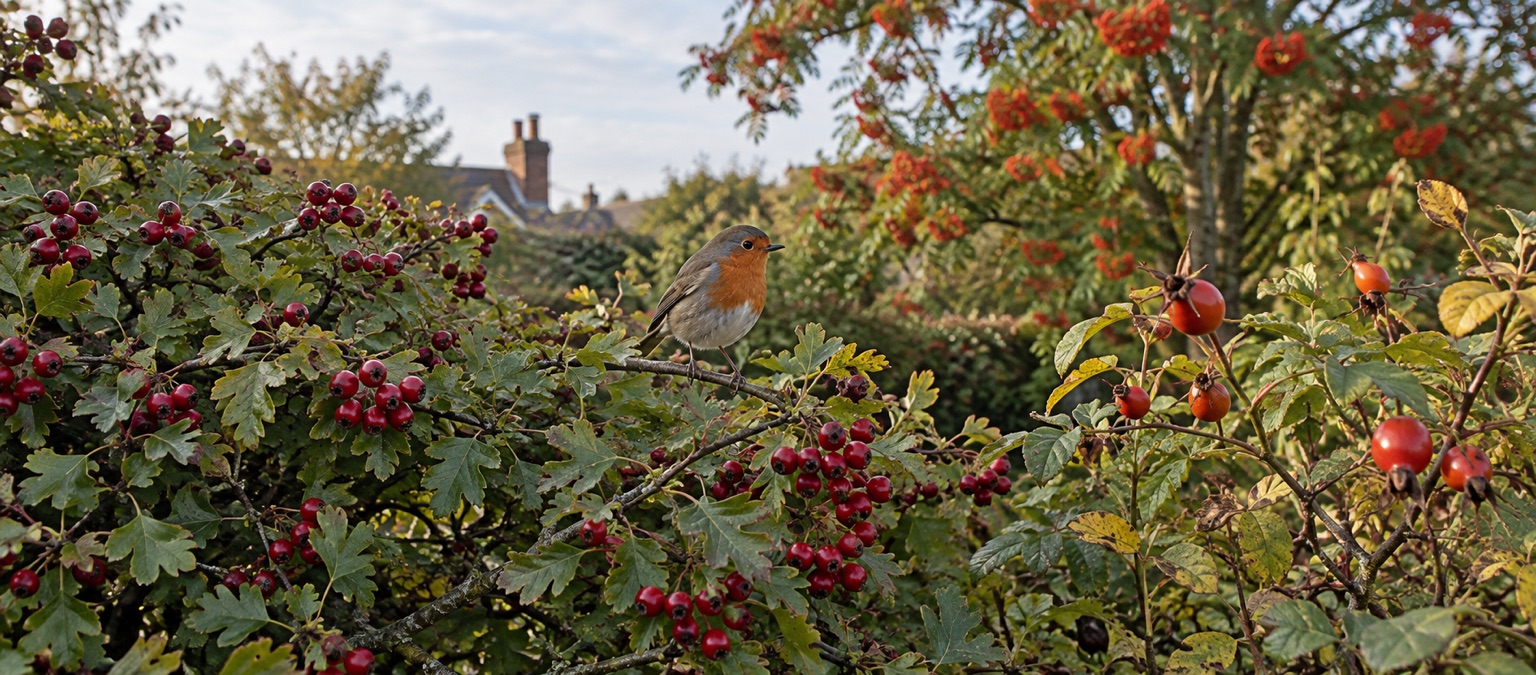
The best native plants for garden birds are those that fit your garden and supply more than one need: a hawthorn hedge for cover and haws, a modest rowan or crab apple for fruit, ivy for late flowers and berries, and seed-bearing flowers that remain standing after bloom. No plant guarantees a particular bird will visit. A small, well-sited mix is more useful than crowding in a tree that will soon outgrow its space.
The RHS guide to garden birds lists both British natives and cultivated plants. That distinction matters: native planting is valuable, but it is not a reason to pull out a healthy non-native shrub already feeding insects or bearing fruit. Work with the habitat you have.
Which native plants earn their space?
| Plant | What it can offer | Space and care check |
|---|---|---|
| Hawthorn | Dense shelter, spring flowers, autumn haws | Thorny; allow room for a real hedge rather than clipping it to a thin screen |
| Rowan | Blossom and late-season fruit | Choose a suitable form and check eventual height and root space |
| Crab apple | Spring flowers and fruit that may persist | A small tree still needs a proper rooting area or a large maintained container |
| Dog rose | Flowers, hips and tangled cover | Give it support and room to arch; mind thorns near paths |
| Hazel | Cover, catkins and insect habitat | Best where it can grow into a substantial shrub or be managed appropriately |
| Ivy | Late nectar, shelter and winter berries on mature plants | Keep growth away from vulnerable building features and check before cutting |
The RHS wildlife-plant guide particularly highlights hawthorn; its broader wildlife-garden advice explains how living boundaries connect shelter across gardens. A hedge is a longer-term investment, not an instant food source. For fruit-led choices, compare our berry-producing shrub guide.
Choose for your plot before ordering
Check sun, drainage, the width available at maturity and the position of neighbouring paths, foundations and services. Some vigorous plants are unsuitable for tight corners; a thorny hedge may be impractical beside a narrow passage. A small urban plot might take one hawthorn or a suitable container-grown crab apple, while a long boundary can accommodate a mixed bird-friendly hedge.
Buy plants from a reputable UK supplier with the species and size clearly named. Inspect bare-root saplings on arrival and follow the supplier's planting and watering instructions. The Woodland Trust's standard 15-sapling mix contains hazel, dogwood, hawthorn, crab apple and dog rose; that is a sensible in-ground mix, not a solution for a balcony.
Add flowers without relying on a meadow
A small strip or a few pots can still support insects. Choose plants suited to your light and soil, let some flower heads set seed, and leave suitable stems through winter. The RSPB's seedhead advice and our seedhead guide explain why a border need not be cut back all at once. Avoid pesticides where possible: birds rely on invertebrates as well as berries and seeds.
For a paved space, group pots of flowers and one manageable shrub instead of attempting an ill-fitting hedge. The rented-home guide covers portable planting; the small urban garden guide helps allocate limited space.
What about water and nesting?
Plants are only part of the habitat. Offer a shallow, clean water source if you can maintain it: the RHS advises fresh water every day and regular cleaning. Place it with clear sightlines and an escape route, especially where cats visit. See where to put a bird bath before choosing a position.
Do not prune a hedge or clear ivy without checking for nests. Wild birds' active nests are protected; the RHS notes that damaging a nest in use or under construction is an offence. Plan major cutting for an appropriate time after checking carefully, rather than assuming a calendar date makes it safe.
Frequently asked questions
Is a native plant always better than a non-native one?
Not automatically. The RHS says both can support wildlife. Native species can be especially helpful in a mixed hedge, but the right plant in the right place, maintained with fruit, flowers and cover in mind, is more important than an all-native label.
Which single plant should a small garden start with?
Choose a shrub or small tree that fits the eventual space and conditions. If there is no in-ground room, start with containers and clean water rather than planting a tree that will need removing.
Helpful products
If you have room for a hedge
A mixed pack can establish several layers of cover, but only where there is enough in-ground space and a boundary you are permitted to plant. Smaller gardens may be better served by one appropriate shrub.
Woodland Trust standard hedge mix — 15 saplings
The specified pack combines hazel, dogwood, hawthorn, crab apple and dog rose, giving a boundary a range of flowers, fruit and cover as it matures.
For a suitable in-ground boundary with room for a hedge; this is not a balcony or container pack. Confirm the mix and site suitability before ordering.
F&G Supplies mixed native hedge — 10 bare-root plants
A smaller mixed bare-root hedge pack. The listing names hawthorn, blackthorn and other possible native species, but the exact mix may vary.
For a suitable in-ground boundary, not pots or a balcony. Check the supplied species, delivery timing and eventual hedge size before ordering.