Practical advice
Why are birds not visiting my feeder?
Seven practical checks for a new or suddenly quiet feeder, from food freshness and position to predators and seasonal changes.
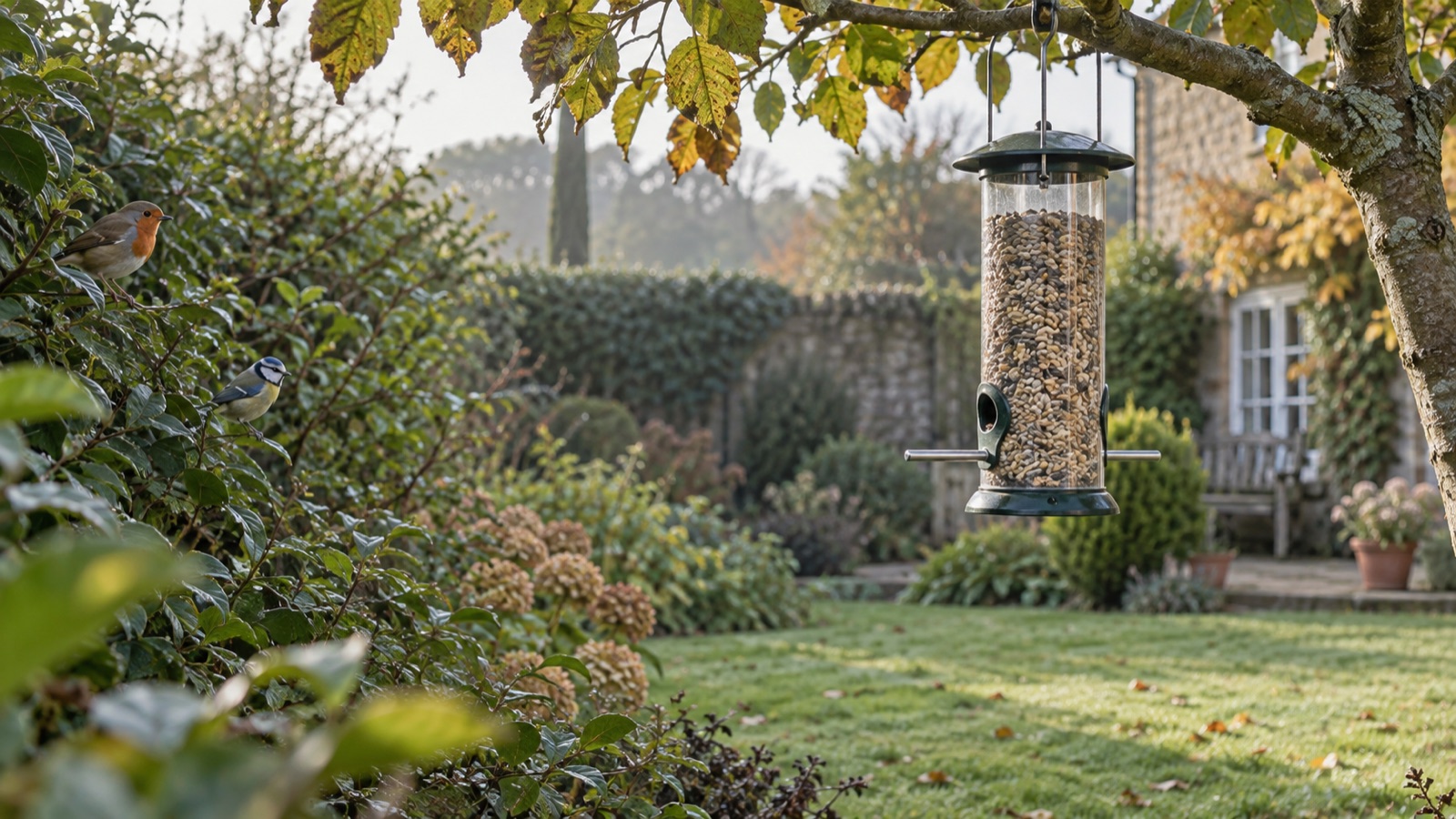
Keep food fresh and ports clear while birds get used to the feeder.
Choose a quiet, sheltered position with a clear view and nearby cover.
Change one factor at a time so you can tell what made a difference.
It is normal for a new feeder to be quiet at first. Birds have to notice it, decide that the position feels safe and learn that it contains food. There is no dependable number of days this should take, so focus on the things you can check rather than repeatedly moving or refilling it.
The RSPB recommends a position that is quiet, sheltered from harsh winds and close enough to cover for birds to retreat, but not so close to bushes that a predator can hide beside the feeder. Its current feeding guide also notes that birds can take time to become accustomed to something new.
Seven things to check first
1. Is the food fresh and currently suitable?
Empty anything damp, stale, clumped or more than a couple of days old. Check that the food is intended for wild birds and suited to the feeder openings.
Current RSPB guidance recommends seeds and peanuts from the beginning of November to the end of April rather than throughout the year. Check the live guidance before adding more food simply to attract attention.
2. Can birds reach the food?
Look closely at the ports. Seed can bridge inside a damp tube, fine fragments can block an opening and a feeder can be reassembled incorrectly after cleaning. Make sure a guard, perch or moving shroud is fitted as intended and that the feeder hangs upright.
3. Does the position feel safe?
Birds need a clear view while feeding and an easy escape route. Nearby vegetation can provide useful cover, but dense growth immediately beneath the feeder may conceal a cat.
Stand back and look at the approach from several directions. A position that seems sheltered from the house may feel enclosed at bird height.
4. Is the area too busy?
Doors opening, children playing, regular garden work and pets waiting nearby can all interrupt visits. Watch from indoors or a greater distance rather than standing close to the feeder.
If the feeder is beside a window, consider reflections and collision risk as well as indoor movement. The BTO window-strike guidance explains how glazing can affect birds.
5. Are squirrels or larger birds taking over?
A squirrel occupying the feeder or a regular rush of larger birds can reduce opportunities for smaller species. Observe what happens when you are not immediately beside the window. Our guides to squirrel-resistant feeders and feeders for smaller birds explain the available designs and their limitations.
6. Has the weather or season changed?
Natural food, harsh weather, breeding activity and normal movement through the area all affect what you see in one garden. A quiet week does not establish that local bird numbers have declined, and it does not necessarily mean the feeder needs replacing.
7. Is the feeder itself a poor match?
Different formats ask birds to feed in different ways. Some cling to mesh, some use short perches and others are better suited to a guarded opening. Check that likely garden visitors can use the posture and opening provided.
Do not replace a quiet hanging feeder with a flat tray. Current RSPB advice recommends avoiding flat feeding surfaces because they carry a higher disease-transmission risk. The main feeder comparison is a better place to compare formats.
Change one thing at a time
If the food is fresh and the position is safe, resist the temptation to alter everything at once. Make one meaningful change—such as moving away from a busy doorway or switching to a compatible food—then observe.
Keep fills small during this period. Adding more food will not make birds arrive faster and creates more waste if the feeder remains quiet.
A simple note of the weather, time, food and any disturbance is enough. You are looking for a pattern, not running a formal experiment.
When to move the feeder
Move it when the current site has a clear problem: poor visibility, persistent disturbance, harsh exposure, predator cover, roof runoff or a window hazard. Do not move it every day simply because you have not seen a visit.
The RSPB also recommends rotating feeding positions to reduce the build-up of food and droppings beneath them. When you relocate for hygiene, reassess sight lines and squirrel access at the new position.
When quietness is a warning
A lack of visitors on its own is not evidence of disease. Sick, lethargic or dead birds are different: stop feeding, empty bird baths and follow current RSPB and BTO advice before restarting.
Keep the ordinary routine going while the feeder is quiet. Inspect the food whenever you visit and clean the feeder at least weekly. Waiting for birds should never mean leaving old food outdoors.
Frequently asked questions
Why do birds suddenly disappear from feeders?
Natural food, weather, disturbance, predators and normal seasonal movement can all change visits quickly. Check the food and feeder condition, look for an obvious safety problem and avoid assuming that a quiet spell means local birds have disappeared.
How can I attract birds to a feeder?
Use fresh, seasonally appropriate food in a clean feeder, choose a quiet position with clear sight lines and nearby escape cover, then give birds time to find it. Avoid scattering extra food or changing several things at once.
How long does a new feeder take to attract birds?
There is no fixed period. The position, local bird activity, food, weather and surrounding cover all make a difference.
Should I scatter seed underneath?
No. It creates another feeding surface, can attract pests and makes waste harder to manage.
Should I keep trying different foods?
First check the season, freshness and compatibility with the feeder. If you do change food, make one change at a time and keep the quantity small.
What if nothing seems wrong?
There may be no problem to solve. Natural food and local movement can leave a feeder quiet. It is reasonable to pause supplementary feeding rather than continually increasing the amount on offer.
Helpful products
Feeder options if the current setup is the problem
Check the food, position and local activity first. If the feeder itself is awkward to monitor or unsuitable for the birds nearby, these are two manageable formats to consider.
RSPB Classic easy-clean seed feeder (small)
Best for: Trying a familiar, easy-to-monitor feeder format
A simple 500ml, two-port feeder with a polycarbonate tube and plastic fittings that come apart without tools.
What stands out
- Clear tube shows food condition
- Compact two-port design
- Comes apart without tools
Keep in mind
- Changing the feeder will not fix poor positioning or stale food
- 500ml capacity
- Two ports
- Clear tube
RSPB My favourites feeder
Best for: Offering a smaller covered feeding point for birds that cling
A small hanging feeder with a protective roof, designed for seeds or mealworms and birds that can cling to its feeding surface.
What stands out
- Protective roof
- Compact hanging design
- Can take seeds or mealworms as directed
Keep in mind
- Food choice must follow current seasonal guidance
- Feeds fewer birds at once
- Hanging feeder
- Covered food area
- Compact format