Garden bird guide
Blue tits: food, feeders, nest boxes and identification
How to identify blue tits in a UK garden, what they eat, when seeds are appropriate and why a 25mm nest-box entrance matters.
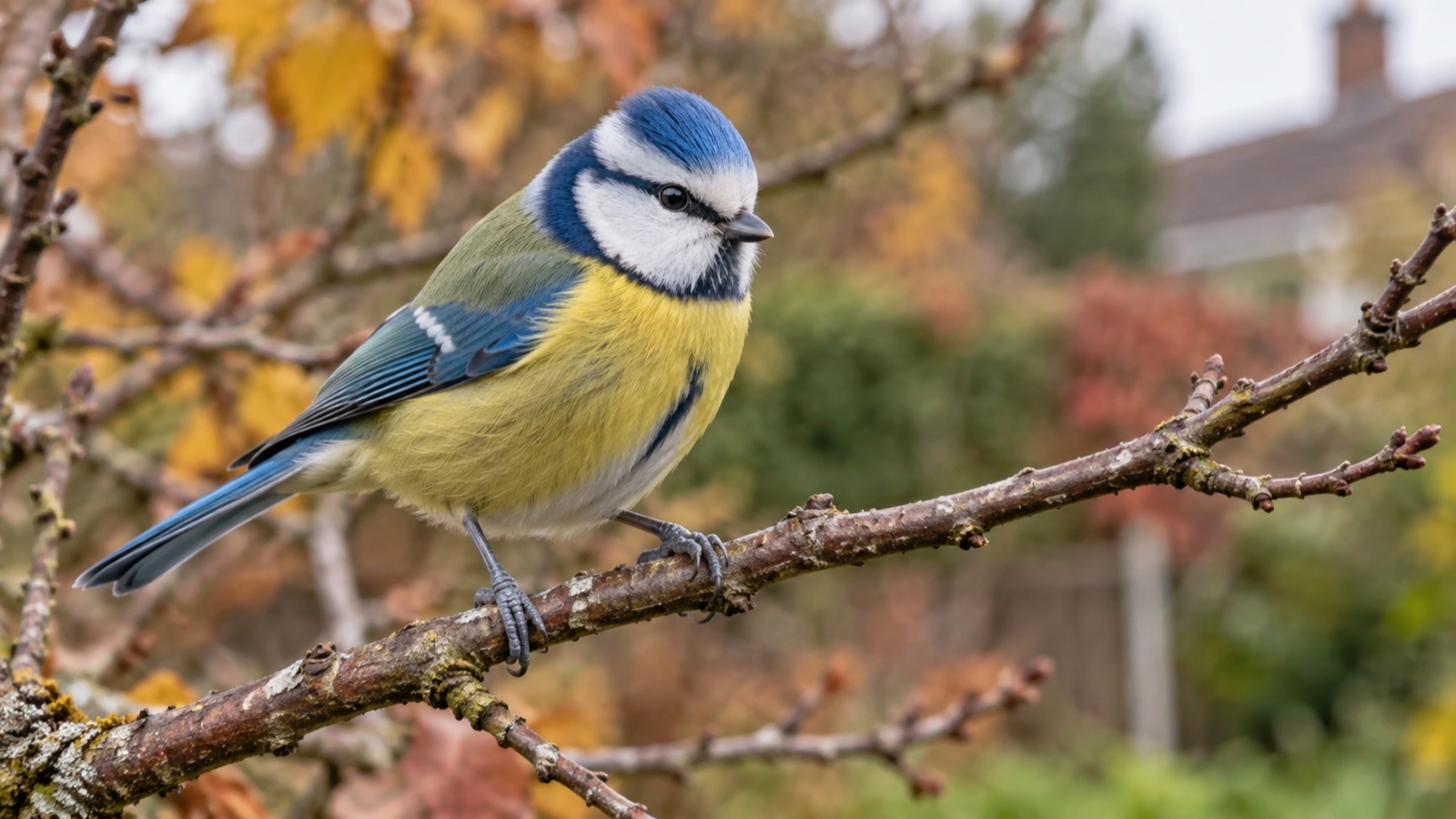
What do blue tits eat? They search leaves, twigs and bark for insects, spiders and caterpillars, particularly during the breeding season. In gardens they may also take mealworms, suitable suet and—during the current permitted season—seeds and peanuts from feeders. The RSPB's feeding guide notes that mealworms attract blue tits, while its nesting-season advice explains the importance of natural insect food for chicks. A feeder cannot replace that living food supply.
If a blue tit is already visiting your garden, it is likely finding much more than the food you put out. Trees, shrubs and an undisturbed insect-rich corner do useful work even when the feeder is empty.
How do you recognise a blue tit?
Look for the blue crown and wings, a white face crossed by a dark eye-stripe, greenish back and yellow underside. It is notably small, with a short, fine bill. From below or at speed it is easy to notice only a flash of yellow; wait for a clear view of the head. A great tit is larger, with a black head, bold white cheeks and a black stripe running down the yellow front. The RSPB blue-tit profile provides reliable photographs, recordings and further identification detail.
In winter, blue tits often travel with other tits. Several visits in a few minutes do not necessarily mean you have only one or two individuals. They are quick at feeders, often taking a morsel to a nearby branch rather than staying on an open perch.
Which feeder and food make sense?
A small, dismantlable hanging feeder suits a bird that can cling and hop between branches. If you offer seed, start with a small sunflower-heart fill in a feeder you can empty and wash. Whole peanuts belong in a suitable rigid-mesh feeder, never loose on a flat tray. A mealworm feeder can be useful for a small portion, but damp leftovers spoil quickly.
The important timing has changed. BTO guidance updated in 2026 advises offering seed and peanuts from November through April, then pausing them May through October to reduce disease risk. Mealworms and suitable suet may continue, with close attention to freshness and cleaning. Do not ignore that rule because blue tits are not the finches most associated with trichomonosis; a garden feeding point is shared by many species.
Avoid a crowded station. Start with one feeder you can maintain, offer only what disappears in a day or two, and clear spill beneath it. Our small-bird feeder comparison covers formats and drawbacks in more detail.
What size nest-box hole does a blue tit need?
A 25mm entrance is the usual specialist choice for blue tits and helps discourage larger species. Some mixed-use boxes have a larger opening or a reducer plate; check the exact dimensions before buying. The RSPB's tit-box guide distinguishes 25mm blue-tit and 32mm great-tit entries. Our nest-box hole-size chart puts those figures in context, while the blue-tit nest-box comparison focuses on construction and access for cleaning.
Position a box in a sheltered, quiet location with a clear approach, away from the bustle of feeders. Do not fit a perch below the entrance; it is unnecessary and can assist unwanted visitors. The box should be securely fixed, resistant to rain and accessible for safe cleaning after it is definitely unoccupied. Where to put a nest box covers height and direction without pretending one compass bearing works for every wall.
How can you help without adding another product?
Let appropriate plants support caterpillars and other invertebrates. Keep shallow water fresh, and do not strip every leaf or dead stem from a wildlife-friendly area. These choices help blue tits forage naturally while avoiding a feeding point that concentrates birds and contamination. If you find sick birds at a feeder, stop offering food, remove the supply and follow the current BTO hygiene advice.
Do blue tits eat peanuts?
They can, but use only good-quality whole peanuts in a suitable rigid-mesh feeder during the November-to-April window. Do not give loose whole nuts or continue peanut feeding through the current May-to-October pause.
Will a blue tit use a 32mm box?
It may, but the larger entrance also admits bigger competitors. If your goal is to favour blue tits, a correctly made 25mm box is a more specific choice. No box can guarantee which bird will move in.
Helpful products
A box and a modest food option
The box is for a quiet nesting position; mealworms are an optional food supplement. Neither is a substitute for insects and safe habitat.
Artisan 25mm blue-tit nest box
Best for: A small-hole nest box suited to blue tits
A timber nest box with a 25mm entrance, slate entrance protector, drainage and ventilation gaps, a lead roof ridge and a locking hinged side.
Keep in mind: Site it away from feeding activity and do not open it when occupied.
RSPB dried mealworms (500g)
Best for: A small, fresh mealworm portion outside the seed season
A 500g pack of dried mealworms in a resealable pouch, offering a clear weight for comparison and portion planning.
Keep in mind: Do not assume supplementary food replaces caterpillars for chicks.