Garden bird guide
Dunnocks: food, identification and quiet garden foraging
What dunnocks eat, how to tell them from house sparrows and whether a low-level garden feeding point is helpful or risky.
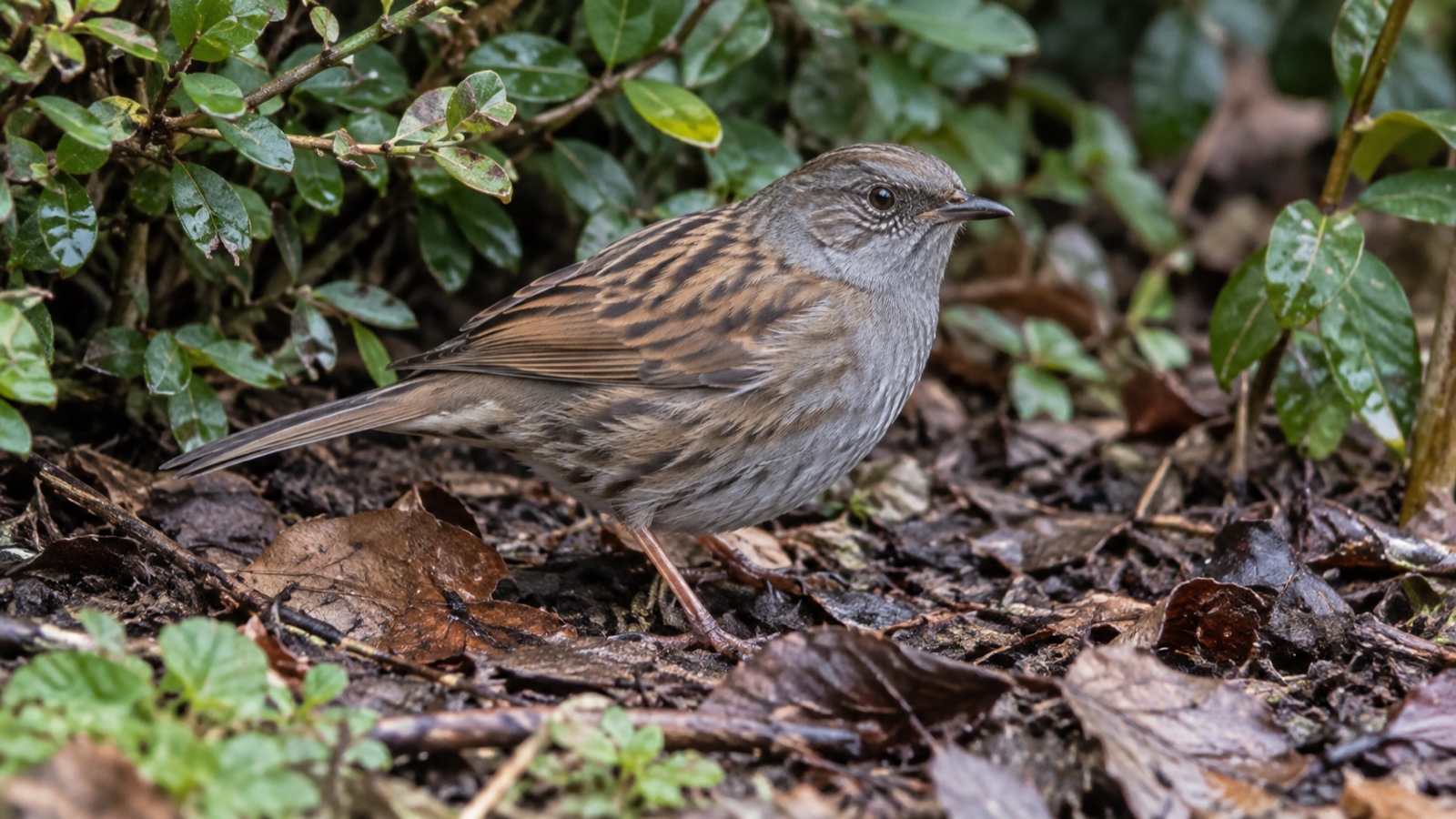
What do dunnocks eat? They search for insects, spiders and other small invertebrates among leaf litter and low plants. They can also take fine seeds and may pick up food beneath a feeder. The RSPB dunnock profile describes this quiet, ground-level behaviour. You are more likely to spot one creeping along a border than hanging from a busy seed tube.
That makes a dunnock a useful reminder that not every garden bird needs a dedicated product. A shrub edge, some leaf litter and fewer unnecessary pesticides can support natural food without concentrating birds at a shared surface.
Dunnock or house sparrow: how can you tell?
A dunnock has a grey face and chest, streaky brown back, pinkish legs and a slender pointed bill. A house sparrow has a thicker seed-cracking bill; the adult male wears a black bib and grey crown, while females are plainer brown. Behaviour is helpful too. Dunnocks usually skulk alone or in pairs near low cover, often with a shuffling gait and wing-flicks; house sparrows are more inclined to call and move in a group.
"Hedge sparrow" is an old name for the dunnock, but it is not actually a sparrow. The RSPB comparison of small brown birds shows the difference. Do not rely on an illustration or a glimpse through a window for a definitive identification.
Should you put food on the ground?
Do not make a permanent seed patch just because a dunnock forages low down. Seed and droppings can collect together, with added risk from rodents and cats. The RSPB's feeding Q&A says a few mealworms can be scattered temporarily for ground-feeding birds if leftovers are cleared by dusk; it does not recommend scattering other foods on the ground. Choose a small, observable quantity and stop if you cannot keep the spot clean.
If a dunnock appears under a hanging feeder, clean that area rather than treating dropped food as a second feeding station. Our under-feeder cleaning guide and no-mess setup guide address the cause of persistent spill. A wide bird table is not an easy substitute: the RSPB's health guidance cautions against flat feeding surfaces where droppings and food mix.
Do dunnocks eat seed or suet?
They may take small seeds or suitable fat-food crumbs, but their behaviour varies by garden and season. Do not buy a large seed bag or crumble a suet block over a broad surface to target one quiet visitor. If you already provide seed for other birds, the BTO's 2026 seasonal advice applies: offer seed and peanuts November–April, pause May–October. Mealworms and suitable suet can continue with strict freshness and hygiene.
The practical question is not whether a dunnock is capable of eating one food; it is whether your method leaves the whole feeding area safer. Small portions, no stale leftovers and clean water help more than a menu of overlapping products. See how much bird food to put out for portion control.
Where can you make the garden better for them?
Keep dense shrubs for shelter and nesting, with open gaps where the bird can step out and retreat. Retain a little leaf litter where it will not create a damp nuisance. A varied planting scheme supports small insects through the year. Dunnocks nest in shrubs or bushes rather than in a small round-hole tit box; the RSPB species guide describes their nesting behaviour. A box bought for blue tits will not be a dunnock solution.
A shallow water point may be useful, but it needs changing daily and regular washing. Place it where a cat cannot wait unseen immediately beside it. Our bird-bath location checklist helps with that decision.
What if a dunnock seems sick?
Do not keep adding food in hopes it will recover. Stop supplementary feeding, clear food and water, and use current BTO hygiene guidance. Illness can affect birds outside the finch family. Clean the entire feeding area and avoid handling wild birds unnecessarily.
Are dunnocks shy of feeders?
Many forage below or near cover rather than at a busy feeder, though individuals may occasionally visit one. Their absence from a tube feeder does not mean your garden has no value to them.
Are dunnocks sparrows?
No. The name "hedge sparrow" is misleading. Dunnocks are accentors, with a slimmer bill, greyer face and generally quieter, solitary foraging style.
Helpful products
An optional small mealworm portion
A little food can be offered where you can clear leftovers by dusk. Keeping shrubs and leaf litter is the more lasting help.
Supa dried mealworms (1L tub)
Best for: An occasional small mealworm offering that can be cleared by dusk
Dried mealworms in a reusable one-litre bucket, sized for smaller portions and straightforward storage.
Keep in mind: Do not scatter seed or leave a persistent feeding patch beneath the hedge.