Feeding-area care
How to clean underneath bird feeders
Remove seed, husks and droppings safely from paving, soil, gravel and planted areas without creating another feeding surface.
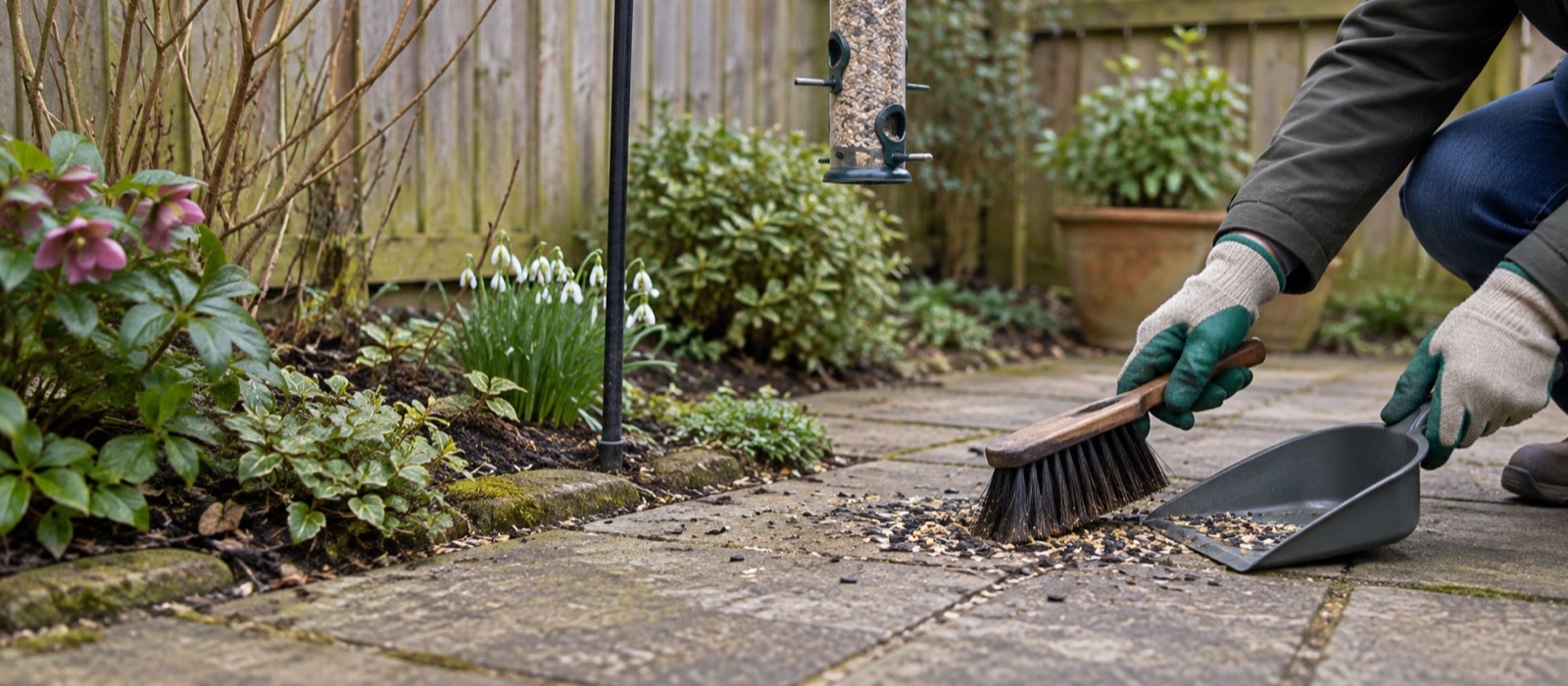
Wear waterproof gloves and keep brushes and pans for outdoor use only.
Collect waste rather than washing it into soil, drains or ponds.
Do not add a broad seed-catching tray beneath the feeder.
Clean underneath a bird feeder whenever food, husks or droppings begin to collect. On paving, sweep the material into a pan. On soil, gravel or planting, pick up as much as you reasonably can and move the feeder periodically rather than letting one patch become a permanent feeding point.
The BTO’s garden-feeding hygiene guidance specifically recommends regularly sweeping or cleaning beneath feeders. This is part of the same routine as offering fresh food, cleaning the feeder at least weekly and rotating its position.
What you will need
- Waterproof gloves
- A stiff hand brush and dustpan for paving
- A small rake or hand fork for loose gravel where appropriate
- A refuse bag or lidded outdoor-waste container
- Separate equipment kept outdoors and away from food preparation
Do not use a kitchen brush, vacuum cleaner or household dustpan that will return indoors. Wash your hands and forearms with soap and water when the job is complete.
How to clean paving or decking
1. Take down the feeder
Remove the feeder before working below it. This prevents more food falling while you clean and gives you a chance to inspect the ports and base.
2. Dampen dusty material if necessary
If dry droppings or fine debris could become airborne, lightly dampen the area before sweeping. The aim is to control dust, not to soak the waste or wash it across the garden.
3. Sweep from the outside in
Collect husks, whole food, fragments and droppings with a dedicated stiff brush and deep pan. Work towards a small central area so material does not spread into borders.
Seal the waste in household rubbish where birds, rodents and other wildlife cannot retrieve it. Do not tip it elsewhere in the garden or add contaminated food to a compost heap.
4. Clean a washable surface carefully
Wash visible residue from suitable hard surfaces. If you use a disinfectant, check that its label permits the surface and outdoor use, use the stated dilution or ready-to-use method, and keep runoff away from ponds, water bowls, plants and wildlife.
Do not improvise a stronger mixture. More concentrated does not mean more effective or safer. Never mix cleaning products.
5. Let the area dry
Allow paving or decking to dry before replacing the feeder. Rehang it in a different suitable position where possible rather than returning it to exactly the same patch every week.
How to deal with soil and borders
Soil cannot be scrubbed and rinsed like paving. Put on gloves and remove visible whole food, compacted husks and droppings by hand or with a small dedicated tool. Bag the material for household waste.
Do not pour disinfectant, bleach or soapy water onto soil. These can affect plants and other organisms, and they do not turn a contaminated feeding patch into a clean surface.
If waste is difficult to retrieve from dense ground cover, move the feeder to an open, manageable location. Thin or prune vegetation only where normal garden care allows; do not strip useful habitat simply to maintain a poorly positioned feeding station.
When the patch has accumulated a lot of material, pause feeding there and allow it to recover. In a small garden where rotation is difficult, reduce portions and use a contained feeder that does not release food freely.
Cleaning gravel
Sweep larger fragments from firm gravel or use a small rake to bring visible waste to the surface. Avoid vigorous raking that spreads food deeper into the bed.
Loose food between stones is a sign to reduce the next fill or reconsider the feeder ports. Moving the station onto a cleanable hard surface can make daily maintenance more realistic, provided the new position remains safe for birds.
What about grass?
Pick up visible food and droppings, then move the feeder regularly. Keeping the grass short enough to see beneath the station makes fresh spill easier to find, but do not scalp or chemically treat the area.
Persistent germination or a bare, dirty patch suggests the feeder is dispensing more than birds consume. A husk-free food may reduce shells, but it will not remove rejected food or droppings. See our no-mess feeding guide for the practical limits.
Do not add a broad catch tray
A tray may look like an easy way to keep food off the ground, but it creates a flat feeding surface where food, saliva and droppings can mix. Current RSPB and BTO guidance advises avoiding flat-surface feeders.
Deal with the source of the spill instead:
- Put out a smaller portion.
- Use ports suited to the food.
- Replace cracked or loose fittings.
- Stop using a mix if birds repeatedly discard one ingredient.
- Choose a feeder with controlled openings rather than an open platform.
Clean the feeder at the same time
Ground care does not replace feeder cleaning. Empty and dismantle the feeder, wash off dirt, disinfect appropriately, rinse with fresh water and let every part dry before refilling. Our complete feeder-cleaning guide covers the sequence.
Check the pole, hook, cage and rain guard as well. Droppings and food can collect on horizontal fittings even when the ground looks tidy.
If rodents are visiting
Stop leaving food accessible overnight. Remove the feeder while you clear the area, store the main supply indoors and do not restart until you can keep portions and spill under control.
A clean-looking surface does not prove that a rodent problem has ended. Look for droppings, burrows, gnawing and repeat visits, then follow the steps in our guide to preventing mice around bird food.
If you see a sick or dead bird
Stop feeding and leave bird baths empty. Clean and disinfect the equipment and suitable hard surfaces, then follow current RSPB and BTO disease guidance before restarting. Do not handle a sick or dead bird with bare hands.
The BTO currently advises stopping for at least two weeks from the last sighting of an unwell bird. The RSPB advises a two-to-four-week pause. Check their live guidance because advice can change with the situation.
Frequently asked questions
How often should I sweep underneath a feeder?
Check whenever you visit. Sweep as soon as waste appears rather than saving it for the feeder’s weekly clean.
Can I pressure-wash the area?
Do not pressure-wash dry droppings or seed debris. It can spread contaminated material and dirty water. Collect solid waste first and clean a suitable hard surface in a controlled way.
Can dropped seed go in the compost?
No. Dispose of old or contaminated food where wildlife cannot retrieve it.
Will a no-grow seed mix mean no cleaning?
No. It may reduce germination, but food fragments and droppings still collect and need removing.
Helpful products
Useful equipment for the feeding area
A stiff hand brush and deep pan are practical on paving. A purpose-made cleaner is for suitable washable equipment and surfaces only—always follow its label and never apply disinfectant to soil or plants.
Spear & Jackson dustpan and hand brush set
Best for: Collecting husks, dropped food and light debris from paving
A deep outdoor dustpan with a reinforced front edge and a wooden-handled brush with stiff bassine bristles for collecting seed husks and light garden debris.
What stands out
- Deep dustpan
- Reinforced leading edge
- Stiff bassine-bristle hand brush
Keep in mind
- Keep it for outdoor feeding areas
- Do not use disinfectant on soil or vegetation
- Hand brush and pan
- Outdoor use
- Stiff bristles
Inspired Bird Feeder Cleaner and Sanitiser
Best for: Cleaning feeder parts and suitable washable surfaces
A ready-to-use 500ml trigger spray sold specifically for cleaning feeders, bowls and feeding-station equipment.
What stands out
- Purpose-made for feeding equipment
- Ready-to-use trigger spray
- 500ml bottle
Keep in mind
- Follow the label exactly
- Rinse treated feeder parts thoroughly before reuse
- 500ml
- Trigger spray
- For feeding equipment