Garden bird guide
House sparrows: food, feeders and sparrow nest boxes
Identify male and female house sparrows, understand their social garden behaviour, choose appropriate food and consider a colony nest box.
What do house sparrows eat? Adults take seeds and other plant food as well as insects. During breeding, insect food matters greatly for their chicks. In gardens sparrows may use sunflower hearts, small seed mixes and fat balls, but the food you offer should follow the RSPB and BTO's current seasonal guidance: seed and peanuts November to April; pause them May to October. Suitable suet or mealworms can remain an option when kept fresh and clean.
A flock can empty food quickly. That does not justify a giant open tray or a constantly topped-up feeder. Feed only what you can check, clean and replenish without leaving stale food beneath the group.
Is it a house sparrow or a dunnock?
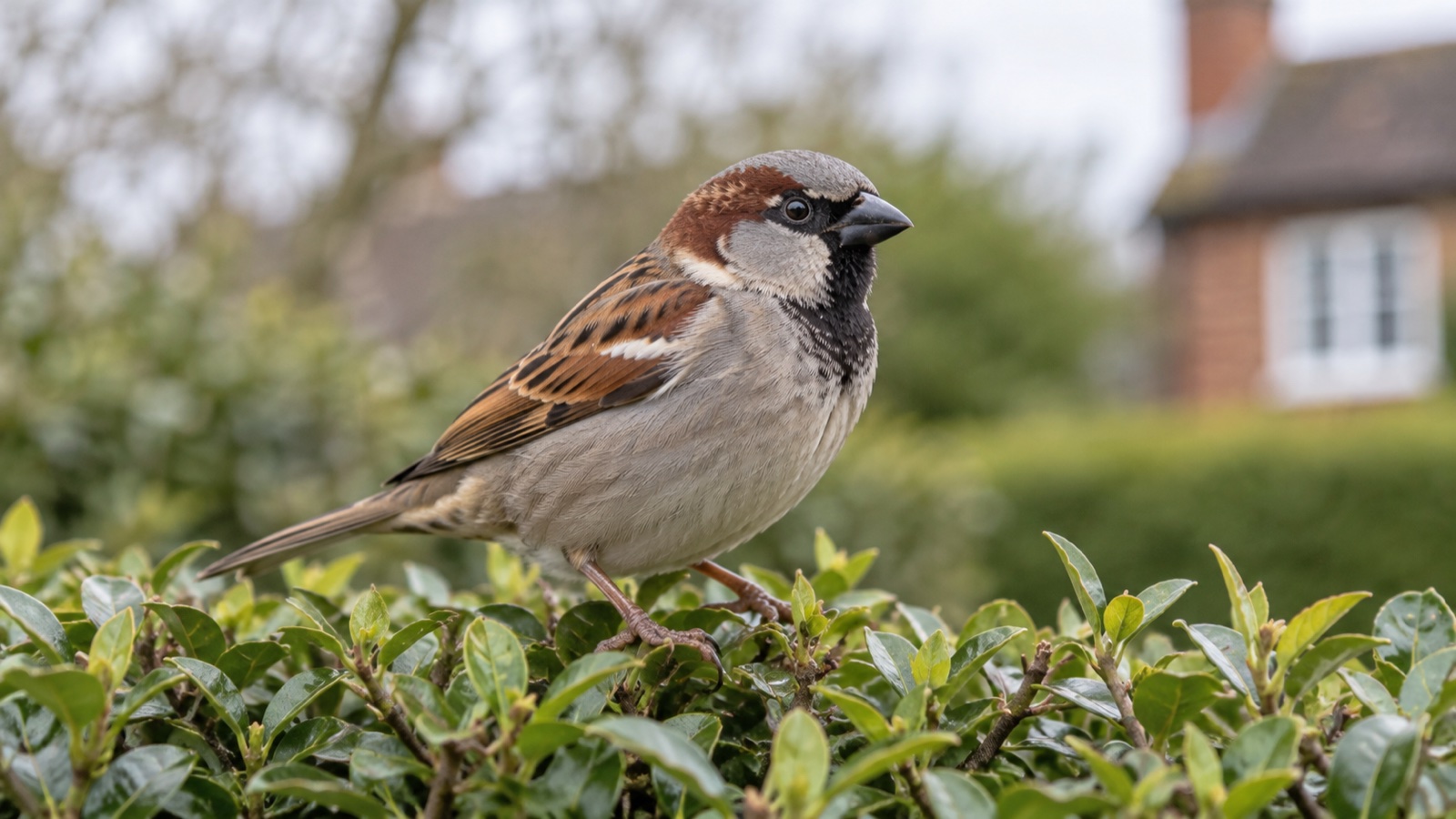
An adult male house sparrow has a grey crown, chestnut-brown nape, pale cheeks and a black bib. Females and young birds are plainer brown, with a pale eyebrow and no black bib. Both have a stout seed-cracking bill. A dunnock looks greyer around the face and breast, has a much thinner pointed bill and usually creeps alone or in a pair near low cover. House sparrows are more likely to arrive together, calling loudly from a hedge.
The RSPB house-sparrow profile shows the sexes side by side. Behaviour can help when plumage is confusing: look for a cluster moving between shelter, ground and feeder, not simply a single brown silhouette.
Which feeders will they use?
Sparrows can perch on ordinary seed tubes and use suitable fat-ball holders. A smaller feeder that comes apart for washing is easier to manage than a decorative high-capacity station. If you offer fat balls, remove retail netting and put the food in a rigid holder; do not leave balls in their plastic mesh. Our fat-ball guide explains pack size and turnover, while small-bird feeder choices compare guarded and open formats.
Sparrows also feed on the ground. That is not a reason to leave a carpet of seed under a feeder. Sweep spills and rotate the feeding point if the area becomes dirty. The RSPB health guidance cautions against flat surfaces where food and droppings mingle. Leave room for birds to retreat into nearby vegetation without putting food directly beside a cat's hiding place.
Why do sparrows gather in groups?
House sparrows are social. You may hear their cheeps before seeing them, then watch several hop between a hedge, water and feeding point. This can feel busy in a small garden, particularly when a flock arrives at once. More birds mean faster food turnover but also more droppings and more pressure on one shared location. Spread access across suitable contained feeders rather than creating a permanent communal food patch.
Their numbers in many places have declined despite being familiar garden birds; the RSPB species account lists them as a UK Red List species. The useful response is not merely to buy more seed. Dense nesting and roosting cover, insect-friendly planting, fresh shallow water and safe nesting opportunities all matter.
Would a sparrow terrace help?
It can, where a suitable building position offers a safe approach and little disturbance. A sparrow terrace has several separate nest compartments because the birds often nest near one another. Check entrance design, weather protection, fastening and access for lawful cleaning after breeding. Our sparrow nest-box comparison explains the trade-offs; where to put a box covers siting. Do not block an active nest or move a used box during the breeding season.
A box is not a substitute for a lack of insects or cover. Nor is every "sparrow" box correctly sized. Use the nest-box hole-size guide before purchase, and remember that any suitable box may be investigated by other birds.
What should you watch for around a flock?
Check the feeder and water every day, clear old food before refilling and clean equipment at least weekly or sooner if dirty. BTO hygiene advice applies even when birds appear healthy. If you see a lethargic bird or one struggling to swallow, stop feeding and follow current disease instructions. Trichomonosis is not confined to finches; this is one reason the seasonal advice applies to the whole garden.
Do house sparrows eat fat balls?
Yes, they often use them. Offer a manageable amount in a rigid, net-free holder and remove anything softened, contaminated or left too long.
Are sparrows the same as dunnocks?
No. Dunnocks are accentors, not sparrows. A dunnock's slim bill, grey face and quiet low-level foraging help separate it from the stockier, social house sparrow.
Helpful products
Food and nesting options for sparrows
A colony box supports nesting where the site is right. A small fat-food pack can be offered separately in a rigid, net-free holder.
Esschert three-chamber sparrow box
Best for: A multi-compartment box for sociable house sparrows
A horizontal pine terrace with three chambers, a galvanised roof, removable front and three approximately 32mm entrance holes.
Keep in mind: Mount securely in a suitable quiet position; occupancy is never guaranteed.
RSPB fat balls (six-pack)
Best for: Trying a net-free fat-ball holder without buying in bulk
A small pack of six suet balls made with a blend that includes wheat flour, ground peanuts and seeds.
Keep in mind: Remove retail netting and old food; the holder is sold separately.