Practical advice
Contains affiliate links
How to feed garden birds naturally without feeders
Build a bird-friendly garden with fruit, seeds, insects, shelter and clean water without relying on supplementary bird feeders.
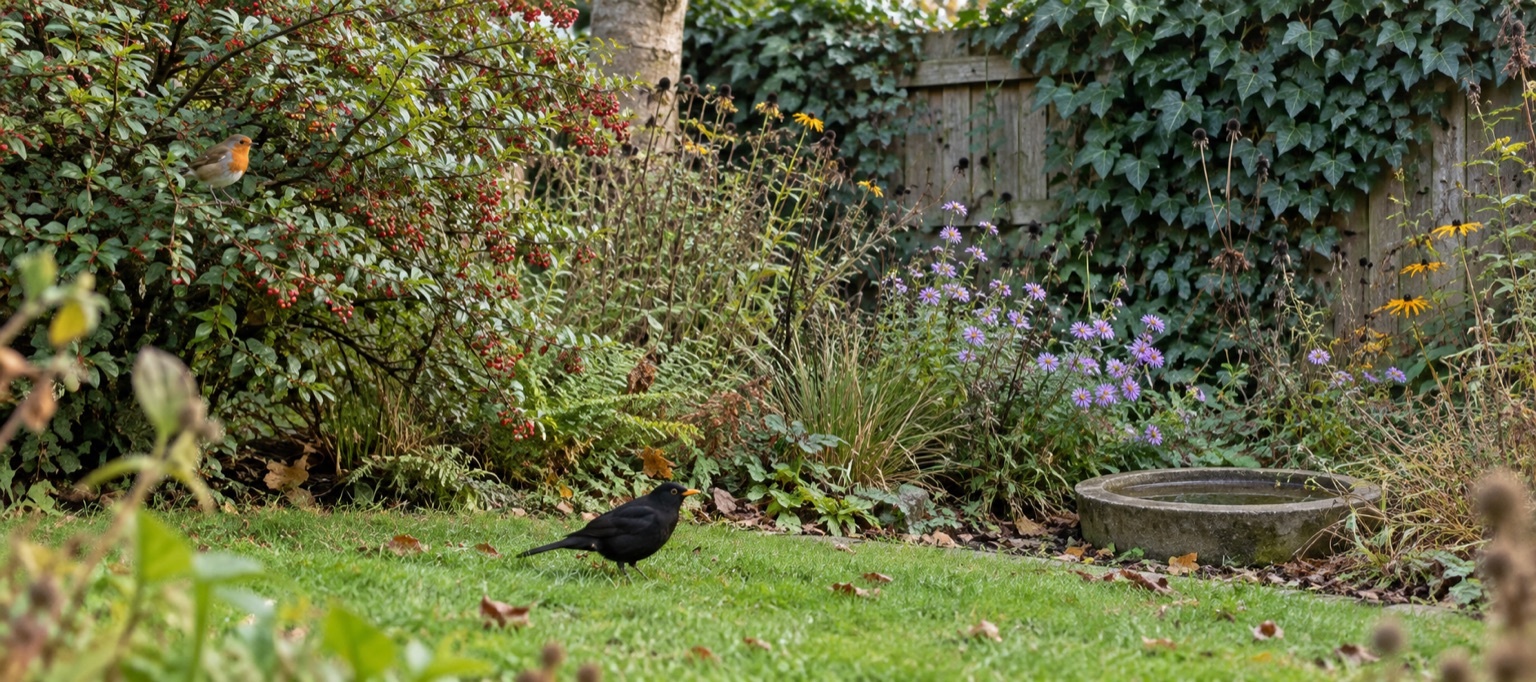
Grow fruit and seed-bearing plants that fit the space.
Leave some insect habitat and avoid pesticides.
Keep fresh water available and easy to clean.
You can support garden birds without a single feeder by growing plants that produce seeds and fruit, encouraging insects, keeping shelter and offering clean water. This is not the same as throwing bird seed onto a lawn: scattered supplementary food can spoil, attract pests and create a hard-to-clean feeding patch. Natural food develops through the garden itself and changes with the seasons.
The RHS says seed- and berry-bearing plants are a sustainable way to provide for garden birds. Its wildlife-garden guidance also points to shrubs, hedges, longer grass and less tidying as ways to support the wider food chain. These changes may take seasons to mature; birds will still range beyond one garden.
Build four layers of natural food
| Layer | Practical garden choice | What it contributes |
|---|---|---|
| Flowers and seed heads | Let suitable annuals and perennials set seed | Seeds later; insects around flowers and stems |
| Fruiting shrubs | Hawthorn, dog rose, suitable berrying shrubs | Fruit and protected perches |
| Ground habitat | Leave a small leaf-litter or longer-grass patch | Invertebrates and foraging structure |
| Water | Stable shallow dish with daily fresh water | Drinking and bathing throughout the year |
Choose plants for your conditions. A full native-plant list and our berry-shrub comparison can help, while leaving seed heads costs nothing once plants are growing. Avoid claims that a single seed mix directly feeds birds; many flowers mainly support insects.
Let insects be part of the answer
An immaculate lawn and sprayed borders offer less variety than a garden with flowers, leaf litter and small undisturbed patches. The RHS advises avoiding pesticides where possible. You need not abandon maintenance: leave a manageable corner, keep paths clear and remove genuinely diseased material appropriately. Robins and blackbirds may search in soil and leaf litter, but they need safe access and local habitat too.
If cats visit, avoid creating a dense ambush point immediately beside water or a place birds forage. Give birds cover nearby with a clear approach and exit; see how to make a garden safer when you have a cat.
Water still needs hands-on care
The no-feeder approach is not a no-maintenance approach. Use a shallow dish with a secure foothold, place it where cats cannot hide against it, change water daily and clean the bowl at least weekly. The RHS bird guide recommends a shallow container where no pond exists. Our bird-bath placement guide explains shade, escape cover and windows; cleaning instructions explain the routine.
You can start with a stable saucer you already own. A purpose-made low dish is optional, especially if your existing container has steep, slippery sides. Always assess usable water depth and grip rather than judging by the product's outer height.
What changes through the year?
Spring flowers bring insects; summer growth gives cover; autumn fruit and seeds may feed birds; winter standing stems shelter insects and hold remaining seeds. Do not infer that every garden has enough natural food in a cold snap. If you choose supplementary feeding, follow the current seasonal guidance, keep equipment hygienic and do not treat natural habitat as a substitute for the safe-feeding rules.
For a paved or rented space, a few grouped pots and clean water can still be worthwhile. The balcony and small urban garden guides help choose a safe layout without inventing a miniature meadow.
Frequently asked questions
Will birds visit if I stop using feeders?
They may still use plants, water and cover, but visit frequency depends on neighbouring habitat, season and species. A quieter garden is not proof that natural planting has failed.
Should I put leftover seed on the ground instead?
No. That is still supplementary feeding, with spoilage and hygiene concerns. If you want a feeder-free garden, focus on plants, insects and water rather than scattering food.
Helpful products
Two optional ways to start
You can reuse pots and a household saucer before buying anything. If you need supplies, the seed pack is for establishing container plants; the bath is for clean water, not food. Neither replaces habitat or ongoing care.
RSPB wildflowers for pots seed pack
A seed mix intended for pots, including bird's-foot trefoil, self-heal, poppy and other flowering plants that can support small-space wildlife.
For a suitable sunny container, not a guaranteed bird-food crop. Check sowing directions, light, watering and whether each species suits the setting.
Seedball Urban Meadow — 20 wildflower seed balls
A container-friendly wildflower seed-ball mix intended to add flowers and insect habitat in a small outdoor space.
For soil-filled pots or a suitable garden bed; the maker says one pack can cover three to five medium pots. It is not guaranteed bird food, and the mix needs appropriate light and care.
Jacobi Jayne AnyPlace ceramic bird bath
A low ceramic dish with sloping sides, a stated 35cm diameter and 1-litre capacity.
For a wide, low water dish on a stable surface. Its listed 35mm overall height is not a measured water depth; check grip and usable shallows before filling.