Garden bird guide
Redwings in winter: identification, food and garden visits
Learn how to recognise a redwing, why it appears in UK gardens during cold weather, and what fruit, water and habitat can genuinely help.
What do redwings eat in winter? They search for berries and fruit, as well as worms and other invertebrates when the ground is accessible. A redwing is a winter visitor to most of the UK, not a regular seed-feeder customer. The RSPB redwing account says garden visits are uncommon except during the coldest spells, when fields may be covered by snow. If you have seen one in your garden, a berry-bearing tree or thawed patch of ground is a more likely explanation than the type of feeder you own.
The useful response is modest: leave existing berries for birds, avoid clearing every windfall and make sure there is clean water. Our winter-thrush food guide explains where a small apple or pear portion fits. It does not call for a broad tray of food left outdoors overnight.
How can you identify a redwing?
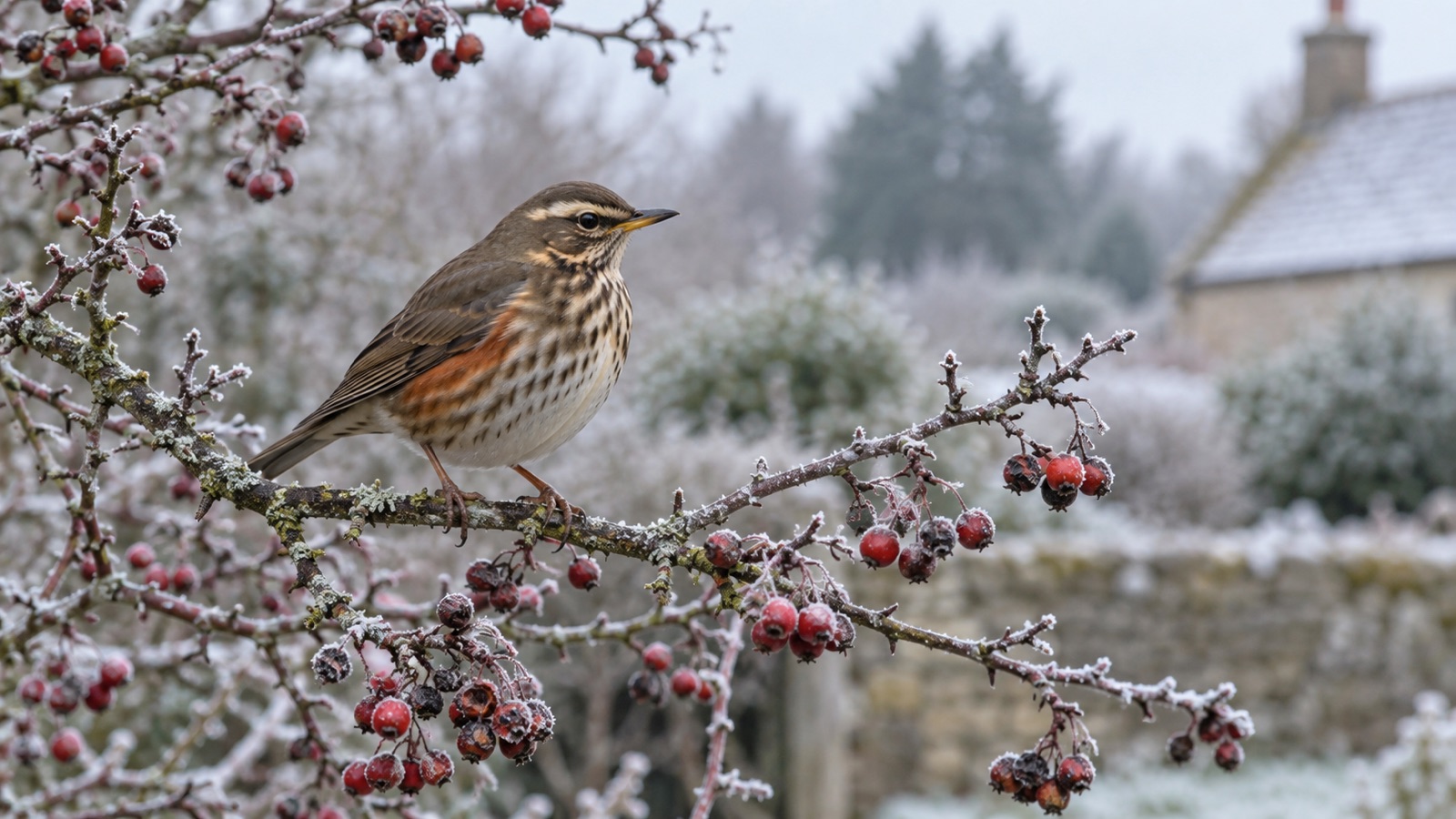
Look for a strong pale eyebrow extending behind the eye and a warm red patch under the wing or along the flank. The bird is smaller than a fieldfare and has a spotted pale breast like other thrushes. The reddish colour can be hidden when it is sitting still, so watch a bird turn or fly. A song thrush has a less striking eyebrow and lacks the same bright underwing flash.
Redwings often arrive with a thin, high flight call, especially as they move at dusk or after dark. Do not rely on the generated illustration here to settle a difficult sighting: compare several views and the RSPB's redwing photographs and call. One view of a spotted bird through a rainy window is rarely enough.
Why would a redwing come into a garden?
Fruit and weather usually explain it. The RSPB describes redwings roaming among hedgerows and trees for berries. After prolonged frost or snowfall, a sheltered garden with fruit can become attractive when the surrounding fields are difficult to forage. Visits may be brief, and birds may move on as soon as conditions change. A quiet feeder the following day is not evidence that something went wrong.
Keep rowan, hawthorn or other suitable existing fruiting plants where you can. The RSPB natural-food guide is a useful starting point if you are planning new planting. Give birds an escape route into cover and keep cats away from a feeding or drinking spot. Do not cut back an occupied hedge simply to get a better view.
Should you offer apples or pears?
A small piece of fresh, unsweetened apple or pear can be a sensible cold-snap supplement if winter thrushes are already using the garden. Secure it so it does not roll into an exposed road or sit in contaminated mud. A simple fruit holder can keep a portion off the ground, but a wary redwing may ignore a hanging object altogether. The holder is a clean-up convenience, not a redwing lure.
Remove uneaten fruit before it becomes mouldy or attracts pests, and do not keep topping up an untouched offering. A few birds at a fruit tree may defend or compete for food; you cannot solve that by putting out a large communal tray. If snow is the immediate problem, the cold-snap routine covers small portions and fresh water.
Do redwings use ordinary bird feeders?
Usually not the hanging seed tubes bought for tits and finches. Their winter diet and feeding style point instead towards natural fruit and accessible invertebrates. You need not buy nyjer, peanuts or a bigger station for a redwing sighting. If you feed other birds, follow current RSPB seasonal guidance: pause supplementary seed and peanuts from 1 May to 31 October, clean and move used feeders weekly, and avoid flat feeding surfaces. Those are whole-garden precautions, not a special redwing menu.
A shallow bird bath can serve visiting birds, provided you change the water daily. In freezing weather, the winter-water guide is more useful than trying to keep a fruit holder full all day.
When are redwings in Britain?
Most are seen from autumn through spring, with numbers and exact arrival dates varying by weather and food supplies. The RSPB notes that only a small number breed in the UK. There is no reason to design a year-round feeding station around an occasional winter guest. If you see one at a berry tree, watch quietly and let it feed; a photograph from a distance is preferable to flushing the flock for a closer look.
Is a redwing the same as a fieldfare?
No. Both are winter thrushes, but a fieldfare is larger with a grey head and a chestnut back. A redwing's cream eyebrow and red underwing are the more useful distinguishing marks.
What if the redwing leaves after a day?
That is normal. Redwings range widely for fruit. Keep natural food and water available for whichever birds are present rather than repeatedly adding food for one species that has moved on.
Helpful products
Fruit and water, only if useful in your garden
These are optional ways to offer a small, removable fruit portion or fresh water. A redwing is much more likely to follow natural berries than a new purchase.
Burgon & Ball Sophie Conran apple feeder
Best for: Securing a small apple piece in a garden already visited by winter thrushes
A decorative hanging heart-shaped metal holder designed to secure an apple for garden birds.
Keep in mind: Redwings may ignore hanging fruit; berry-bearing shrubs and unspoilt windfalls matter more.
Peckish Secret Garden bird bath
Best for: Providing a shallow, clean drinking place during a cold spell
A 60cm-high decorative metal bath with a 40cm-wide bowl, broad base and tool-free assembly.
Keep in mind: Change the water daily; a bath cannot attract a redwing on its own.