Cold-weather advice
Feeding garden birds during snow and ice
What to check after overnight snow or a hard frost: safe food, small portions, feeder access and fresh unfrozen drinking water.
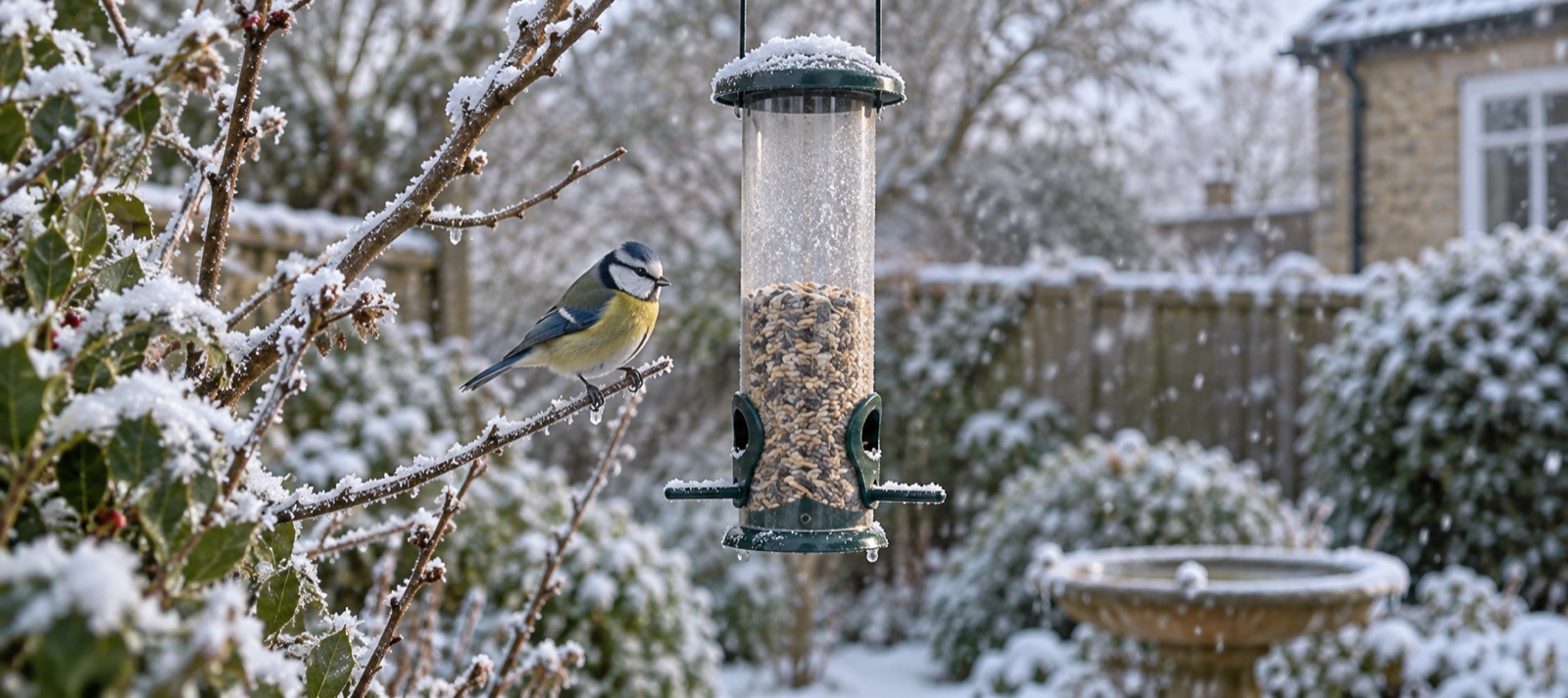
Snow can block a feeder even when food remains inside.
A cold snap does not justify leaving more food out than birds will clear promptly.
Check water again later if it repeatedly freezes.
How do you help garden birds during snow and ice? Start by checking the feeding point you already have. Clear snow from the roof and ports, discard wet or frozen food, and put out a small fresh portion of suitable winter food. Then replace ice in a shallow water container with clean water. Check again later if the temperature stays below freezing. These steps are more useful than filling several feeders at once.
The RSPB feeding guide recommends high-energy, high-fat foods in winter while keeping portions fresh. The BTO's winter guidance also highlights fruit for thrushes and water when natural sources freeze. Neither is a reason to ignore normal hygiene when the weather is difficult.
A five-minute morning check
- Look at the feeder before topping up. Is the opening blocked by snow or ice? Is seed clumped at the base? Does suet look wet, dirty or stale?
- Remove anything spoiled. Never pour new food over damp material in the hope that the dry layer will protect it.
- Put out a modest portion and look for spill beneath. Clear accumulations rather than creating a ground-feeding patch.
- Empty ice from the bath without smashing a brittle basin; add fresh water. A little warm water can help loosen ice, but do not pour boiling water into a cold terracotta vessel.
- Recheck the food and water later. Repeated freezing may call for a smaller, easier-to-service bowl in a sheltered position.
Our winter-feeding hub covers the everyday routine. For the bath alone, see how to provide water in winter.
Which foods make sense in a cold snap?
From 1 November to 30 April, current RSPB and BTO advice permits seeds and peanuts. Sunflower hearts in a suitable clean tube, whole peanuts behind rigid mesh, or a small net-free fat-food portion can all be practical choices. Suet blocks and pellets are distinct formats: a block needs a cage; pellets need a suitable mesh feeder. Compare the high-energy winter foods if you are choosing a first option.
Snow may make some natural food less accessible, but visitor numbers and use vary greatly. Check after a day rather than assuming every garden needs a full reservoir. If many birds arrive, separate suitable feeding points where the garden allows, while keeping each one clean and manageable.
What about fruit for blackbirds and winter thrushes?
Leave clean windfall apples or pears where safe and practical, or put out small fresh pieces in dispersed spots and collect leftovers promptly. Blackbirds may already be resident; redwings and fieldfares are winter visitors and may not appear in every garden. Fruit should supplement shrubs and berries, not create a permanent dirty tray. See what to feed winter thrushes for a fuller answer.
Do not use salty kitchen scraps, mouldy bread or food treated with chemicals. Dried vine fruits such as raisins and sultanas are hazardous to dogs and cats, so apples and pears are a simpler choice for mixed-use gardens.
Keep the water safe
Use a shallow container that you can empty and clean readily. The RSPB's bird-bath advice warns against salt, antifreeze and other additives. Fresh water may refreeze, so replace it as needed rather than making it chemically persistent. Clean the bath at least weekly and more often if droppings or algae appear.
If you have a suitable shallow wildlife pond that remains accessible, an extra bowl may not be needed. A deep or steep-sided pond is not a substitute for a safe shallow drinking edge.
When to stop rather than add more
Stop feeding if food repeatedly spoils, spill attracts rodents, or birds appear sick. The BTO hygiene guidance calls for small amounts, regular cleaning and removal of old food. Snow does not make contaminated equipment safer.
Do not move an occupied nest box, handle a sick bird casually or attempt rescue without specialist guidance. For disease concerns, follow the latest RSPB/BTO instructions and use appropriate local wildlife advice.
Frequently asked questions
Should I scatter seed on snow?
Avoid making a broad flat feeding area where food can mix with droppings and thawing slush. A clean contained feeder is easier to monitor, and food lost under snow is difficult to recover.
How often should I refill during a freeze?
Check daily and refill according to use, not the temperature alone. Increase the next fresh portion only when birds are regularly clearing the previous one while it remains clean.
Can I pour hot water into a frozen bird bath?
Use gentle warm water to loosen ice if needed, and beware of cracking a cold terracotta or brittle basin. Refill with fresh water and check again later; never add salt or antifreeze.
Helpful products
Practical help for a cold-weather routine
Choose equipment that is simple to refill and clean; no feeder or bath removes the need for daily checks.
RSPB fat balls (six-pack)
Best for: Putting out one fresh fat ball in a rigid holder
A small pack of six suet balls made with a blend that includes wheat flour, ground peanuts and seeds.
What stands out
- Manageable six-pack
- Easy to inspect turnover
Keep in mind
- Holder sold separately
- Remove softened or spoiled food
- 6 balls
- Use without retail netting
Fallen Fruits FB378 hanging bath
Best for: A small water point that can be emptied and refilled
A compact hanging bowl listed at 28.5 by 16 by 16cm, designed for use as either a water bath or a feeding tray.
What stands out
- Hanging design
- Compact removable bowl
Keep in mind
- Check its fixing
- Use for water only and watch for refreezing
- Compact bowl
- Daily water change