
Garden bird guide
What do song thrushes eat? Identification and garden food
Learn why song thrushes use snail anvils, how to distinguish them from mistle thrushes and when a few mealworms can supplement natural food.
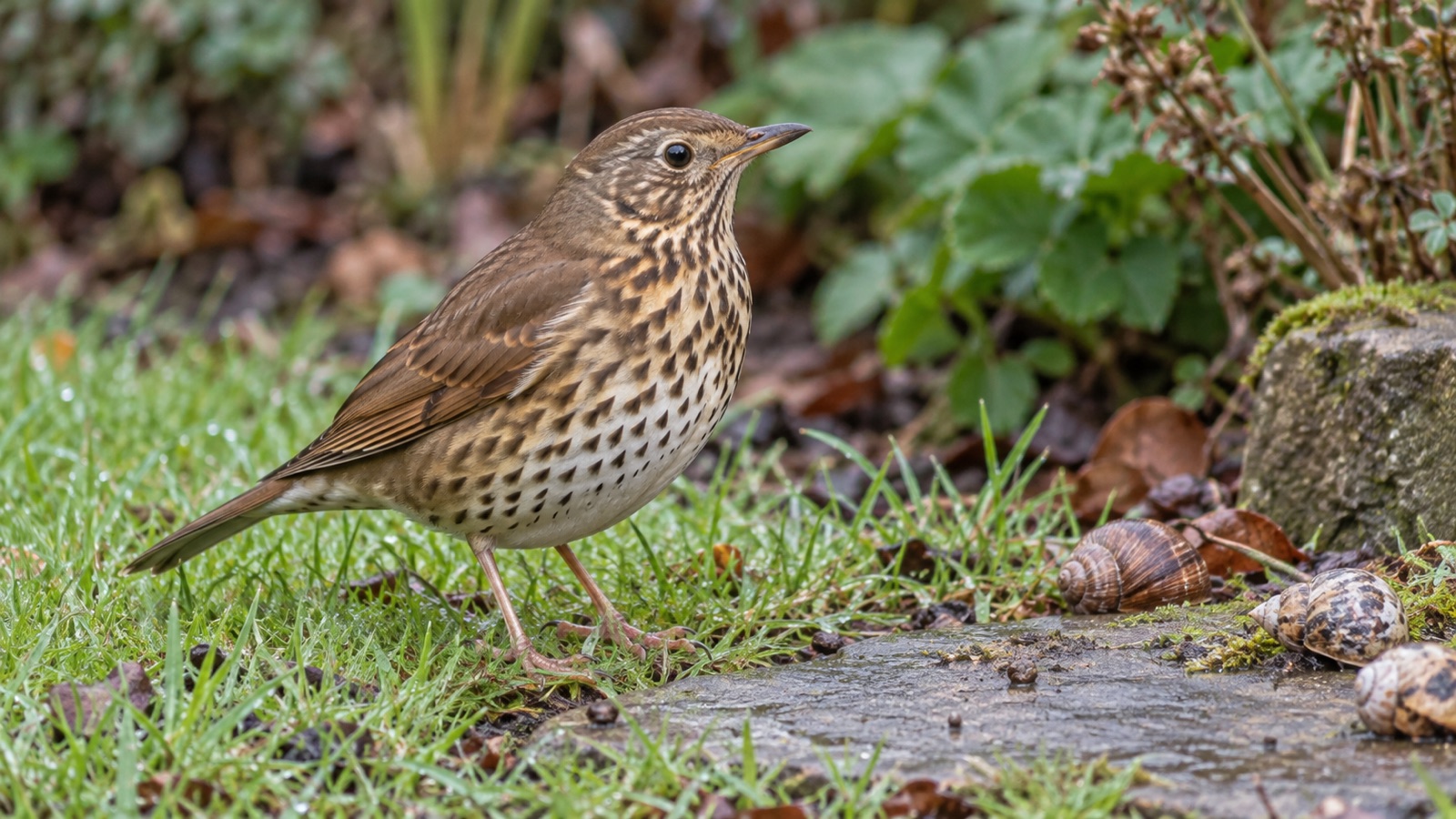
What do song thrushes eat? Snails, worms, insects and other small invertebrates are central to their diet, with fruit also taken. The RSPB song-thrush profile describes the bird smashing snail shells against a stone—an “anvil”—to reach the food inside. A small pile of broken shells beside a regular stone can be a better clue than a fleeting view of the bird.
Look along a lawn edge, shrub border or damp patch. Keeping some leaf litter and avoiding routine pesticide use supports living prey. A commercial food supplement can be useful in particular conditions, but it cannot reproduce the range of invertebrates a thrush finds naturally.
How do you identify a song thrush?
A song thrush is warm brown above with a cream chest and small dark marks shaped rather like inverted hearts or arrowheads. It is smaller and warmer-toned than a mistle thrush, which is larger, greyer and more heavily spotted. A blackbird usually looks plainer above and lacks the song thrush's neat spotted breast. Compare the RSPB's real photographs rather than trusting the generated hero as an exact field record.
Song is often the easiest distinction. A song thrush repeats a short phrase two or three times before moving to a different one. A blackbird sings more fluid, varied passages without that characteristic repeated pattern. You might hear the song from high cover while the bird feeds unseen lower down.
What is a snail anvil?
It is a hard stone, path edge or similar surface a thrush uses to break a shell. Several empty snail shells in one place can indicate repeated use. Do not remove every snail from a garden and then buy mealworms to compensate. Snails are part of a wider food web, and the thrush finds other invertebrates as conditions change.
If you garden around an anvil, give the bird space. It is unnecessary to move shells into a display or place food on the same stone. The anvil is a feeding tool, not an invitation to build an open food platform.
Should you offer dried mealworms?
A few suitable mealworms can be an occasional supplement. For dried worms, soaking can add moisture when appropriate, especially in breeding season, but only offer what will be taken promptly. Our dried-mealworm guide explains portion sizes and storage. A mealworm-feeder guide may help if you need a contained option, but not every song thrush will use a hanging feeder.
The RSPB's current advice includes thrushes among birds that can take suitable supplementary food. That is not a reason to leave mealworms scattered overnight. Put out a small amount at a clean, observable spot, clear leftovers by dusk and keep cats from using nearby cover as an ambush point. Avoid a permanent flat tray, where food and droppings can mingle.
Does winter change the feeding plan?
Frost can make worms difficult to reach, and fruit or berries become more prominent. Our winter-thrush food guide discusses fruit and other thrush visitors, while the winter-water guide covers safe fresh water. Do not assume a song thrush will visit just because you put out food; garden location and cover matter.
If you feed any seed or peanuts for other birds, the current BTO seasonal FAQ says November–April only, with a May–October pause. Mealworms or suitable suet may continue in small clean portions. Stop all supplementary feeding if sick birds appear and follow BTO hygiene guidance.
How do you make a garden better for song thrushes?
Leave some sheltered, insect-rich edges, varied planting and access to clean shallow water. The RSPB natural-food guide explains how plants and soil life support birds beyond a feeder. Song thrushes have declined in parts of the UK; do not reduce a meaningful habitat question to a choice between two feed products. Avoid disturbing any active nest when pruning shrubs.
Is a song thrush the same as a mistle thrush?
No. The song thrush is smaller, warmer brown and has finer spotting. The mistle thrush is larger, cooler-toned and often stands upright or gives a rattling call.
Why does the song thrush repeat its song?
Repeated phrases are a normal feature of its song and a helpful identification clue. Listen for the pattern over several phrases rather than one isolated note.
Helpful products
A modest mealworm option
This is for a few fresh or appropriately soaked mealworms at a time, not for covering the lawn with food. Natural prey and clean water remain the priorities.
RSPB dried mealworms (500g)
Best for: A few soaked worms in a short-lived clean offering
A 500g pack of dried mealworms in a resealable pouch, offering a clear weight for comparison and portion planning.
Keep in mind: A song thrush still needs living soil, snails and insects; clear leftovers the same day.