Winter visitors
What to feed winter thrushes in a UK garden
Apples, pears and natural berries for blackbirds, redwings and fieldfares in winter, with sensible hygiene and pet-safety precautions.
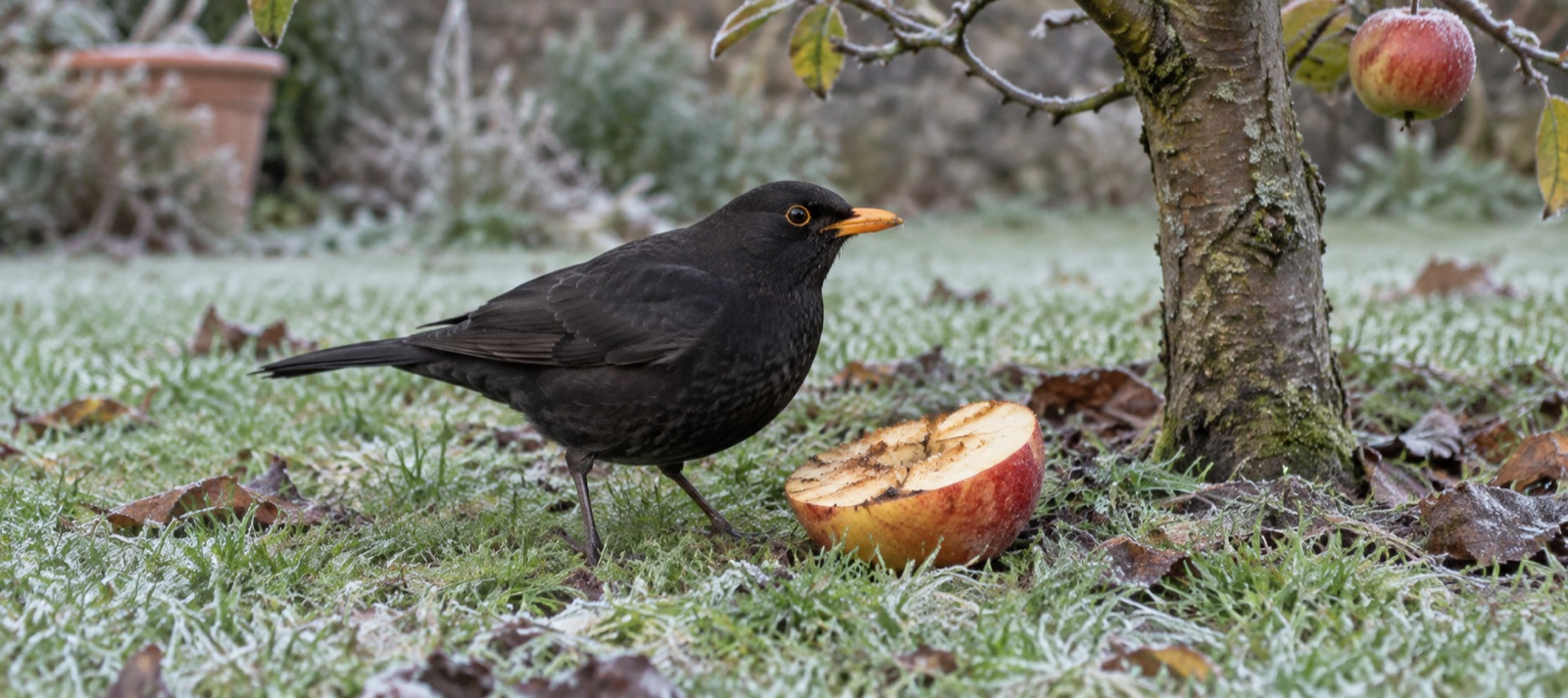
A blackbird may visit regularly; redwings and fieldfares are winter visitors and may never use a small garden.
Apples and pears are a straightforward supplement to shrubs, berries and leaf litter.
Do not leave mouldy fruit or pet-toxic dried vine fruits in a shared garden.
What can you feed winter thrushes? In a UK garden, the simplest additional food is fresh apple or pear in small amounts, alongside the fruit, berries and invertebrates already present. Blackbirds often visit gardens year-round; redwings and fieldfares arrive for winter and are particularly associated with fruit when weather reduces other food. Do not expect every species to appear just because fruit is available.
The BTO's winter-garden advice mentions apples and pears for blackbirds, redwings and fieldfares. Its fruit-and-berry guide explains why berry-bearing shrubs and fruiting trees are valuable natural resources.
Offer fruit without making a dirty feeding station
Leave a few sound windfalls where they fall if the location is safe for birds, people and pets. Alternatively, cut a fresh apple or pear into manageable pieces and place only a small amount in separate clean spots, away from the main feeder and from cover where cats can hide. Check later and remove damaged, mouldy or heavily soiled pieces. Do not keep topping up old fruit.
Current RSPB/BTO disease advice cautions against flat feeding surfaces that accumulate food and droppings. A big permanent tray or bird table is therefore a poor way to attract a flock. Fruit already hanging on a tree or dispersed temporarily beneath shrubs is different from continually provisioning a contaminated communal surface, but it still needs observation and clearing. If you cannot keep a ground spot clean, focus on natural fruiting plants instead.
Avoid grapes, raisins and sultanas in gardens used by dogs or cats: dried vine fruits can be dangerous to pets. Do not put out fruit that is mouldy, heavily fermented or treated with salt, sugar or cooking ingredients. Avoid leaving large quantities that attract rodents.
Which birds might visit?
| Bird | What to expect | Practical implication |
|---|---|---|
| Blackbird | A familiar resident in many gardens, often feeding on the ground or among shrubs | A little fruit near safe cover may be found quickly; protect against cat ambushes |
| Redwing | A smaller winter-visiting thrush, often travelling in flocks | Visits depend on weather and local fruit availability; do not increase quantities in anticipation |
| Fieldfare | A larger winter-visiting thrush that may defend a fruit source | Space small offerings apart rather than concentrating birds at one spot |
The BTO Fieldfare and Redwing profiles describe these winter visitors. Identification can be difficult at a distance, so do not infer which bird has eaten fruit solely from what disappears overnight.
Is suet useful for thrushes?
Some thrushes may take suitable suet pieces, and the RSPB's general feeding guide mentions fat food and fruit for blackbirds. But hanging suet cages primarily serve birds able to perch or cling to them. There is no need to crumble a block across a large flat surface to reach thrushes. Begin with natural fruit and habitat, then use only a small, observable amount of any additional food.
If you are choosing fat food for the wider garden, compare suet blocks, suet pellets and fat balls by feeder fit and turnover, not by a promise that they will attract a particular thrush.
Help without buying food
Retain berry-bearing shrubs, allow some windfalls to remain where safe, and avoid stripping every seedhead or fallen leaf from a wildlife-friendly corner. A varied garden can offer fruit, insects, shelter and a safe approach route. In a hard freeze, a shallow clean water source may be more useful than another food pile; see winter water guidance.
Our wider winter-feeding routine brings seed, suet and water together. During a cold snap, use the snow-and-ice checklist instead of putting out ever larger amounts of fruit.
Frequently asked questions
Do redwings and fieldfares eat apples?
Yes, both winter thrushes can take apples, particularly when other fruit is scarce. Their appearance in a specific garden is uncertain and depends on local habitat, weather and food availability.
Should I put fruit on a bird table?
A continuously used flat table can mix food and droppings and is discouraged under current disease guidance. Prefer suitable natural fruit or a few fresh pieces in separate clean locations, with prompt removal of leftovers.
Can I leave rotten apples for birds?
Do not offer mouldy or heavily fermented fruit as supplementary food. Remove obviously spoiled pieces from a managed feeding area and keep the amount small enough to monitor.