Garden bird guide
Fieldfares in UK gardens: identification and winter food
Identify a winter fieldfare, understand its berry-seeking flocks and learn when fruit and clean water are more useful than another feeder.
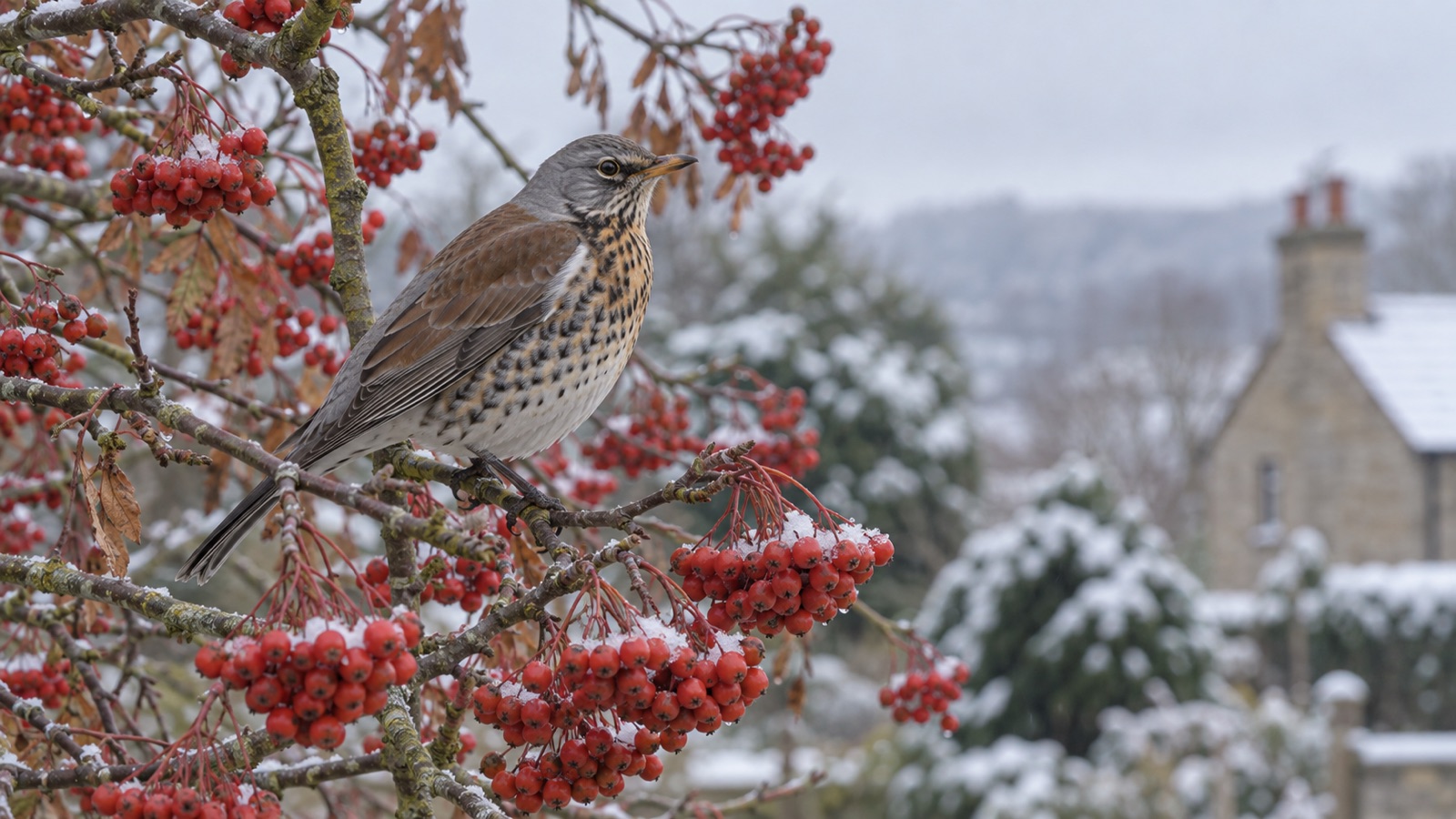
What do fieldfares eat? Their winter food includes berries, fruit and invertebrates where the ground is open enough to forage. In Britain they are chiefly winter visitors, often travelling in conspicuous flocks. The RSPB fieldfare profile describes their upright stance and social behaviour. A fruiting rowan, hawthorn hedge or a run of cold weather is more likely to bring them near a garden than a new seed feeder.
If a fieldfare appears on your lawn, watch where it actually feeds before putting food out. It may be taking worms or searching a fallen-fruit patch. For a broader cold-weather approach, see what to feed winter thrushes, which also covers redwings and blackbirds without treating all three as feeder birds.
What does a fieldfare look and sound like?
A fieldfare is a large spotted thrush with a grey head, grey rump and rich chestnut back. It has a yellowish bill and a spotted pale chest, but plumage changes with light and age. Its size and upright stance can recall a mistle thrush; the contrasting grey head and chestnut back help separate them. A redwing is smaller and has a stronger pale eyebrow and red flank. The RSPB's UK thrush-identification guide is worth opening beside your own notes or photograph.
Listen for a dry, chattering call from a moving flock. It can draw your eye to birds at the tops of nearby trees before they come low enough for a clear view. The generated hero here is illustrative rather than an identification photograph; verify an uncertain bird against the RSPB's fieldfare images and sound.
Why are fieldfares often seen in groups?
They move together over large areas in search of winter food. A mixed flock can include redwings, and numbers may change quickly when a berry crop runs out or weather improves. This is not a species that settles onto one backyard station for months. A garden with a single apple cannot recreate a productive hedge, and a large feeding pile can spoil or draw pests before a flock returns.
Leave natural berry clusters where possible. If you manage a hedge or tree, consider its winter fruit before pruning. The RSPB natural-food advice explains why varied trees, shrubs and insect-rich ground are useful across more seasons than one purchased food. Do not approach an active nest in the unusual event you encounter one; a distant observation is enough.
Should you put fruit out for fieldfares?
A small, fresh apple or pear portion can help birds already visiting during snow or frozen ground. Place it where birds have a clear view of approaching danger and nearby escape cover. Remove anything left before it rots, and check the area for cats. Our fruit-feeder guide discusses holders, but a hanging holder is unlikely to be the first choice for a large, wary fieldfare. We would not buy one solely for a flock that passed overhead once.
Do not build a broad bird table or scatter a large quantity of seed as a substitute for fruit. Flat communal feeding surfaces are discouraged in the current RSPB feeding update because they can concentrate contamination. The snow-and-ice guide explains how to make a small, short-lived offering without turning it into a permanent feeding patch.
Is water worth providing?
Yes, if you can maintain it. A shallow bath is useful to more than one species even when there is no fieldfare in sight. Replace the water daily and clean the container regularly. During a freeze, add fresh unfrozen water rather than salt, antifreeze or hot water. Our winter water guide covers placement and morning checks.
The bath product shown below is a general garden-water option, not a claim that fieldfares prefer that model. Choose a stable, cleanable basin and position it with visibility and cover in mind.
Do fieldfares eat from seed tubes?
That is not the behaviour to plan around. Their berry and ground-foraging habits make habitat, modest fruit and water more relevant. If you already put out seed for finches or tits, use the current BTO seasonal window: seed and peanuts November–April, paused May–October. Keep equipment clean, change stale food and do not let spilled seed accumulate under a feeder. Those measures support the wider garden, not a special fieldfare feeding programme.
Are fieldfares in the UK all year?
They are chiefly winter visitors. Numbers fluctuate with weather and food, so a brief sighting does not predict the same flock next week or the following winter.
Is a fieldfare larger than a blackbird?
Usually yes. The grey head and rump, chestnut back, heavily spotted underside and chattering flock call give stronger clues than size alone.
Helpful products
A clean water option for a mixed winter garden
Fresh water is useful to many birds already visiting, including during frost. A bird bath does not make a fieldfare flock choose your garden; berries and local habitat are the stronger factors.
Peckish Secret Garden bird bath
Best for: A clean drinking place for birds already using the garden
A 60cm-high decorative metal bath with a 40cm-wide bowl, broad base and tool-free assembly.
Keep in mind: A fieldfare may never visit a bath; fruiting trees are the stronger habitat choice.