Garden bird guide
Mistle thrushes: identification, food and winter berries
Identify a mistle thrush by its size, heavy spotting and rattling call, and learn why berry-rich trees matter more than an ordinary feeder.
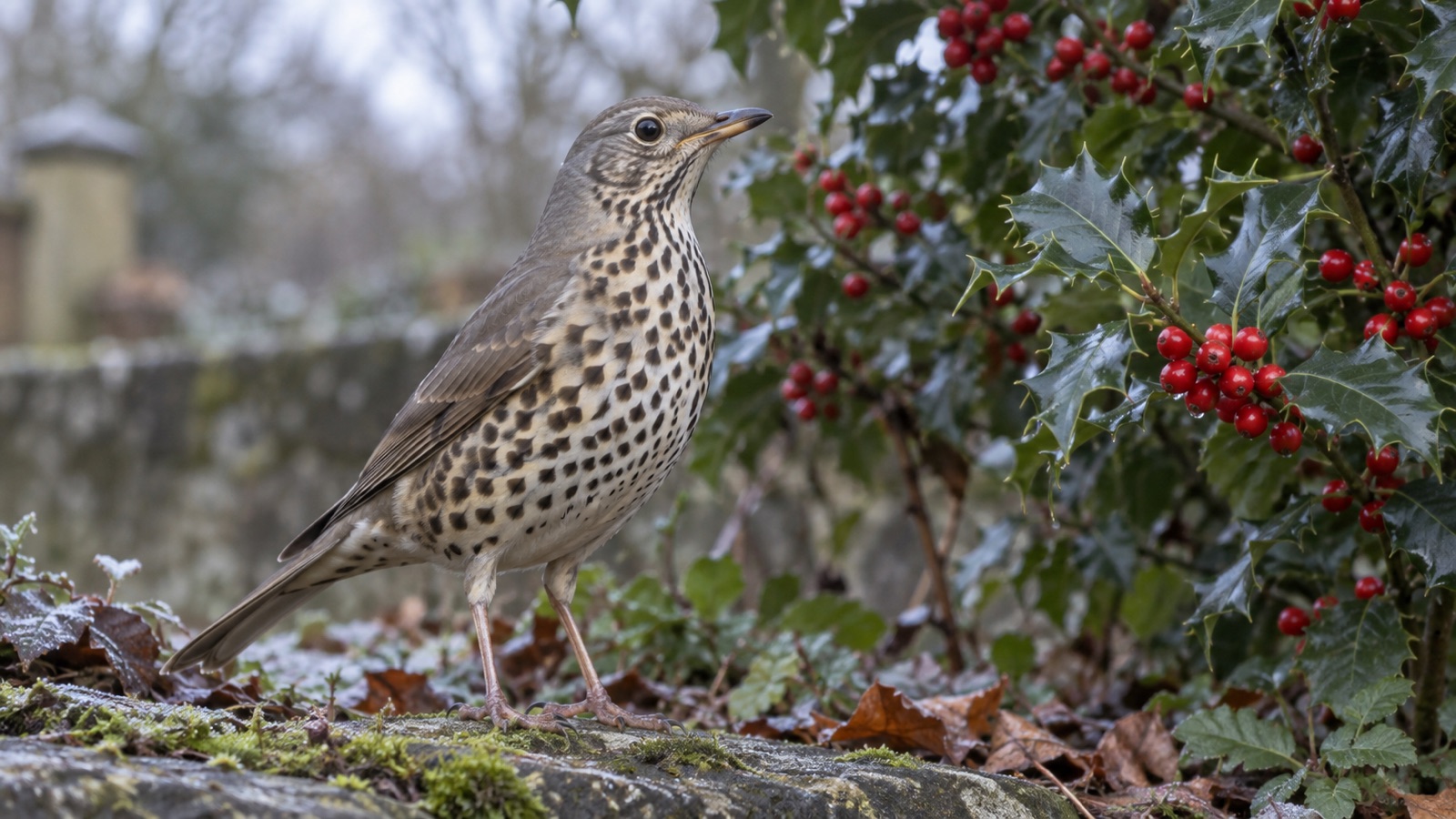
What do mistle thrushes eat? Invertebrates such as worms and insects, and fruit and berries when available. In winter, one may defend a holly or rowan tree against other thrushes. The RSPB species profile describes that berry guarding as well as the bird's upright, powerful stance. A berry-rich tree can be a more convincing reason for a visit than any shop-bought feed mix.
The species is on the UK's Red List of conservation concern, according to the RSPB. That does not mean every individual needs a garden handout. Keeping mature fruiting trees, healthy borders and safe feeding habitat is more useful than making an exposed station where birds congregate around wet food.
How do you tell a mistle thrush from a song thrush?
The mistle thrush is larger, longer-winged and cooler grey-brown, with bold dark spots on a white breast. It often stands erect on a lawn, bounds across open ground or perches high in a tree. A song thrush is smaller, warmer brown and has finer, often heart-shaped spots. Compare both species in the RSPB thrush-identification guide rather than relying on a single distant photograph or the illustration above.
Listen too. A mistle thrush gives a dry, rattling call that can carry across a garden as it flies. Its song can sound fluty, but it does not typically repeat short phrases in the distinctive song-thrush fashion. Size and voice together are stronger evidence than spots alone.
Why does one guard a holly tree?
A loaded berry tree is a valuable winter food supply. The RSPB account describes mistle thrushes chasing off other birds that approach holly or rowan. You might see it stationed near the top and hear its rattling alarm before it flies after a blackbird or winter visitor. That behaviour is normal, not a sign the other birds are harmed or that you need to intervene.
Leave berries available through winter when possible. If you must prune, consider the food and shelter being removed, and never disturb an active nest. The RSPB natural-food guide gives planting ideas that support a wider range of birds and insects.
Would it use a fruit feeder?
It may investigate offered fruit, but do not assume a large, wary thrush will perch on a small hanging holder. The fruit-feeder guide compares ways to secure a modest apple or pear portion and remove it before it rots. Use one only if it is stable, accessible to the bird and easy for you to clean. Our winter-thrush food advice explains how to place fruit without building a permanent flat feeding surface.
Avoid adding sweetened or salted kitchen scraps. Remove fruit when it begins to spoil and clear fallen food that could attract pests. A mistle thrush may ignore your offering while using a natural berry crop nearby; that is not a failure to be solved with more products.
Does it need seed or suet?
Ordinary seed tubes are not a sensible first purchase for a mistle thrush. The bird's natural foraging and fruit use differ from a small finch's feeder habits. If you already feed seed to other birds, follow the BTO's current seasonal window: November–April for seed and peanuts, with a May–October pause. This is a whole-garden disease precaution, not a claim that mistle thrushes need those foods.
Fresh shallow water is a more broadly useful provision. Change it daily and position the bath safely. Stop supplementary feeding if sick birds are present and follow the BTO hygiene guidance for food, water and the surrounding area.
Where might you see a mistle thrush?
Look across lawns, orchards, parks and gardens with substantial trees, especially at the top of a berry-bearing tree in winter. The RSPB notes its use of open woodland and hedgerows too. A bird that chooses a distant tree may still be using your local area. Watch quietly rather than placing fruit closer to a window or cutting cover to improve a view.
Is the mistle thrush bigger than a blackbird?
Yes, though a distant view can distort size. Use the heavy spotting, cool upperparts, upright posture and rattling call together.
Will fruit guarantee a visit?
No. Natural berry trees, local territories and season determine visits. A small clean fruit offering is optional, not a way to replace habitat.
Helpful products
An optional way to secure fresh fruit
This holder is for a small, removable fruit portion, not a reliable mistle-thrush attractant. Keep berry-rich shrubs and trees where possible.
Burgon & Ball Sophie Conran apple feeder
Best for: A firmly secured small fruit offering in winter
A decorative hanging heart-shaped metal holder designed to secure an apple for garden birds.
Keep in mind: A mistle thrush may ignore a hanging holder; berry-bearing shrubs are the stronger habitat choice.