Seasonal feeding
Feeding garden birds in autumn
What UK garden birds need in autumn: the October seed pause, when to restart in November, fresh water, natural berries and a clean feeding setup.
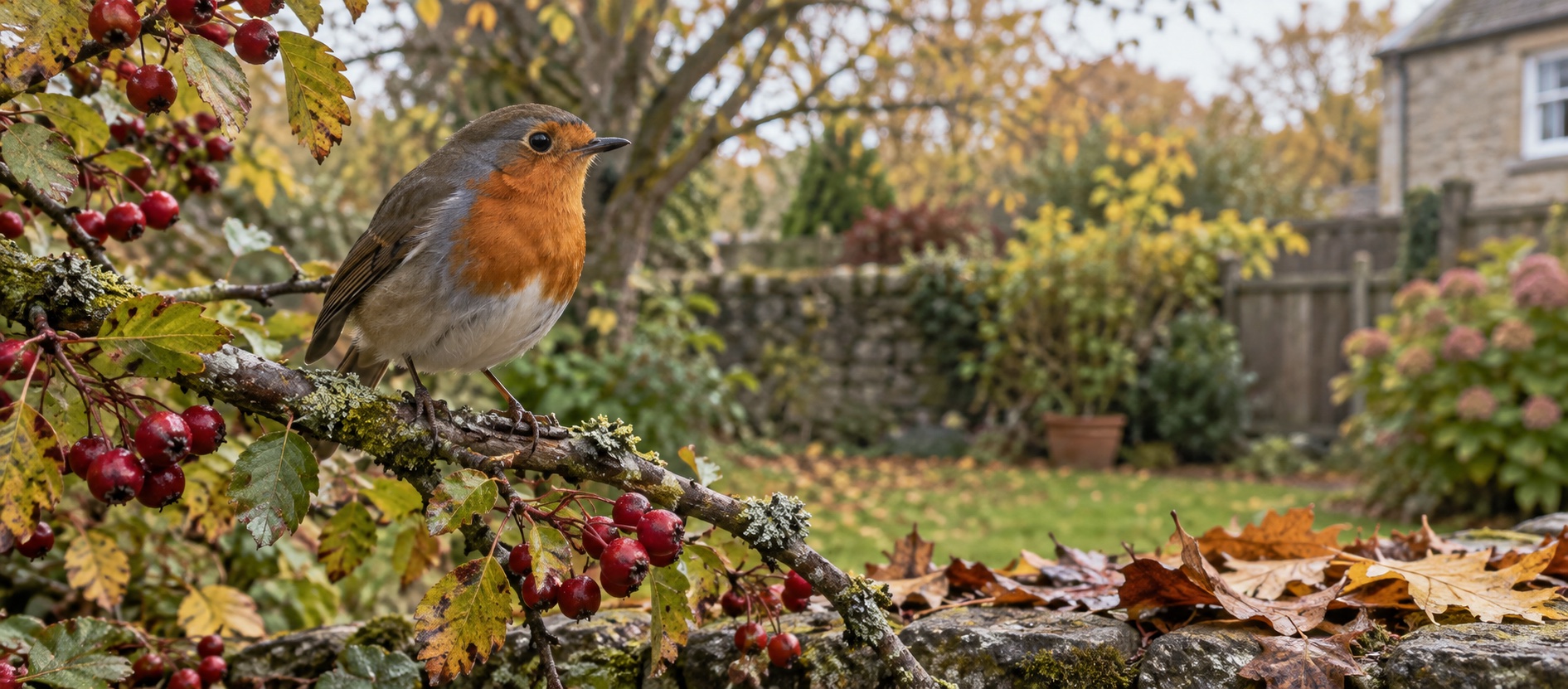
The current seed-and-peanut pause includes all of October.
Clean and dry stored feeders before the 1 November restart.
Natural berries, seedheads and water remain useful in autumn.
When should you start feeding garden birds in autumn? For seeds and peanuts, the current RSPB advice and BTO guidance set 1 November as the restart date. September and October remain within the May–October pause. Small amounts of suitable mealworms or suet can be offered sooner if kept fresh and clean, but natural berries, seedheads and water are excellent autumn support too.
September and October: don't rush a quiet feeder
Some gardens have fewer feeder visitors in early autumn while natural food is abundant. That is not automatically a problem to solve with more purchased food. BTO Garden BirdWatch research documents seasonal changes in garden use. Leave berrying shrubs and seedheads where safe, keep water available, and watch what birds are doing before changing the setup. Our seedhead guide explains which plants can stay standing.
If you continue with a little permitted supplementary food, use contained, cleanable equipment and remove leftovers before they spoil. Rain and falling leaves can quickly foul a bowl or feeder. Our prolonged-rain guide deals with persistent wet weather rather than the seasonal calendar.
Get ready for the 1 November change
Take stored feeders apart. Wash old residue from the tube, ports and base, follow suitable disinfectant directions where appropriate, rinse and let every part dry. Check the hanger, drainage and fixings. Do not refill a mouldy feeder or mix new food with old. The BTO hygiene guidance recommends regular cleaning and small, fresh amounts.
When November starts, choose one food and one contained feeder first. Fill only enough for birds to eat within a day or two and observe. Increase gradually if turnover is reliable. Use rigid mesh for whole peanuts and remove retail netting from fat balls. The winter-feeding guide covers the full cold-weather routine; our restart page answers the date question directly.
An autumn garden is more than a feeder
Hawthorn, rowan and other fruiting plants may feed birds directly, while leaf litter supports invertebrates. Blackbirds and visiting thrushes can use fallen fruit that is still sound; remove rotten piles that create a hygiene or pest problem. Do not prune an occupied nest. Read the berry-shrub guide if you are planning next year's planting, and the winter-thrush guide for fruit use later in the season.
Keep a shallow water source topped up daily and clean the vessel at least weekly. Place it where you can reach it even when the path is wet or slippery. That simple routine continues through winter.
Autumn checklist
- September–October: no seeds or peanuts under current guidance; continue water, natural food and hygiene.
- Before November: clean and inspect feeders, check a small food pack's storage and expiry, and choose a safe location.
- From 1 November: begin with modest fresh fills, clear spill and establish weekly cleaning.
- Whenever a bird looks unwell: pause supplementary feeding and check current official disease advice.
Autumn FAQs
Can I start seed feeding in October when it turns cold?
The current seasonal advice still runs through 31 October. Put the effort into fresh water, natural garden food and a prepared clean feeder; restart seed on 1 November unless official advice changes.
Why did my garden birds disappear in September?
Birds may range elsewhere when natural food is plentiful. Check for other causes such as disturbance or a dirty feeder, but do not assume a temporary dip means an emergency. Our quiet-feeder guide helps distinguish the possibilities.
Helpful products
Prepare a clean autumn setup
A brush can help clean stored feeder tubes. A small fat-food pack is an option where portions stay fresh; neither is a reason to restart seed before November.
Jacobi Jayne long bird feeder cleaning brush
A long-handled natural-bristle brush made for reaching inside bottle-shaped and tubular bird feeders.
Best for cleaning the length of feeder tubes. Drawback: a smaller detail brush may still be useful around ports and threads.
RSPB fat balls (six-pack)
A small pack of six suet balls made with a blend that includes wheat flour, ground peanuts and seeds.
Best small pack for modest demand. Drawback: it contains peanut and cereal ingredients and is not suitable where those need to be avoided.