Wet-weather feeding
How to keep feeding birds during prolonged rain
Keep UK bird food safe in wet weather: rain guards, small dry portions, feeder drainage, wet-food removal and seasonal feeding rules.
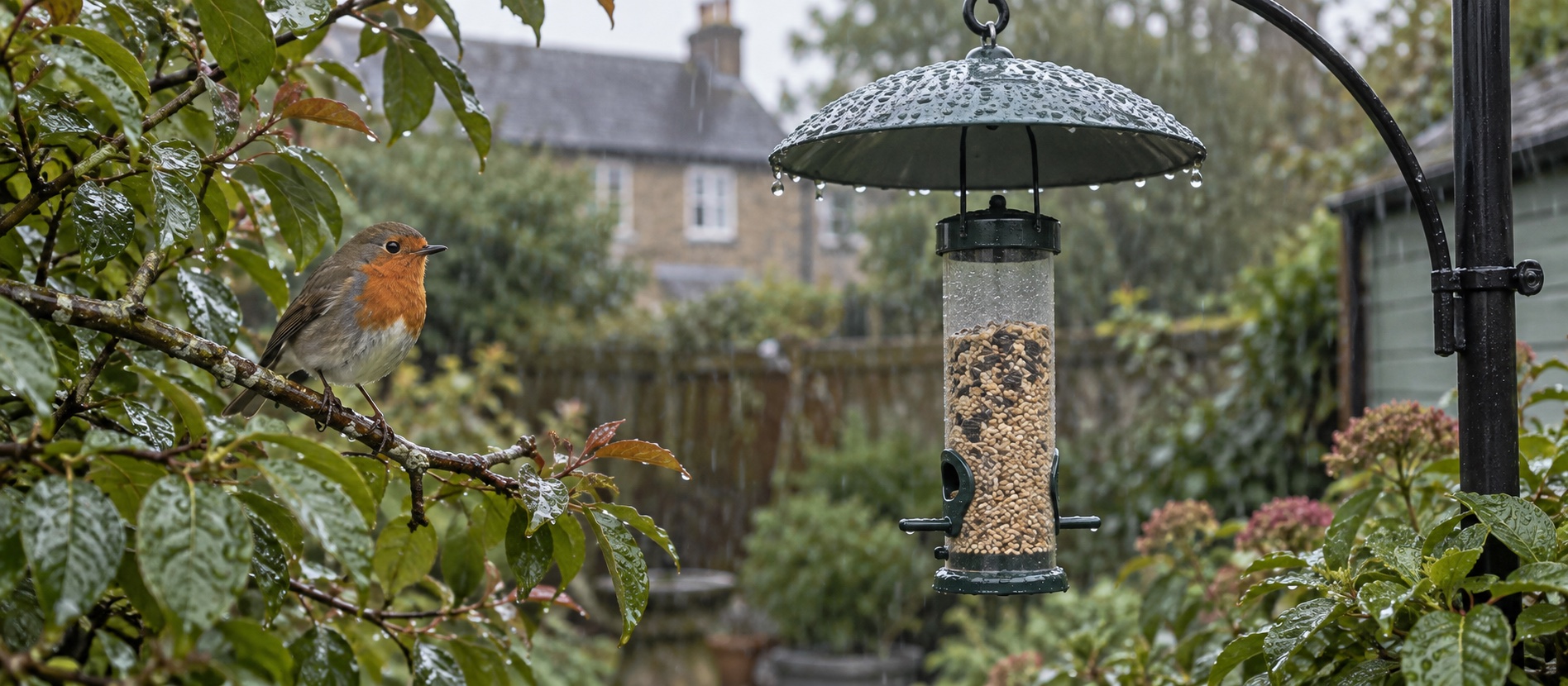
Wet or mouldy food must be discarded, not dried and reused.
Check the feeder base, ports and spill zone after heavy rain.
Choose sheltered placement without creating a hidden cat approach.
Can you feed garden birds during prolonged rain? Yes, if the food stays sound and you can keep the equipment clean. Use a contained feeder with working drainage, fill it lightly, check it after rain and discard anything wet, clumped or mouldy. A rain dome can help but cannot guarantee dry food in driving rain. If the feeder repeatedly floods, pause feeding until you fix the position or equipment. Also follow the current RSPB seasonal guidance: seeds and peanuts are paused from May through October.
Find where the water enters
Water can run down the hanger, enter under a loose lid, blow across open ports or collect in a blocked base. Inspect each point while the feeder is empty. Check that drainage holes are open and that the feeder hangs level. If a cap no longer seals or a base traps old food, cleaning or replacement may be more effective than an accessory. Our wet-seed troubleshooting guide follows the water route step by step.
A dome should project beyond the feeder's ports, sit securely and still allow you to remove the feeder for washing. It will not stop wind-driven rain from reaching a tube sideways. Sheltering a feeder under dense branches can also create a cat ambush point or make cleaning awkward. Choose a position with an open view and access for daily checks; see where to put a feeding station.
Change the portion before changing the hardware
Fill only enough for birds to take before the next weather check. Food in a large reservoir can sit damp for days even if the top looks dry. Do not pour new food over old; empty the tube, brush the base and refill only once it is dry. The BTO hygiene guidance recommends small fresh amounts and removal of uneaten food. Our portion guide helps size a fill without guessing.
During the November–April seed period, a dry, contained seed feeder may be practical. During May–October, do not switch to seeds simply because rain has reduced insect activity: the current pause still applies. Small fresh portions of suitable mealworms or suet may be an option if you can monitor them. If not, fresh water and natural shelter remain useful without leaving spoiling food outside.
After a soaking: a five-step reset
- Empty the feeder completely and discard wet, sour-smelling or clumped food. Do not put it into another feeder.
- Check ports, tube seams and the base for trapped residue; dismantle it for a full wash if needed.
- Clean and disinfect according to current guidance and the product label, rinse thoroughly, and let all parts dry.
- Clear fallen food below the station so it does not become a damp feeding patch for birds or rodents.
- Rehang in a better position or with a suitable guard, then restart with a smaller portion and check after the next shower.
For mould or visible contamination, our wet-or-mouldy-seed guide explains when food and equipment should be discarded. If birds appear ill, stop feeding and follow official disease advice first.
Rain FAQs
Will a rain guard keep every feeder dry?
No. Its fit, feeder shape, wind direction and intensity of rain all matter. Inspect the food after heavy weather rather than trusting a dome alone.
Can I dry wet bird seed in the oven?
Do not try to salvage wet or mouldy food. It can spoil inside the feeder before visible mould appears. Dispose of it, clean the equipment and fix the source of water.
Should I leave food out when no birds visit in bad weather?
No need. Remove uneaten food before it deteriorates. A clean, empty feeder is safer than one filled only in case visitors arrive.
Helpful products
A guard and a brush for wet-weather upkeep
The rain guard may reduce direct wetting on a compatible hanging feeder; the brush reaches residue inside a tube. Neither rescues food that is already wet or mouldy.
Jacobi Jayne RainAway feeder guard
A tube-mounted rain shield made to slide over compatible feeders with an approximately 2.5-inch diameter body.
Best integrated guard for a compatible tube feeder. Drawback: it is not universal and the feeder must be dismantled sufficiently for installation.
Jacobi Jayne long bird feeder cleaning brush
A long-handled natural-bristle brush made for reaching inside bottle-shaped and tubular bird feeders.
Best for cleaning the length of feeder tubes. Drawback: a smaller detail brush may still be useful around ports and threads.