Practical advice
Contains affiliate links
Why leaving seed heads helps garden birds
See which seed heads to leave, what birds may find on them and when to cut back a wildlife-friendly border.
Leave a few sound stems after flowering.
Avoid pesticide use around the insect-rich border.
Cut back gradually, not in one autumn sweep.
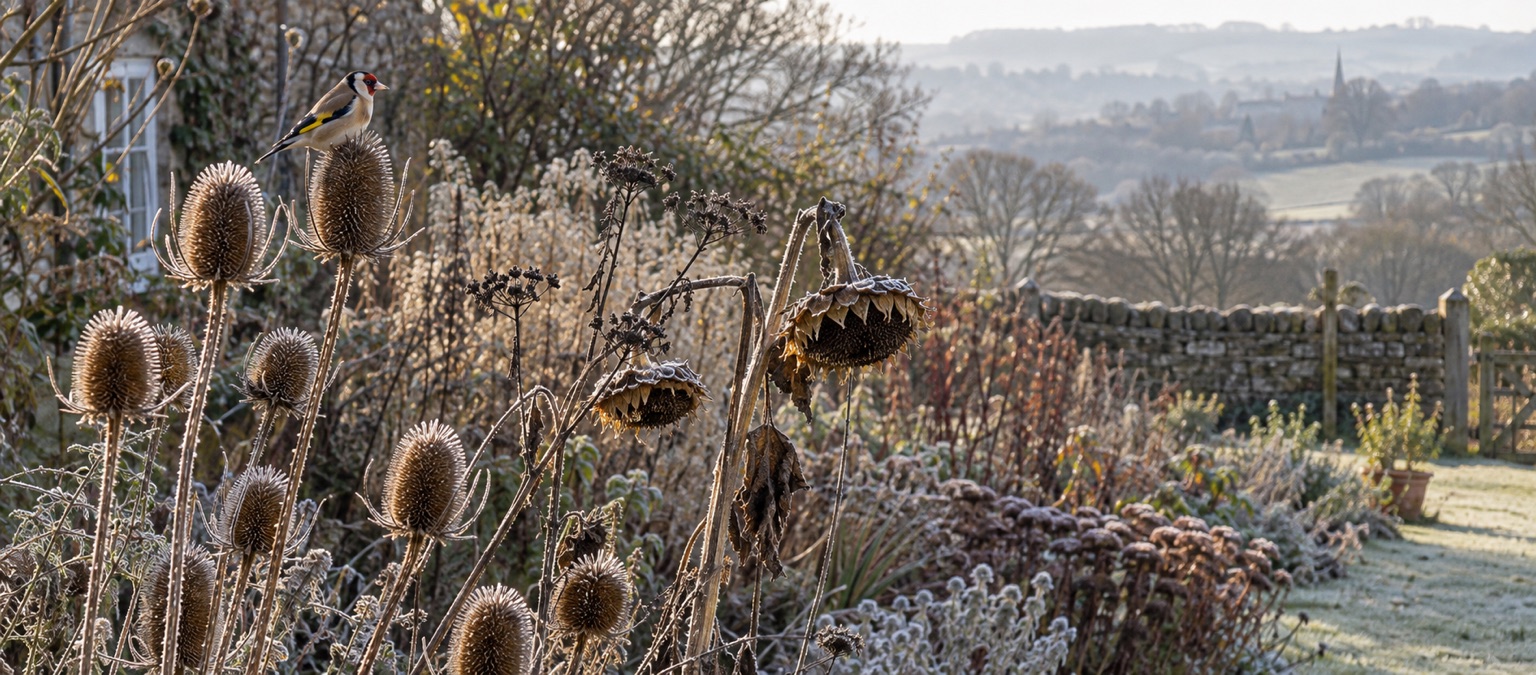
Leaving seed heads standing can help garden birds because the dry flower heads hold seeds, while the surrounding stems and foliage harbour invertebrates. A garden border left partly standing through autumn and winter may offer food and cover long after the flowers have faded. It costs nothing, needs no feeder and can look attractive with frost or low winter light.
The RSPB recommends leaving seedheads; the RHS includes the same advice in its bird-friendly gardening guidance. Neither suggests neglecting dangerous, diseased or obstructive growth. The aim is a managed patch of standing plants, not a garden-wide ban on tidying.
Which seed heads are worth keeping?
Sunflowers and teasels are familiar examples, but the best choice is a plant that already grows well in your conditions and has sound stems after flowering. Let a few heads ripen instead of deadheading every bloom. Native and cultivated plants can both contribute; check that any seed mix suits your soil, light and available space.
| Garden situation | Useful approach | Watch for |
|---|---|---|
| Sunny border | Leave selected tall flower heads standing | Stems leaning into paths or loose in winter wind |
| Large container | Grow a manageable flowering mix and retain sound heads | Drying compost and limited root space |
| Existing perennial bed | Cut some stems, leave others until spring | Disease and blocked access |
| Tiny courtyard | Keep one or two pots rather than a wild patch | Safe placement away from glass and cat cover |
Goldfinches may work seed heads, but do not promise a visit from goldfinches or any other species. The insects that overwinter in stems may matter even when no bird is visible. For a fuller planting plan, see native plants for garden birds.
How to make the border useful in winter
Choose a patch you can observe and maintain. Let flowers finish, then leave a proportion of sound stems; avoid tying everything into a dense bundle that birds cannot access. Keep pesticides out of this patch where possible. A nearby shrub or mixed hedge gives birds cover while they move between plants.
You need not scatter purchased bird seed over the bed. That can create a damp, dirty feeding patch and attract unwanted visitors. Natural seed heads are part of a different approach from a managed feeder. Read how to feed birds naturally without feeders for that distinction, or our winter-feeding guide if you choose to offer supplementary food.
When should you cut them back?
There is no single date that suits every plant or garden. Keep useful stems through winter where safe, then cut back progressively as new growth requires space. Check first for active nests and other wildlife. Put suitable cut stems in a quiet garden corner for a while rather than immediately shredding every hollow stem; some insects shelter inside. Dispose of genuinely diseased plant material according to appropriate garden guidance instead of returning it to the border.
On a balcony, wind and falling debris matter. Use stable pots placed within the railing and trim stems that could become hazards. The balcony guide has the practical siting checks.
Frequently asked questions
Will leaving seed heads make the garden messy?
It can look intentional if you keep a defined patch, a clear path edge and sound upright stems. You can cut back the rest of the border while retaining the most useful heads.
Do I need to buy special seeds?
No. Start with plants already growing in your garden. If you have only paving, a suitable pot mix can create a small flowering patch, but it will take time to establish and may not produce a meaningful bird seed crop in its first season.
Helpful products
If you are starting with pots
A pot-friendly wildflower mix may help establish a small flowering patch. It is not a ready-made winter bird-food product; check which plants germinate in your conditions and let suitable heads mature.
RSPB wildflowers for pots seed pack
A seed mix intended for pots, including bird's-foot trefoil, self-heal, poppy and other flowering plants that can support small-space wildlife.
For a suitable sunny container, not a guaranteed bird-food crop. Check sowing directions, light, watering and whether each species suits the setting.
Seedball Urban Meadow — 20 wildflower seed balls
A container-friendly wildflower seed-ball mix intended to add flowers and insect habitat in a small outdoor space.
For soil-filled pots or a suitable garden bed; the maker says one pack can cover three to five medium pots. It is not guaranteed bird food, and the mix needs appropriate light and care.