Practical advice
Contains affiliate links
How to make a rented garden bird-friendly
Create portable bird habitat with pots and clean water while avoiding permanent changes you have not been allowed to make.
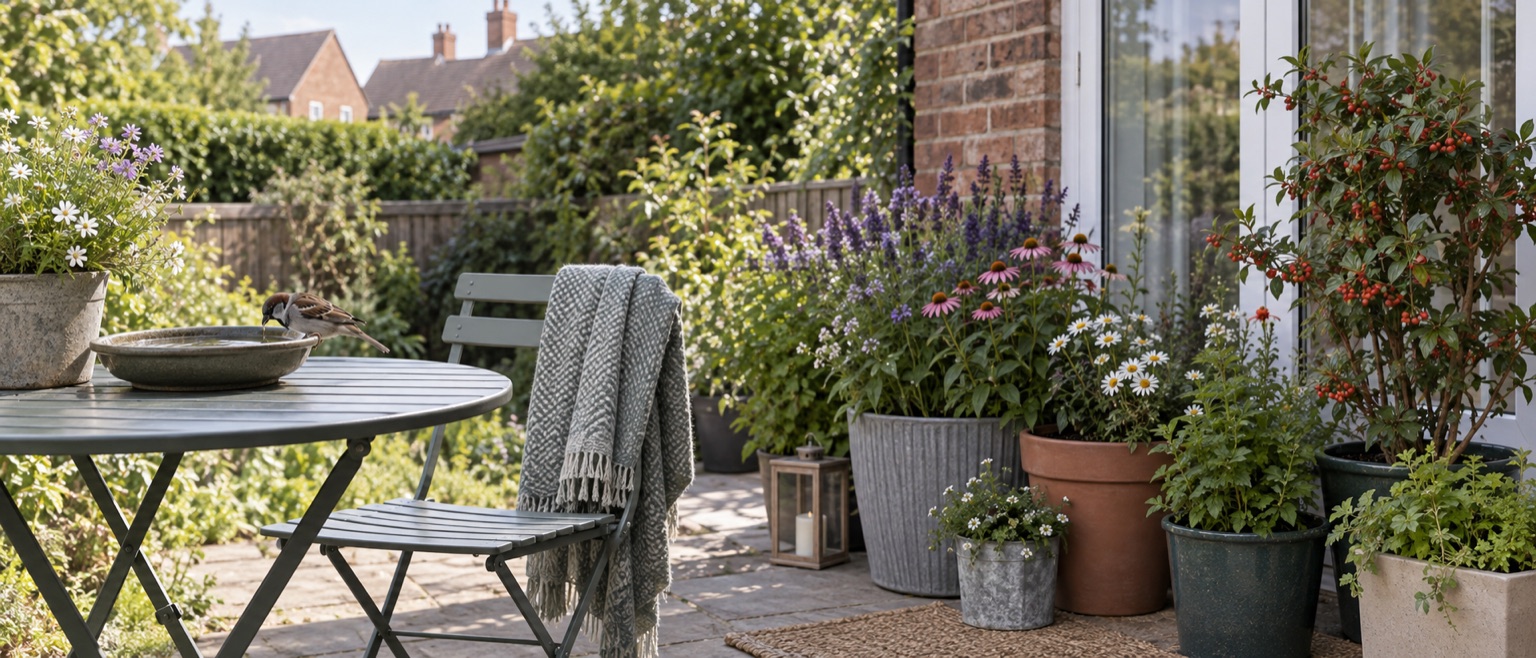
Start with movable containers that fit the light.
Keep all water and equipment easy to clean.
Ask before fixing anything to walls or railings.
A rented garden can be bird-friendly without digging a hedge or drilling a wall. Moveable pots, a suitable shrub, insect-supporting flowers and clean water are a sensible starting point. Check the tenancy and any building or management rules before changing a boundary, fitting brackets or placing heavy items on a balcony. The practical limit is the actual light, floor space and load-bearing surface—not the fact that you do not own the property.
The RHS describes containers as useful wildlife habitats, including clusters on patios and balconies. Its renter-focused urban display illustrates how a container garden can move with you. Neither source implies that every balcony can take a large tree or pond: keep the design proportional.
Begin with what you can take with you
Arrange several pots together rather than scattering identical little planters across a paved area. Use plants suited to the light: a sunny patch may support more flowering choices, while a shady courtyard calls for shade-tolerant plants and a different expectation of seed production. A shrub in a suitably large container can add height and cover, but will need watering and root management.
| Space | Portable first step | Check before adding more |
|---|---|---|
| Paved patio | Group pots and a stable shallow water dish | Drainage, sun and cat access |
| Small rented lawn | Leave a defined edge a little longer | Permission for any permanent planting |
| Balcony | Containers kept securely inside the railing | Weight, wind and building rules |
| Shared courtyard | Agree a small common area with the owner or manager | Access, maintenance responsibility and neighbours |
Our small urban garden guide helps place the elements; the balcony guide adds above-ground safety checks.
Plant for insects and natural food
A pot-friendly wildflower mix can bring flowers and insects to a paved area. It is not instant bird food and it must suit the season and container. Let some seed heads mature if safe, then keep the stems through winter where practical. See why leaving seed heads helps birds.
If you have permission and enough ground, a shrub may eventually supply fruit and cover. Otherwise keep planting moveable; there is no need to buy a 15-sapling hedge pack for a six-square-metre patio. The native-plant guide distinguishes planting projects by space.
Water can be more useful than another fixture
A stable shallow dish is easy to move, but it still needs a clear, cat-aware position. Change the water daily and clean the container thoroughly at least weekly. The RHS advises shallow water; our bath-placement and cleaning guides cover the routine. Do not put a heavy water vessel on a shelf, rail or suspended bracket whose capacity you cannot establish.
If you choose a feeder, use the current seasonal feeding guidance, and position it so food does not spill onto a shared neighbour's area. A garden can still be worthwhile without one; read natural feeding without feeders first.
Leaving the property without leaving a problem
Plan who waters pots when you travel, where excess water drains and how you will remove the setup at the end of the tenancy. Do not allow standing water to stagnate or food to accumulate. Photograph and document any agreed permanent changes, and ask the responsible person before planting into the ground or attaching hardware. This is practical care, not tenancy-law advice; your agreement controls what you may do.
Frequently asked questions
Can I hang a feeder outside a rented flat?
Only after checking the building's rules, secure fixing and the area below. A free-standing pot-and-water setup inside the space may be simpler and safer.
Is a balcony too small for birds?
Not necessarily. Flowers, cover and water can be useful even in a small space, but visitors depend on the surrounding habitat. Do not crowd a balcony or overload its railing to chase a particular species.
Helpful products
Optional portable additions
Reuse containers and a safe saucer first. These options suit a pot-based planting patch and a stable, shallow water position; confirm that the surface can carry the filled bowl.
RSPB wildflowers for pots seed pack
A seed mix intended for pots, including bird's-foot trefoil, self-heal, poppy and other flowering plants that can support small-space wildlife.
For a suitable sunny container, not a guaranteed bird-food crop. Check sowing directions, light, watering and whether each species suits the setting.
Seedball Urban Meadow — 20 wildflower seed balls
A container-friendly wildflower seed-ball mix intended to add flowers and insect habitat in a small outdoor space.
For soil-filled pots or a suitable garden bed; the maker says one pack can cover three to five medium pots. It is not guaranteed bird food, and the mix needs appropriate light and care.
Jacobi Jayne AnyPlace ceramic bird bath
A low ceramic dish with sloping sides, a stated 35cm diameter and 1-litre capacity.
For a wide, low water dish on a stable surface. Its listed 35mm overall height is not a measured water depth; check grip and usable shallows before filling.