Practical advice
Contains affiliate links
How to create a bird-friendly garden hedge
Plan a mixed hedge for shelter, flowers and fruit, then plant and manage it without disturbing nesting birds.
Measure the mature boundary, not just today's gap.
Mix cover, blossom and fruit rather than one fast grower.
Check for nests before every major cut.
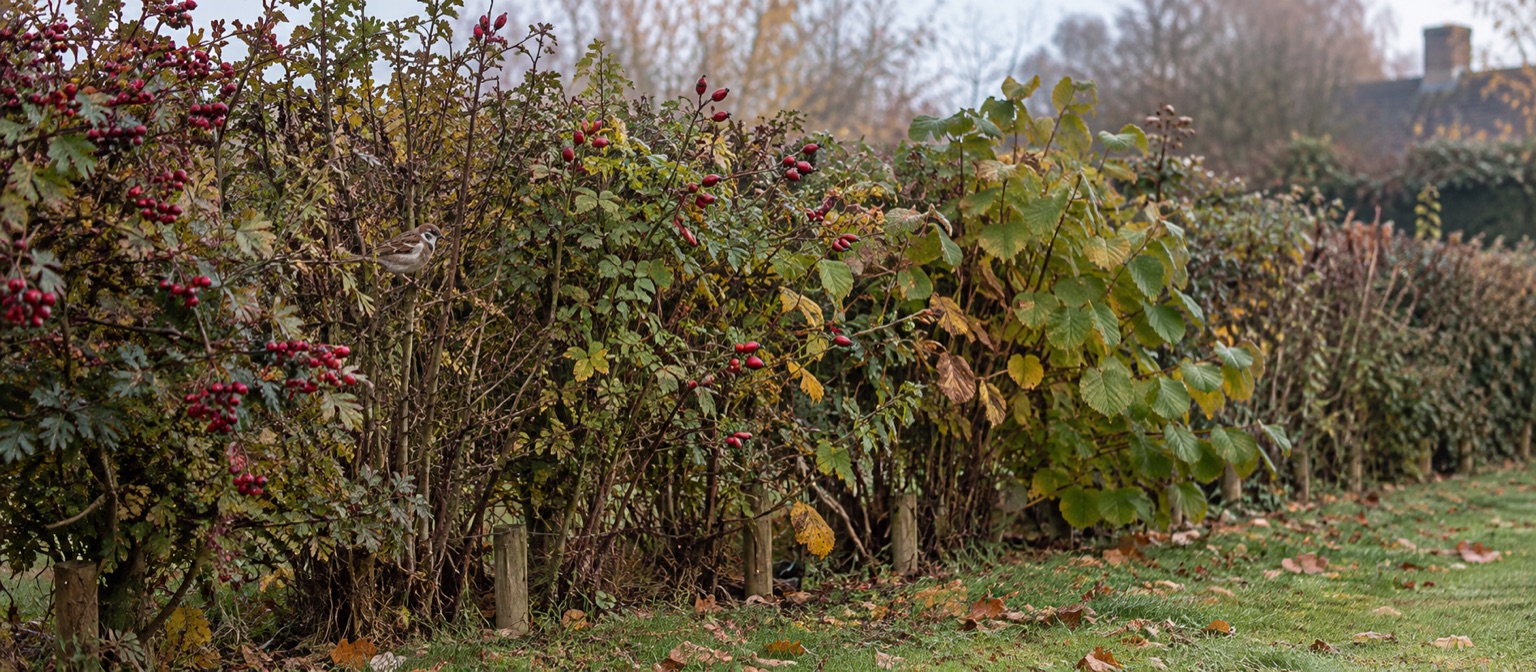
To create a bird-friendly hedge, plant a mix of shrubs that can grow dense enough for shelter, flower for insects and produce fruit later in the year. A line of tiny saplings is only the beginning: the benefit comes as the hedge establishes, thickens and is managed with wildlife in mind. If your boundary is very narrow, a single suitable shrub or climber may be more honest than promising a full hedge.
The Woodland Trust describes hedgerows as food, cover and connecting habitat. The RHS recommends berrying hedges for garden birds. Their value is not just the berries you see: insects, protected perches and nesting opportunities all count.
Plan the boundary first
Measure length and, more importantly, how far growth can extend without blocking a path, neighbour's light or access for maintenance. Check soil drainage, sun, buried services and whether you own or may alter the boundary. Do not plant right up against a structure simply because the saplings are small today.
| Site question | Why it matters |
|---|---|
| Is there enough width? | A repeatedly shaved, thin hedge offers less shelter and fruit |
| Is the boundary yours to alter? | Tenancy, ownership and neighbour permissions may affect planting |
| Will thorns obstruct access? | Hawthorn and dog rose need sensible setbacks from narrow paths |
| Can you water new plants? | Bare-root stock needs establishment care, especially in dry spells |
| Is the soil wet or compacted? | Plant choice and preparation need to match the conditions |
Our native-plant guide helps identify candidate shrubs. The berry-shrub comparison explains which choices might supply fruit, though no mix guarantees berries every year.
Choose a mix and plant carefully
One verified option is the Woodland Trust's standard pack of 15, listed as three each of hazel, dogwood, hawthorn, crab apple and dog rose. It is described for about three metres of hedge, but use the supplier's current spacing and planting directions rather than treating a generic spacing rule as universal. The mix is not designed for pots and may be too large for a small city courtyard.
Bare-root planting is generally a dormant-season task. Order only when the ground and your schedule are ready, and do not plant into frozen or waterlogged soil. Protect roots from drying while you work, plant at the appropriate depth for each specimen, firm and water as directed, then keep the line weed-free enough to establish. Check whether guards are needed locally, but avoid loose plastic that becomes litter. The Woodland Trust's product listing gives the pack details.
Manage for flowers, fruit and safety
Aim for a hedge with depth and a varied edge, not a hard annual cut on every side. The RHS suggests staggered cutting so berries remain on part of a hedge. What works depends on species, size and boundary obligations. Inspect carefully for active nests before pruning; do not rely only on a calendar. Never cut or damage a nest in use or being built.
Keep any bird bath or feeder in a position where birds have an escape route but cats cannot wait unseen directly beside it. Our cat-safer garden guide covers that balance. A hedge alone does not make an unsafe feeding spot safe.
If there is no room for a hedge
Use a compact shrub, climber or grouping of containers and leave seed-bearing flowers where safe. The small urban garden guide shows how to create layers without a boundary planting; renters can start with portable pots.
Frequently asked questions
How soon will birds use a new hedge?
They may perch in it early, but dense cover and fruit take time. Establishment and neighbouring habitat affect what visits; avoid treating one quiet season as failure.
Is hawthorn alone enough?
It can form a useful hedge, but a suitable mix may extend flowering and fruiting opportunities. Choose species that fit the soil and space rather than adding variety for its own sake.
Helpful products
A specified five-species mix
The standard Woodland Trust 15-sapling pack is a practical starting point for a suitable in-ground boundary. Check its current composition, planting instructions and delivery season at the retailer.
Woodland Trust standard hedge mix — 15 saplings
The specified pack combines hazel, dogwood, hawthorn, crab apple and dog rose, giving a boundary a range of flowers, fruit and cover as it matures.
For a suitable in-ground boundary with room for a hedge; this is not a balcony or container pack. Confirm the mix and site suitability before ordering.
F&G Supplies mixed native hedge — 10 bare-root plants
A smaller mixed bare-root hedge pack. The listing names hawthorn, blackthorn and other possible native species, but the exact mix may vary.
For a suitable in-ground boundary, not pots or a balcony. Check the supplied species, delivery timing and eventual hedge size before ordering.