
Garden bird guide
Waxwings in the UK: winter sightings, food and identification
Recognise a waxwing, understand unpredictable winter arrivals, and see why fruiting trees—not a seed feeder—are the best reason to watch your garden.
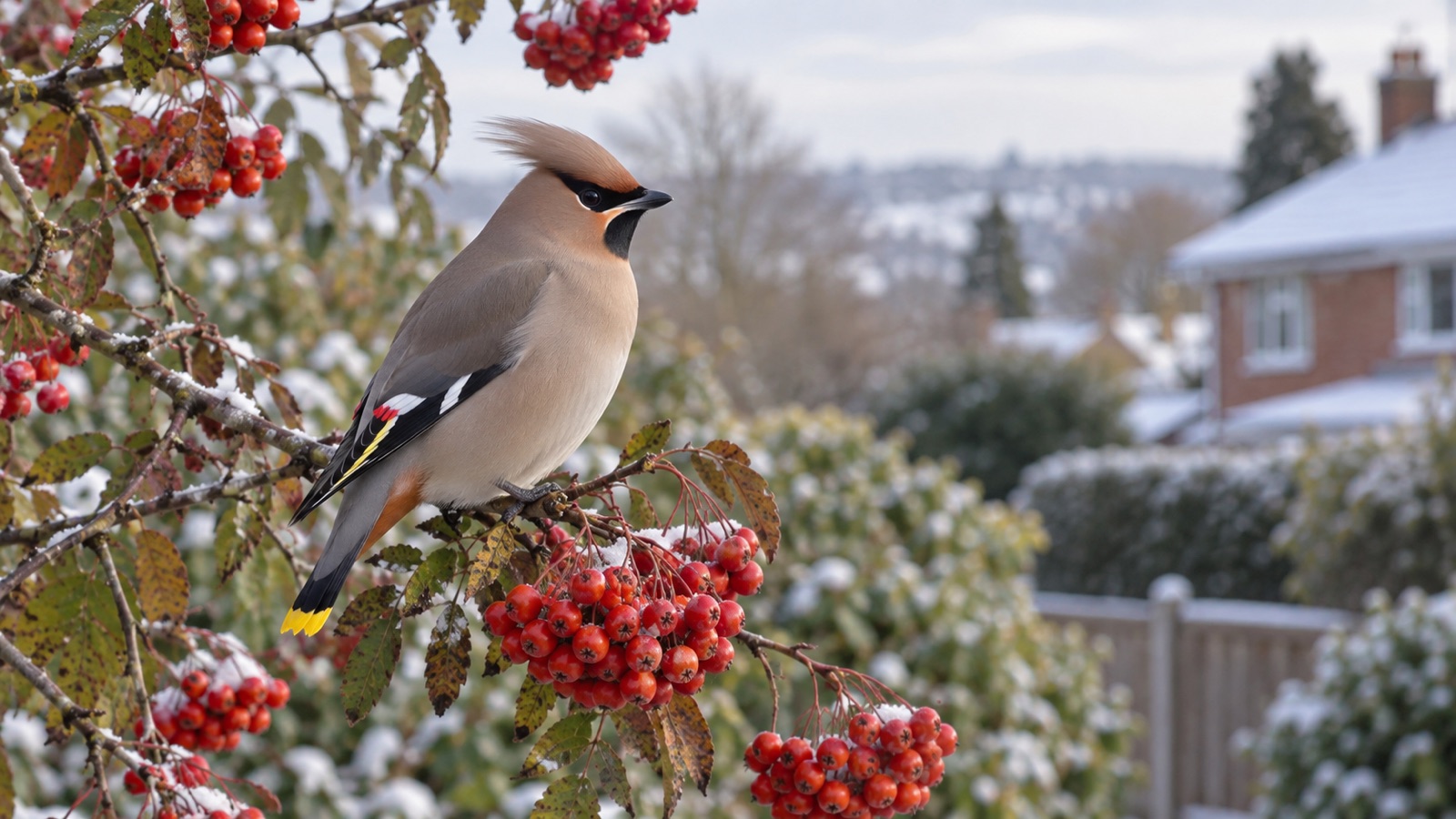
What do waxwings eat in Britain? Berries and other fruit dominate the winter sightings most UK gardeners are likely to see. A waxwing may strip a rowan or hawthorn before moving on with its flock. The RSPB waxwing profile explains that they do not breed in the UK and that winter arrivals can vary enormously. A stocked seed tube is not the reason these birds appear on a suburban street.
If a neighbour reports waxwings nearby, look at fruiting trees rather than rushing to buy specialist food. A tree loaded with berries can bring them into view for a short spell, while a bare garden may not see them at all. The RSPB natural-food guide helps with longer-term fruiting-plant choices.
How can you identify a waxwing?
It is a plump, roughly starling-sized bird with a conspicuous swept-back crest, a black mask through the eye, a dark throat patch and a yellow tip to the tail. Wings show black, white and yellow detail, and adults can have small red wax-like feather tips. Its soft buff colour may look almost pink in low winter light. Compare the combination of marks, not only the crest: a stray tuft of feathers on another bird is not enough.
The bird's call is a high, ringing trill that can reveal a flock overhead. Use the RSPB photographs and sound to check your sighting. Our hero is generated artwork in a photo style, so it is illustrative rather than a field-identification record. Photograph real birds from a respectful distance if you want help with an uncertain report.
Why do some winters have more waxwings?
Waxwings breed far to the north and east of Britain. In some years, food supply and population conditions lead to a much larger winter movement, often called an irruption. RSPB notes that one winter may bring relatively few birds while another brings many thousands. This explains why a garden can seem perfect yet have no sightings for years. You cannot compensate by adding more feeders.
Flocks are nomadic. They may spend a morning at a berry tree and then move to another street or town. Check rowan, hawthorn and ornamental fruiting trees in the wider neighbourhood. Never trespass or crowd a narrow pavement to view birds; a quieter, more distant observation is better for everyone.
Will a fruit feeder attract waxwings?
There is no reliable product method for doing that. Waxwings primarily track natural berry crops. A small hanging apple holder, described in our fruit-feeder guide, is designed to keep an optional fruit portion tidy for birds already visiting; it is not a substitute for a mature rowan and may never be used by a waxwing. Do not put out large piles of fruit that will rot while waiting for a flock.
If you already have redwings or fieldfares in a cold snap, the winter-thrush guide gives more realistic fruit advice for those species. Waxwings are a different kind of seasonal opportunity: leave natural berries, watch patiently and accept that timing is mostly outside your control.
Is water worth offering?
Fresh water is a reasonable garden-wide provision, provided you can change it daily and clean the bath. A shallow stable bowl can help resident birds whether waxwings come or not. The product below is a water option, not a waxwing recommendation in disguise. Our winter-water guide covers freezing conditions and safe placement.
If you also feed seed to other species, follow the current RSPB seasonal guidance: pause seed and peanuts from May through October, clean and move feeders weekly, and avoid flat communal feeding surfaces. That advice remains relevant to the whole garden even though waxwings are not seed-feeder regulars.
Where might you see waxwings near a garden?
RSPB highlights northern and eastern England as productive areas in some winters, but movements vary. Fruit-bearing streets, parks and even supermarket car parks can be more promising than a private garden. A bird passing over your house still counts as an exciting sighting; it need not pose in a tree you own.
Are waxwings common in every UK winter?
No. Arrival numbers vary sharply. Lack of a local sighting says little about your garden's quality.
Do waxwings eat sunflower hearts?
Do not plan a sunflower-heart feeder for them. Berries and fruiting trees explain typical UK winter sightings much better.
Helpful products
Fresh water is useful; a waxwing visit is not promised
A shallow bath can serve many birds already passing through. Do not buy it as a waxwing lure: naturally fruiting trees are far more relevant to this nomadic winter visitor.
Peckish Secret Garden bird bath
Best for: A shallow clean water point for visiting birds
A 60cm-high decorative metal bath with a 40cm-wide bowl, broad base and tool-free assembly.
Keep in mind: This is not a waxwing-attraction product; rowan, hawthorn and other fruiting trees are the real draw.