Garden bird guide
Pied wagtails: what they eat and why they visit lawns
Recognise a pied wagtail's black-white-grey plumage and constantly moving tail, and learn how insect-rich open ground beats a seed feeder.
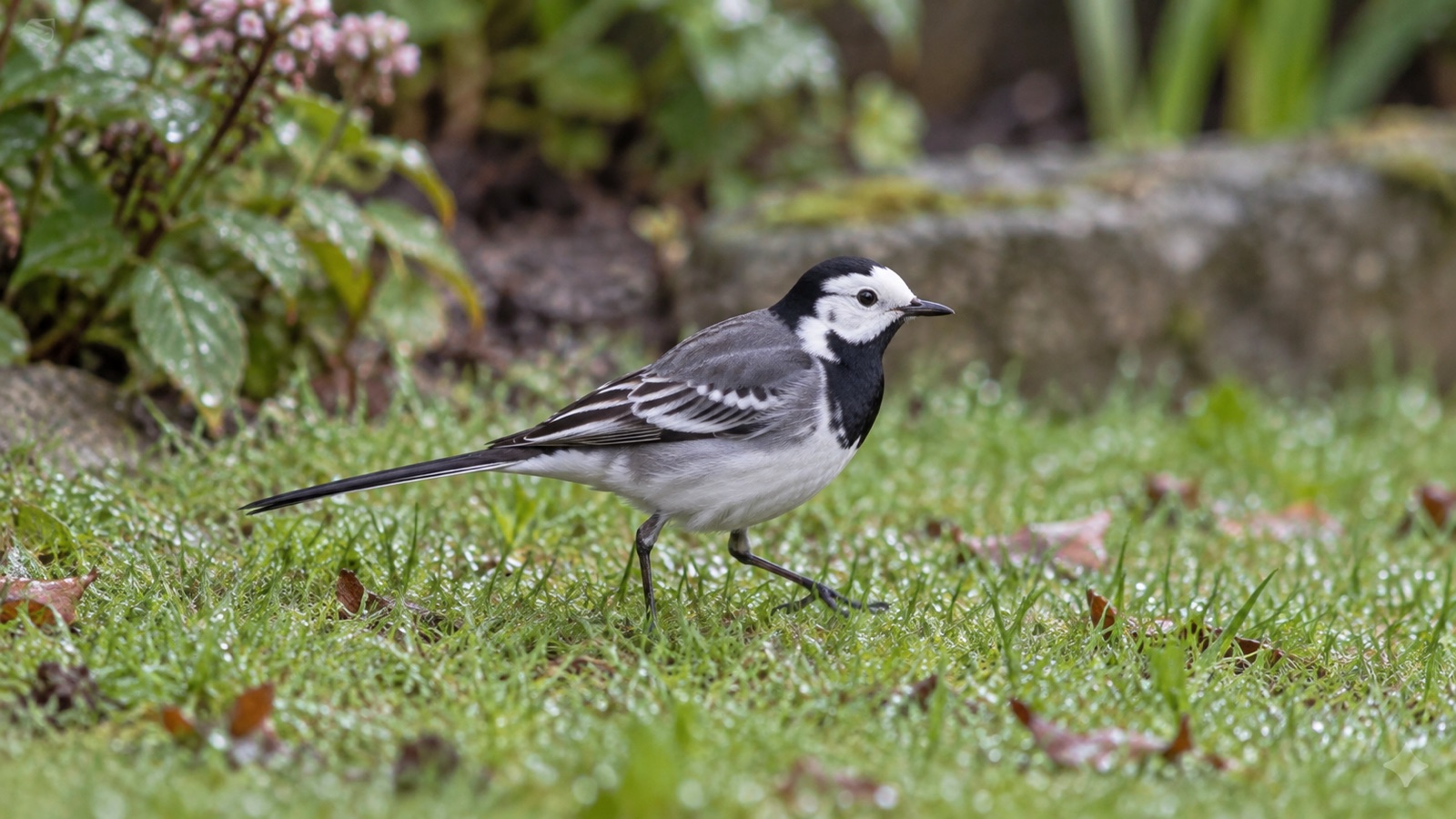
What do pied wagtails eat? Mostly small insects and other invertebrates picked from the ground or caught during short dashes. The RSPB species account describes them running across lawns, car parks and other open places looking for food. A bird following damp lawn edges after rain is probably hunting natural prey, not searching for seed under a feeder.
You can support that foraging by keeping a varied garden with some open ground, insect-friendly planting and access to fresh water. A very short lawn with no nearby cover is not automatically ideal; birds also need safe routes away from cats and other threats.
How do you identify a pied wagtail?
Look for a small, slim, black-white-grey bird with a very long tail that repeatedly moves up and down. It takes quick steps, stops and dashes again. The RSPB profile notes its bouncing flight and calls as well as the distinctive ground-running behaviour. An adult's plumage changes with age and season, so do not insist on one exact black-and-white pattern.
A wren has a tiny round body and short cocked tail, not the wagtail's long mobile one. A dunnock is brown-grey and stays closer to cover. Compare the RSPB's real photographs when light makes a bird look unusually dark or pale; the generated hero is illustrative.
Why is a wagtail walking on my lawn?
It is usually exploiting visible or emerging invertebrates. Damp grass, an insect-rich path edge or even a paved area can provide prey. The bird may return to the same patch after rain and be absent when the ground dries. Resist the temptation to scatter seed to make it stay. A seed pile is more likely to leave waste than to help an insect hunter.
Pied wagtails are adaptable. The RSPB describes them in urban and rural places across the UK, including car parks and open farmland. A garden visit does not imply they nest nearby, nor does their absence mean your garden is failing. Watch their route and avoid cornering them against a window.
Should you put mealworms out?
A few suitable mealworms can be a small optional supplement if a wagtail already forages in a safe, observable place. If you use dried worms, follow the dried-mealworm guide for storage and soaking; a contained mealworm feeder may be useful only if the bird will actually use it. Many wagtails will continue to hunt insects instead, which is a good outcome.
Do not leave worms on a permanent flat tray or scatter food over paving overnight. The RSPB feeding Q&A allows a few short-lived ground mealworms while warning against the broader risks of food left on flat surfaces. Offer a tiny amount, clear what remains by dusk and clean the area. Our guide to cleaning beneath feeders is relevant if other bird food collects where the wagtail walks.
Will a pied wagtail use a seed or fat-ball feeder?
Do not choose one on that assumption. Its slender bill and running behaviour suit insect hunting, not clinging to a seed tube. If you feed other birds, the current BTO seasonal advice still applies to the shared garden: offer supplementary seed and peanuts November–April, pause them May–October, and keep all equipment hygienic. Suitable suet and mealworms may continue in small fresh portions, but that does not make them essential for a wagtail.
If a wagtail is picking up fallen fragments beneath another feeder, improve the spill control rather than regarding the drop zone as a feeding feature. Damp food and droppings do not become safer because an unusual visitor uses them.
What else helps in winter?
Keep a small area of accessible ground if snow permits, and supply fresh shallow water that is changed daily. The winter-water guide gives a routine for freezing conditions. Insect-rich cover around the garden also matters when a bird is not visible on the lawn. If any bird at a feeding point looks sick, stop feeding and follow BTO hygiene instructions.
Why does a pied wagtail wag its tail?
Tail wagging is a normal, conspicuous part of its behaviour and a useful identification clue. It is not evidence the bird is asking for food.
Are pied wagtails only garden birds?
No. They use many open urban and rural spaces. A garden lawn is one of several places where they may find small prey.
Helpful products
An optional small insect-food portion
Offer only what you can see being taken and clear the rest by dusk. A permanent tray or a large bag of food is not needed to support a passing wagtail.
Supa dried mealworms (1L tub)
Best for: A measured portion when natural insects are scarce
Dried mealworms in a reusable one-litre bucket, sized for smaller portions and straightforward storage.
Keep in mind: Do not leave mealworms on a permanent flat tray or scatter them where pests gather.