Feeder buying guide
Best feeders for blackbirds and ground-feeding birds
Compare two hanging fruit holders for winter blackbirds and thrushes, while avoiding high-risk ground trays and recognising the value of natural habitat.
Our recommendations
Food holders worth considering
These two choices lift fruit off a communal ground surface; they cannot guarantee that a blackbird will use them.
Burgon & Ball Sophie Conran house apple feeder
A house-shaped powder-coated steel hanging holder with a leather cord for a single apple or other suitable soft fruit.
Best lightweight metal apple holder. Drawback: the cord and exposed fruit need frequent inspection and the house-shaped frame is decorative rather than protective.
Cast-iron heart hanging fruit feeder
A black cast-iron heart-shaped fruit holder measuring approximately 17cm wide and 22cm high with a 44cm hanging chain.
Best larger all-metal holder. Drawback: it is heavier than the other options and only nine units were shown in stock when checked.
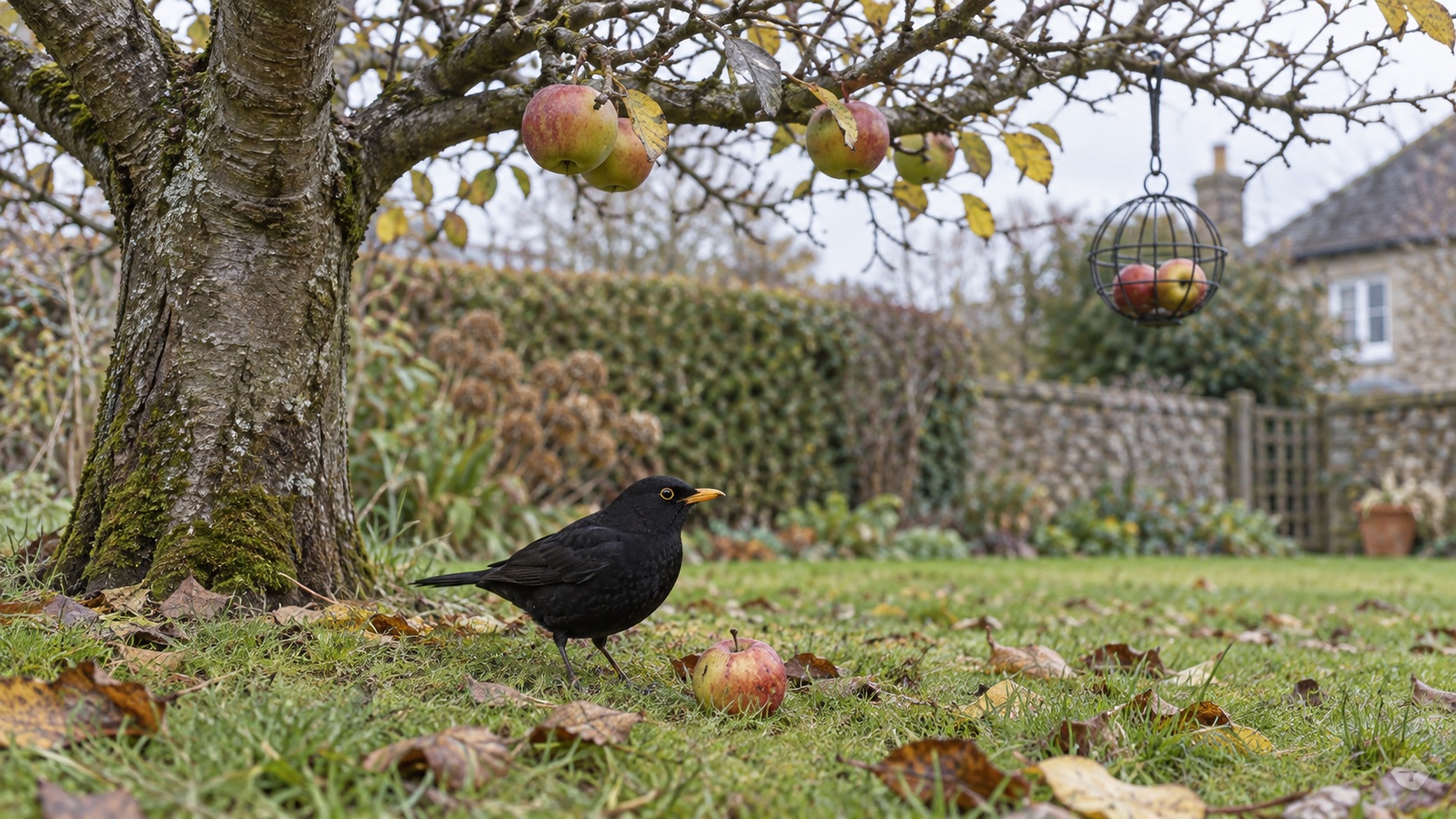
A blackbird turning leaves for worms is doing exactly what it evolved to do. The best response is often better habitat, not a product. BTO notes that blackbirds and thrushes also take berries and windfall fruit, especially when natural invertebrates are hard to find. A modest hanging fruit holder may help where fruit can be offered without creating a flat communal feeding point.
Two fruit holders—and their limits
The Burgon & Ball house-shaped holder is a light metal way to suspend an apple or pear piece. Its open frame lets you inspect the fruit and spike easily. Check that the fruit covers the point, that the leather hanging cord remains sound and that the holder will not swing into a wall. It offers no shelter from rain.
The cast-iron heart holder is heavier and may suit a firm hook where a lighter holder moves in wind. Its weight is also the drawback: it needs a sound support and the metal should be checked for roughness or corrosion. Neither fruit holder will turn every blackbird into a hanging-feeder visitor. Some birds may take fruit from a natural tree but ignore a suspended piece.
We have not added a generic mealworm or suet feeder merely to make the shortlist longer. Blackbirds are not reliable users of small clinging-bird cages, while many mealworm products have a broad trough that current hygiene advice asks us to avoid. If these fruit holders are ignored, improve habitat rather than buying a succession of ill-fitting feeders.
Why no ground tray in this shortlist?
The BTO's 2026 advice identifies ground feeding stations and other flat surfaces as higher-risk shared feeding points and says they are best avoided. RSPB's current guidance also recommends hanging feeders over flat surfaces. A washable tray is still a flat tray. This is why a page about ground-feeding birds can honestly have no ground-tray recommendation.
Where natural fruit falls beneath an apple tree, that is different from repeatedly restocking one fixed tray. Remove mouldy fruit and fallen food, avoid creating a permanent pile and be mindful of pets: grapes, raisins and sultanas are not appropriate where dogs might eat them. See our winter-thrush guide for cold-weather food context.
Make the garden work harder than the feeder
Keep a patch of leaf litter under shrubs, leave berry-bearing plants where practical and avoid broad pesticide use. Blackbirds value moist soil, cover and an escape route. Keep cats from ambush points near any feeding location. A clean, shallow source of water can help, but only provide it if you can refresh it daily and clean the container regularly.
If you do hang food, place it where a blackbird has space to approach and retreat. A low branch may work better than a crowded multi-hook station, provided cats and rodents cannot reach it. Watch for actual use over several days before increasing portions. Our blackbird guide covers natural diet and seasonal behaviour.
Food season and hygiene
Mealworms and suitable suet can be offered in small amounts during May–October. Seeds and peanuts should pause then under BTO/RSPB guidance, returning only in the November–April period. Fruit is best offered fresh, in modest pieces and removed if spoiled. Wash the holder at least weekly, sooner if fouled, and move it regularly.
Common questions
Do blackbirds use bird feeders?
Some use accessible fruit or soft-food holders; many continue foraging on the ground. Individual behaviour varies. Do not buy a narrow seed tube expecting a blackbird to learn its ports.
What is best for a winter blackbird?
Natural berries, invertebrate-rich habitat and a small amount of suitable fresh fruit may be more valuable than a large manufactured feeding station. Provide clean water during freezes if you can maintain it.
Can I feed dunnocks and thrushes the same way?
They differ in size and food choice, and neither is guaranteed to use a hanging product. Start with habitat and observe the actual visitors rather than buying a universal “ground-bird” tray.