Feeder buying guide
Ground bird feeders: safer alternatives for UK gardens
Ground trays and tables are no longer a sensible default. See why current UK guidance favours hanging feeders and what may help low-foraging birds instead.
Our recommendations
Alternatives to a ground tray
These products offer different foods off a repeatedly contaminated flat surface. They do not fit every ground-foraging species.
Burgon & Ball Sophie Conran house apple feeder
A house-shaped powder-coated steel hanging holder with a leather cord for a single apple or other suitable soft fruit.
Best lightweight metal apple holder. Drawback: the cord and exposed fruit need frequent inspection and the house-shaped frame is decorative rather than protective.
Jacobi Jayne Bird Lovers small fat ball feeder
A compact hanging feeder that holds up to three suet balls and has a quick-release base for easier cleaning.
Best small-capacity easy-clean option. Drawback: the plastic construction offers less chew resistance than an all-metal cage.
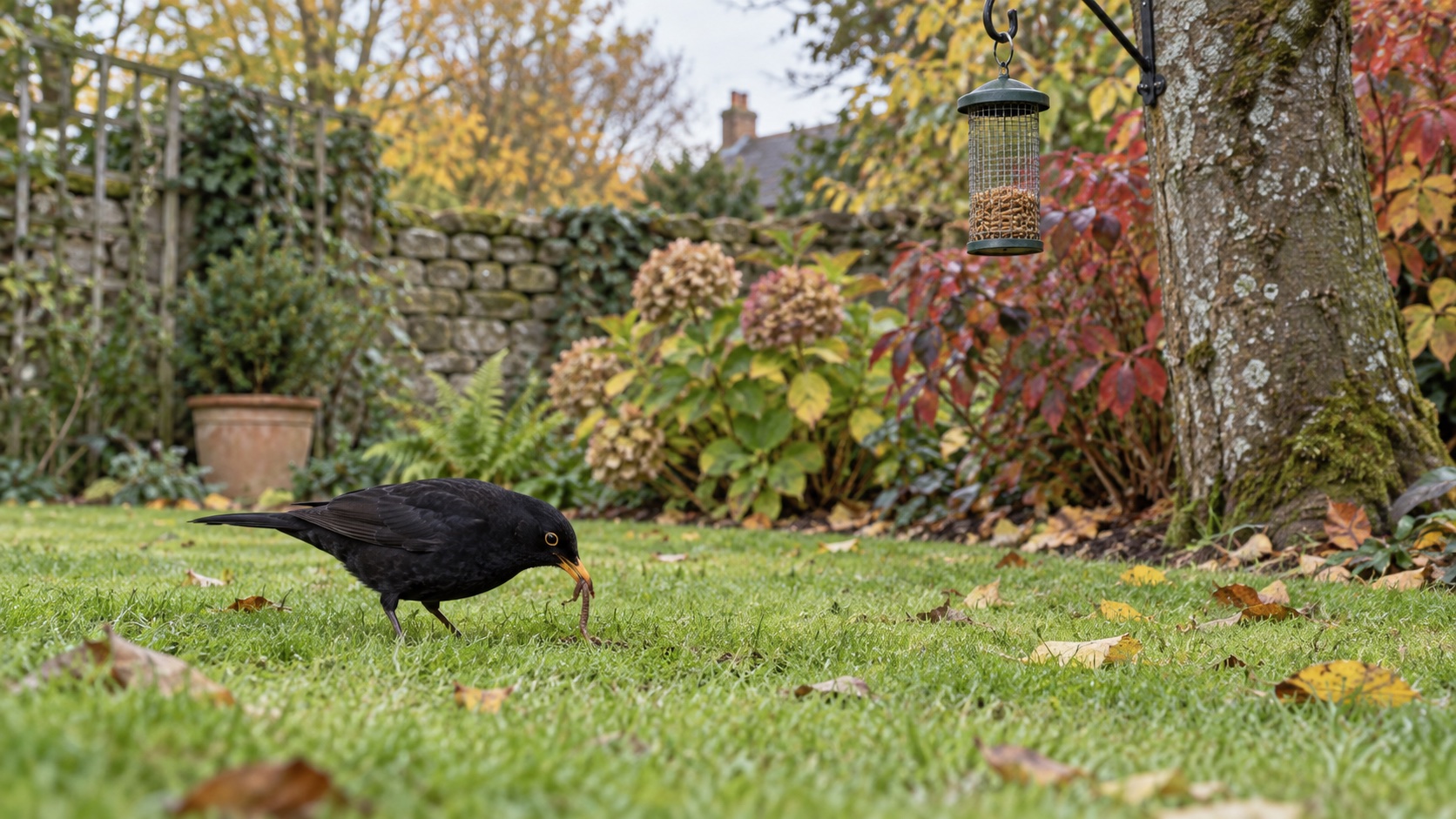
Ground-feeding birds are real; a “ground bird feeder” is not automatically the right response. Blackbirds, robins, dunnocks and thrushes find much of their food among leaves, soil and low plants. The shared tray that seems convenient to us can also concentrate food, droppings and visiting birds in one place.
Why we no longer recommend ground trays
The BTO's 2026 feeding FAQ explicitly includes ground feeding stations among flat-surface feeders. Early field findings suggest higher onward disease-transmission risk than with hanging feeders, so BTO says flat designs are best avoided. The RSPB also advises against bird tables and trays. A removable, cleanable insert does not make a flat communal surface cease to be one.
This is a recommendation about repeated supplementary feeding, not a claim that every bird touching soil becomes ill. Birds still forage naturally on the ground. You can support that behaviour with leaf litter, native plants, damp soil and a garden free of unnecessary pesticides.
What can you use instead?
The Burgon & Ball hanging apple holder suspends one apple or pear. It may be useful for a winter blackbird or thrush that investigates fruit, but a hanging holder is not guaranteed to be accepted. Shield its spike with the fruit, secure it to a stable hook, keep it within reach for cleaning and take away spoiled pieces promptly. Its one-fruit capacity discourages the temptation to leave a large food supply out.
The Jacobi Jayne small fat-ball holder offers unnetted suet balls, not loose mealworms, in a hanging mesh body without a broad food-catching tray. It is an option for a robin that already clings to hanging food; it is a poor choice for a blackbird that only feeds on the soil. Start with one ball, brush residue from the mesh and accept that some birds will ignore it. Neither product is a substitute for natural habitat or an excuse to scatter spillage beneath it.
If a bird will only feed from a broad platform, accepting that you cannot safely recreate its preferred position may be the better decision. Our blackbird-specific guide weighs fruit holders against natural feeding, while the robin guide explains the limits of a small hanging suet holder.
How low should a hanging feeder be?
Low enough to be noticed from a bird's usual route, but high and open enough that cats and rodents cannot reach it. There is no universal centimetre measurement: fence height, shrub density, pets and the feeder's swing all matter. Watch the garden from indoors before fixing a hook. Do not put food where a cat can wait behind cover.
Move feeding positions regularly. Clear scraps and husks beneath them. Put out small amounts only, clean at least weekly and remove mealworms that remain by dusk. Seed and peanuts are for November–April under current seasonal BTO advice; a seed spill on the soil during the rest of the year is not a workaround.
When is no product the best option?
If visiting blackbirds already turn leaf litter for worms or winter thrushes take berries from shrubs, you may have the food source they need. Improve those resources before buying equipment. During freezing weather, safe fresh water and intact fruit on a tree can be more relevant than a permanent feeding station.
If a sick or dead bird is found, stop supplementary feeding and follow BTO hygiene guidance. Do not move a potentially contaminated tray to a new corner and continue filling it.
Common questions
Is a covered ground tray safer?
A roof may keep rain off but does not remove the shared flat food-contact surface. It is not one of our recommendations under the current guidance.
Can I scatter mealworms once in a while?
RSPB allows small amounts of mealworms but asks that leftovers be cleared by dusk. Repeated scattering in one spot is less controllable than a small cleanable hanging holder and may attract other animals.
What if a robin ignores hanging food?
Leave it to forage naturally. A feeder is optional; the bird's refusal is not a reason to move food onto a permanent ground tray.