
Practical food advice
How to choose a seasonal bird food mix
Choose bird food by ingredients and season: winter seed, the May–October pause, small insect and suet portions, and less wasted food.
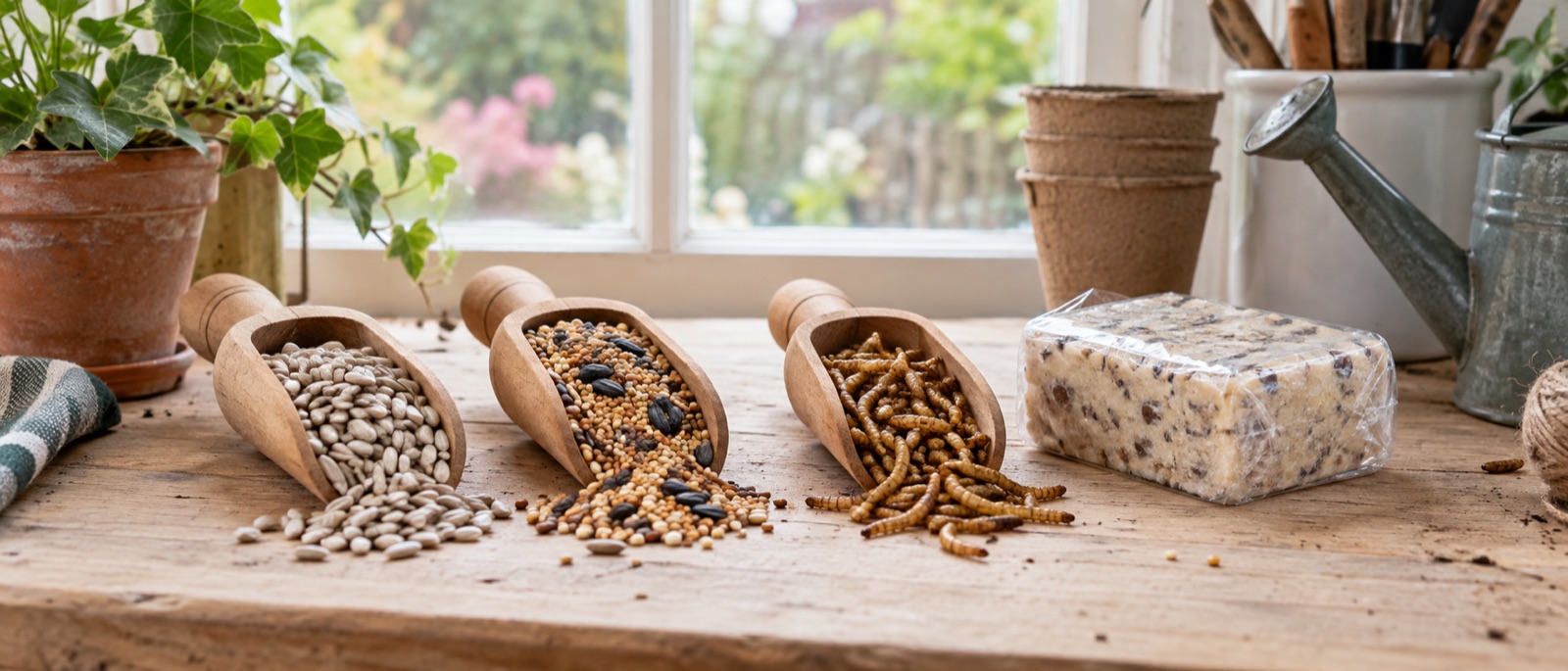
Choose a seasonal bird food mix by its ingredients and the current feeding window, not by a “summer” or “all year” name. From 1 November to 30 April, a small fresh seed mix can suit seed-eating visitors. From 1 May to 31 October, pause seed and peanuts; if feeding, use small separate mealworm or fat/suet portions instead.
The best change is often a smaller, simpler purchase—not a more complicated seasonal blend.
What changes through the year?
| Period | Shopping priority | Feeding decision |
|---|---|---|
| September–October | Check equipment and dry storage before buying seed | Keep the seed-and-peanut pause in place |
| November–February | A modest seed pack or suitable fat format | Match portions to visitors and weather |
| March–April | Avoid stockpiling seed beyond your likely use | Review waste and prepare for the May pause |
| May–August | Natural habitat; small insect or suitable fat food if offered | No seed or peanut provision; watch warm-weather spoilage |
The seasonal distinction comes from BTO's updated feeding FAQs, not a claim that all birds have the same diet. It aims to reduce disease risk associated with concentrated feeding, especially for finches.
Look inside the bag
A recipe labelled winter, high-energy or premium may contain sunflower seed, wheat, millet, peanut pieces, suet pellets and dried insects in varying proportions. Those ingredients do not behave alike in a feeder.
Look at the main food format and particle sizes. Whole grains that your visitors throw out are not good value; tiny seeds that leak through a broad port are not contained simply because the feeder has a roof. Check the full current ingredient label before purchasing, particularly where nuts matter in the household.
Adding a few suet pellets to a seed blend does not make it a suet product for the summer pause. Keep a seed mixture within the seed-feeding window. The seed-mix comparison separates wheat-free, nut-free and bulk choices.
Start winter with a small trial
Extra Select No Wheat 1kg is a modest wheat-free seed trial for November onward. Its disclosed peanut granules mean it is not nut-free. The small pack makes it easier to judge acceptance before buying the next size up.
If you already know that sunflower hearts are the only part being eaten, a straight food may be more useful than another mixture. Our sunflower-hearts guide compares sizes, and the black sunflower guide explains the shell-versus-kernel choice.
Keep the trial manageable: one recipe, one suitable feeder, a short fill and a check of the waste underneath. Record what is left, not just how many birds briefly visit.
Fat food is a separate feeder decision
A small suet-cake pack lets you offer a fat format without repeatedly pouring a mixed bag into every feeder. The RSPB mealworm cakes here come as three individually wrapped blocks, not a full season's supply.
They require a compatible rigid holder. Do not crumble a block onto a shared flat surface because the old packet suggests it. A bird that will not cling to the holder may need a different approach, so choose by observed feeding behaviour as well as the recipe.
For food-format details, compare suet blocks and suet pellets. Pellets are not interchangeable with a solid block, and neither is automatically suited to a standard seed tube.
Spring and summer: simplify rather than blend
When the seed pause begins in May, empty, clean and dry seed and peanut feeders. Do not keep them operating with a “breeding” seed mix or a blend topped up with insects.
Small mealworm or fat/suet provision may continue under the current advice, with particular attention to heat and deterioration. If using dried mealworms in spring and summer, soak the immediate portion first and remove uneaten food by dusk. Our live-versus-dried guide covers the handling differences.
Natural insect and plant foods should remain central. A quieter feeder in summer does not mean you must introduce a new mixture to regain the winter visitor count.
Watch the garden, not just the calendar
Weather, neighbouring food sources and the species using your garden affect appetite. Calendar timing determines which supplemental formats to offer, but it does not determine an exact scoop per day.
Reduce fills when food remains. In a cold spell, reassess use rather than assuming every feeder should be filled to the top. The quantity guide and snow-and-ice routine give practical next steps.
A mix that disappears mainly because it falls onto the ground is not being used well. Investigate port size, wind exposure and rejected ingredients before ordering a bulk replacement.
Buying ahead without storing a season's leftovers
Check the best-before and storage instructions on the actual pack. Opened seed needs a cool, dry indoor location, protected from moisture and pests. Label containers so old and new batches do not get mixed invisibly.
Use your recent rate of consumption to estimate the next purchase, but leave room for changing conditions. The lowest advertised price per kilogram may be poor value if you discard half the bag in May. See storage containers for modest and larger options.
Frequently asked questions
Can I use a summer bird seed mix in summer?
Current advice is to pause seed and peanuts between May and October, regardless of the seasonal name on a bag.
Should winter food always include peanuts?
No. Birds can use several food formats. If a mix contains peanuts, check household handling requirements and use it only within the seed-and-peanut window.
Is an autumn mix appropriate in October?
Not if it is a seed or peanut blend under the current pause. Our restart guide explains the 1 November return.
Helpful products
A small seed trial and a separate suet format
These are optional aids to the advice above, not a reason to offer more food than birds will use.
Extra Select No Wheat bird food (1kg)
A 1kg wheat-free mix containing listed ingredients such as sunflower hearts, niger seed and peanut granules.
Best small wheat-free mix. Drawback: it contains peanut pieces and a small bag may not suit a busy winter feeding station.
RSPB mealworm suet cakes (3 × 280g)
Three individually wrapped mealworm suet cakes for trying the block format without buying a large box.
Best smaller block pack. Drawback: the recipe includes peanuts and seeds, so check ingredients and current feeding guidance.