Bird food guide
Black sunflower seeds for birds
Black sunflower seeds or husk-free hearts? Compare shells, feeder fit, visiting birds, manageable packs and current seasonal feeding advice.
Our recommendations
A modest in-husk pack and a husk-free alternative
Start with a manageable pack, check the current label and choose the right feeder before ordering more.
Extra Select black sunflower seeds (1kg)
A one-kilogram bag of in-husk black sunflower seeds for trying a single seed during the November–April feeding season.
Best modest in-husk trial. Drawback: birds discard the shells, so this is not a no-mess alternative to sunflower hearts.
RSPB sunflower hearts (900g)
A small 900g bag of husk-free sunflower kernels, suited to testing demand before buying a larger pack.
Best small starter pack. Drawback: it costs more per kilogram than bulk bags and still needs dry indoor storage.
Use black sunflower seed in a compatible hanging seed feeder during the November–April seed-feeding season. It is not the same as buying salted sunflower snacks for people.
Black sunflower seeds, striped seeds and hearts
| Food | What birds have to do | Main advantage | Main limitation |
|---|---|---|---|
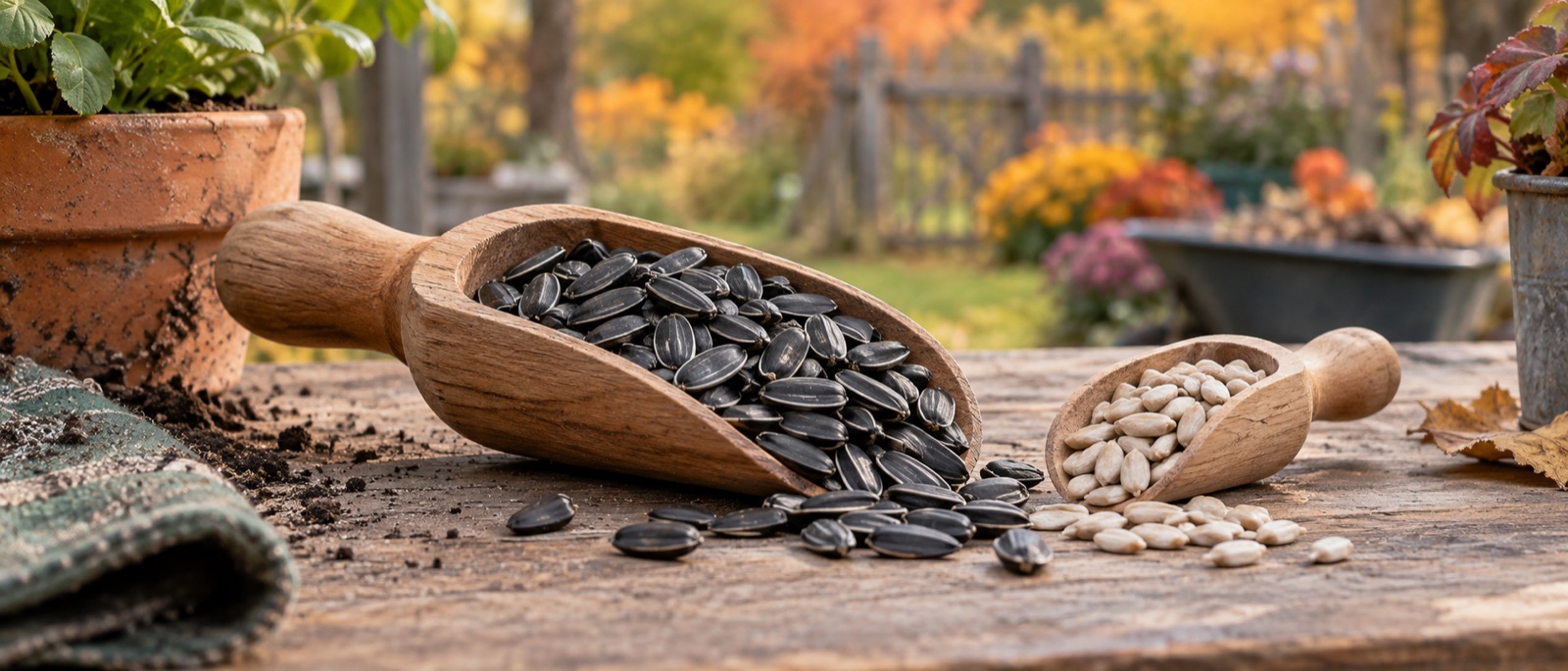
| Black sunflower seeds | Open a relatively thin dark husk | Oil-rich single-seed food | Discarded shells need clearing |
| Striped sunflower seeds | Open a larger, tougher husk | Another in-husk seed format | Harder work for some smaller birds |
| Sunflower hearts | Eat the exposed kernel | Less husk debris and quicker access | Exposed food still needs protection from damp |
BTO's feeding information describes black sunflower as a high-energy food and explains the appeal of hearts. The useful distinction for a buyer is the shell, not a promise that one bag will attract every bird pictured on it.
Which garden birds eat black sunflower seeds?
Tits and greenfinches are familiar sunflower-seed users. Some birds remove a seed and open it elsewhere, so a quick visit may still mean the feeder is useful. Watching only for a bird that stays at the port can underestimate use.
Not every garden visitor handles the husk equally well. If small seed-eating birds arrive but repeatedly drop the whole seed, try a small amount of hearts in an appropriate separate feeder. Our finch-feeder guide explains why nyjer needs different ports, while the greenfinch page includes especially careful disease-aware advice.
Blackbirds and robins are not the reason to buy a large sack of black sunflower seed. Their food preferences and feeding behaviour differ; see food for ground-feeding birds for more suitable options.
A sensible first bag: Extra Select black sunflower 1kg
The one-kilogram pack is a manageable trial of the in-husk format. Its value is the ability to see whether your visitors use it before committing to months of food storage.
Expect shells. This is not a no-mess seed, even if very little edible food is wasted. A cleanable feeder and an accessible area beneath it are part of the purchase. If your only feeding position is above difficult gravel, thick ground cover or decking gaps, husk-free hearts may be more practical.
Use the exact pack size when comparing offers. Similar-looking listings can switch between one kilogram, litres and much larger sacks; the title and selected variant should agree before you order.
When sunflower hearts make more sense
The RSPB 900g pack gives a small husk-free alternative. Choose hearts if cleanup is the sticking point, or if visitors seem to prefer kernels to whole seeds.
You do not need to buy both products in bulk to make the comparison. Try a modest portion, note how quickly it clears and inspect what falls below. Our sunflower-hearts guide covers larger options. For mixtures processed to reduce sprouting, use the no-mess guide; removing a husk and preventing germination are different things.
Choose ports that retain the seed
A feeder must release food when a bird pecks, without simply pouring it onto the ground. Very broad openings can spill whole seeds; a fine nyjer port may not pass a sunflower seed at all. Match the manufacturer's stated food compatibility rather than assuming every clear tube works.
Fill only a short supply at first. If birds take seed from the top but old fragments remain at the base, empty the feeder before refilling. Damp shells and edible fragments can collect together around the ports.
Do not fit a broad catching tray to avoid sweeping. It creates another shared feeding surface. A small easy-clean feeder and a position you can sweep are better starting points.
Season, freshness and storage
Current UK advice is to offer seeds and peanuts from 1 November to 30 April, pausing from 1 May to 31 October. Black sunflower follows that rule, including when a seller describes it as an all-season product. The seasonal-mix guide explains the wider shopping choices.
Store opened food indoors in a cool, dry, sealed container. Follow its best-before and storage label, check for a musty smell or damp clumping, and discard contaminated food rather than sieving it. Do not add oil yourself to imitate claims about enhanced seeds.
Sweep shells and wasted food away, clean the feeder weekly and rotate its position. For the full handling routine, use feeder cleaning advice.
Frequently asked questions
Are black sunflower seeds the same as sunflower hearts?
No. Black sunflower seeds retain the dark shell; hearts are exposed kernels with that shell removed.
Will black sunflower seeds grow under the feeder?
Whole viable seeds can germinate. Do not assume an ordinary in-husk bag is a no-grow product. Spillage control and clearing up remain important.
Can birds eat sunflower seeds sold for people?
Do not offer salted, flavoured or heavily seasoned snack seeds. Buy clearly labelled wild-bird food rather than guessing from a human snack packet.
Should I replace a successful hearts feeder with black seeds?
Not necessarily. If hearts are being eaten promptly and your cleanup is manageable, there is no need to change solely because another product advertises a higher energy claim.