Seasonal feeding
Feeding garden birds in summer
A UK summer bird-feeding routine covering the May–October seed pause, safe small portions, fresh water, heat and feeder hygiene.
Do not put out seed or peanuts during the current May–October pause.
Heat can spoil mealworms and soften suet; smaller portions are easier to manage.
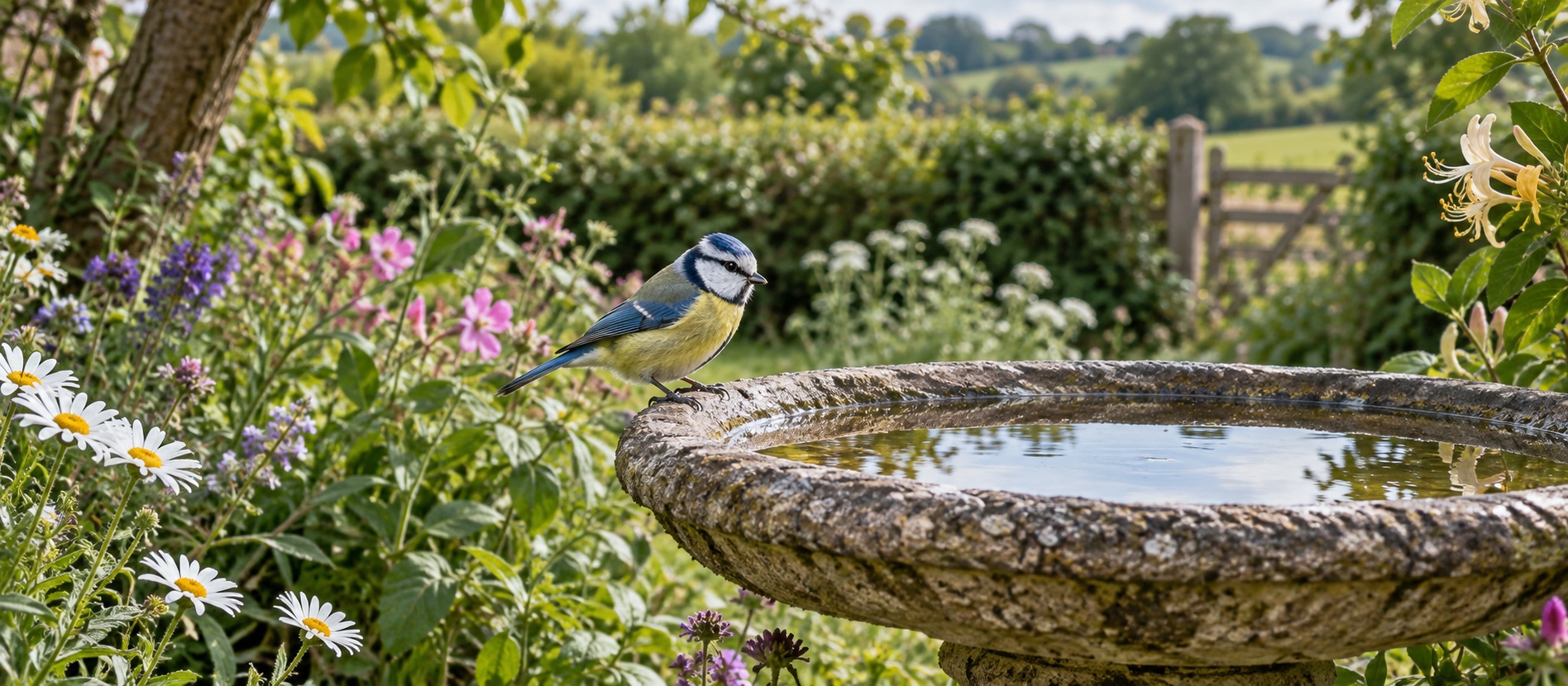
Fresh shallow water may be more useful than another feeder.
Should you feed garden birds in summer? You can, but it is not compulsory and the food choice is narrower under current UK disease advice. The RSPB and BTO advise pausing seeds and peanuts from 1 May to 31 October. If you offer mealworms or suitable suet, keep it to amounts that will be eaten promptly and remove anything softened, wet or stale. A shallow supply of clean water is an excellent place to start.
What can go out in June, July and August?
Small portions of mealworms or appropriate suet may be offered in contained, cleanable equipment. A food that is technically suitable is not suitable in every garden on every day: a hot surface, direct sun or a quiet feeder can make it deteriorate before birds take it. Do not leave a large serving out for the sake of a full-looking feeder. The mealworm guide compares practical serving and storage choices.
Do not use a flat table or tray as a way around the seed pause. Birds congregate there and food can mix with droppings. If illness appears at the feeding point, stop feeding and follow current hygiene and disease advice. The sick-bird guide sets out the first steps.
Keep a reliable water point
Choose a stable, shallow vessel with an escape-friendly edge. Position it where birds can see approaching danger, away from an easy cat launch point, with some cover nearby. Empty and refill with fresh water every day; scrub and rinse at least weekly, and sooner if it is dirty. The RHS advice for garden birds gives the same daily-water, weekly-cleaning baseline.
In a heatwave, move an exposed container into sensible shade if it remains safe and stable, and check it again later in the day. Do not add chemicals to the water. Our heatwave checklist covers what changes when a normal daily refill is not enough.
A five-minute summer routine
- Look at yesterday's food before putting out more; discard residues and check for insects, damp or mould.
- Refill a shallow bath with fresh water and remove droppings or leaves.
- On hot days, check food earlier and remove softening suet rather than leaving it until the weekly clean.
- At least weekly, dismantle and wash any feeder still in use, then rinse and dry it fully.
- Watch the ground below. If leftovers accumulate, reduce the portion or pause feeding.
Let the garden provide more of the menu
Flowers, varied shrubs, seedheads and leaf litter support invertebrates and natural foraging. Avoid broad pesticide use where you are trying to encourage wildlife. Even a compact garden can offer a mix of water, cover and flowering plants. The natural-feeding guide gives options for gardens without a feeder. If you see a feathered youngster on the ground, do not assume it needs food from you; follow our fledgling advice.
Summer FAQs
Will birds become dependent if I stop summer feeding?
Garden birds use several food sources. There is no reason to keep an unhygienic feeder active because you fear stopping it. Clean it, pause if needed and improve natural food and water in the garden.
Can I leave fat balls out during a heatwave?
Only if they remain sound and are taken quickly. Heat can soften or spoil fat food. If it is melting, smelly or unused, remove it; do not try to make a large summer batch last. Our fat-ball guide covers suitable holders.
When do seeds return?
Under current guidance, 1 November. Clean and dry your seed feeder before using it again; the autumn restart guide explains the timing.
Helpful products
Water first, then a manageable food portion
The bath is an option for a garden without safe shallow water. Mealworms are only useful when you can keep portions fresh and clear leftovers.
Jacobi Jayne AnyPlace ceramic bird bath
A low ceramic dish with sloping sides, a stated 35cm diameter and 1-litre capacity.
For a wide, low water dish on a stable surface. Its listed 35mm overall height is not a measured water depth; check grip and usable shallows before filling.
Supa dried mealworms (1L tub)
Dried mealworms in a reusable one-litre bucket, sized for smaller portions and straightforward storage.
Best small reusable tub. Drawback: the listing states volume rather than net weight, so price-per-weight comparisons are limited.