Young-bird safety
How to help fledglings in your garden safely
Found a young bird in a UK garden? Learn when to leave a feathered fledgling alone, when to move it a short distance and when to contact a rescue or vet.
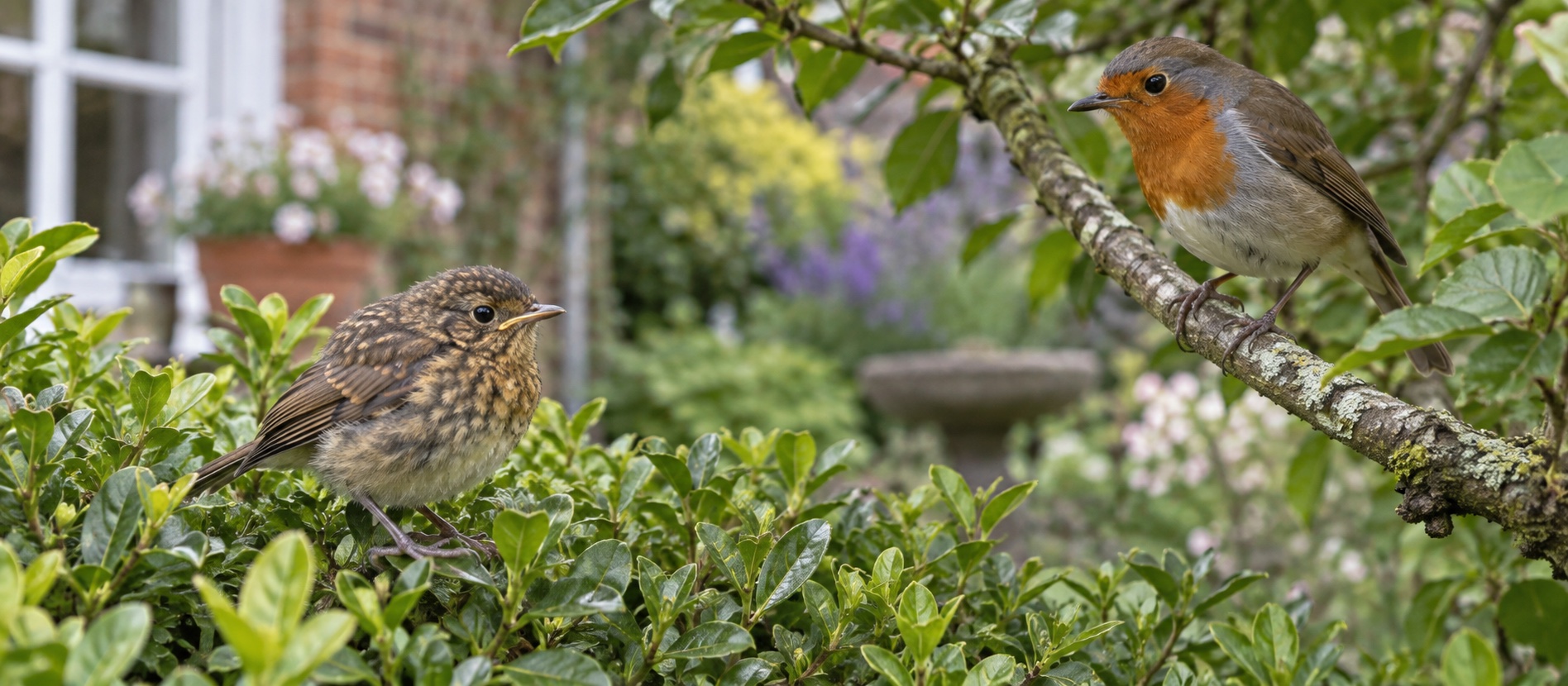
Watch from a distance; parents may avoid returning while people stand nearby.
Keep cats and dogs away and do not offer food or water by hand.
A cat-caught or injured bird needs expert help even if injuries are not obvious.
What should you do if you find a fledgling in your garden? If it is mostly feathered, bright-eyed and hopping or perching, leave it where it is and watch from a distance. Many young garden birds leave the nest before they can fly well; their parents continue to feed them. Keep pets indoors or away from the area. The RSPCA's baby-bird guidance gives the same starting advice. A visibly injured, cat-caught or weak bird is different: contact a wildlife rescue or vet promptly.
First decide whether it is a fledgling or nestling
A fledgling usually has most of its feathers, can grip a perch or hop, and may have a short tail or a pale gape. It may sit quietly on the ground between short flights. A nestling has little or no feather covering and cannot perch; it may have fallen from a nest. Do not put an uncertain bird into a random nest box. Follow RSPCA advice or speak to a rescue if the nest is not safely identifiable and reachable.
Watch from indoors or well back for a reasonable period where safe, rather than standing over the bird. Adults may remain hidden while you are close. Do not take a healthy fledgling inside simply because no parent appears immediately.
If there is immediate danger
If a healthy fledgling is in a road, exposed to a cat or trapped on an unsafe surface, move it only a short distance to nearby sheltered vegetation where its parents can still find it. Then leave the area and monitor from a distance. Keep cats and dogs away; see how to protect feeding birds from cats for longer-term garden changes. Do not move it across the neighbourhood or relocate it to another garden.
If a bird has been caught by a cat, seek expert help even if there is no obvious wound. Contact a wildlife rescue or vet. The RSPB injured-bird guidance explains when professional intervention is needed. Use a suitable ventilated box only if a professional advises temporary containment, and keep the bird quiet and away from pets while arranging help.
What not to do
- Do not force food or water into a young bird's beak. The wrong food or technique can cause harm.
- Do not try to rear it yourself or repeatedly handle it for photographs.
- Do not place food beside an occupied nest to "help" parents; it may draw attention and predators.
- Do not prune or move occupied nesting cover. Active nests have legal protection; see government wild-bird guidance.
Make the garden safer for the next fledgling
Keep existing shrubs and low cover, avoid pesticides that reduce insect prey, and maintain a shallow clean water source where adults can use it. Change water daily and clean the vessel at least weekly. The breeding-season feeding guide explains why natural food and a quiet nest area matter more than extra feeder traffic. A garden safer for birds with a cat covers pet routines and planting.
Fledgling FAQs
Will parents reject a bird I touched?
Brief handling does not automatically cause rejection, but unnecessary handling adds stress and risk. Return a healthy fledgling to nearby safe cover if you moved it, then leave and observe from a distance.
A parent has not appeared. How long should I wait?
There is no safe universal clock: species, weather and your distance affect what you see. If the bird is weak, injured, cat-caught or clearly deteriorating, contact a rescue or vet now. If it is alert and feathered, move away and follow the RSPCA's current observation advice.
Can I give it mealworms?
Do not hand-feed a found fledgling. Its parents have a better chance of supplying the correct diet. Seek specialist advice if you think it is orphaned.
Helpful products
For a safer garden—not an emergency rescue
These optional garden items support future water and insect habitat. Do not delay contacting a wildlife rescue or vet in order to buy anything for an injured bird.
Jacobi Jayne AnyPlace ceramic bird bath
A low ceramic dish with sloping sides, a stated 35cm diameter and 1-litre capacity.
For a wide, low water dish on a stable surface. Its listed 35mm overall height is not a measured water depth; check grip and usable shallows before filling.
Seedball Urban Meadow — 20 wildflower seed balls
A container-friendly wildflower seed-ball mix intended to add flowers and insect habitat in a small outdoor space.
For soil-filled pots or a suitable garden bed; the maker says one pack can cover three to five medium pots. It is not guaranteed bird food, and the mix needs appropriate light and care.