Nesting-season care
Feeding garden birds during the breeding season
UK breeding-season bird-feeding advice: current seed-and-peanut dates, suitable small portions, natural insects, water and how to avoid nest disturbance.
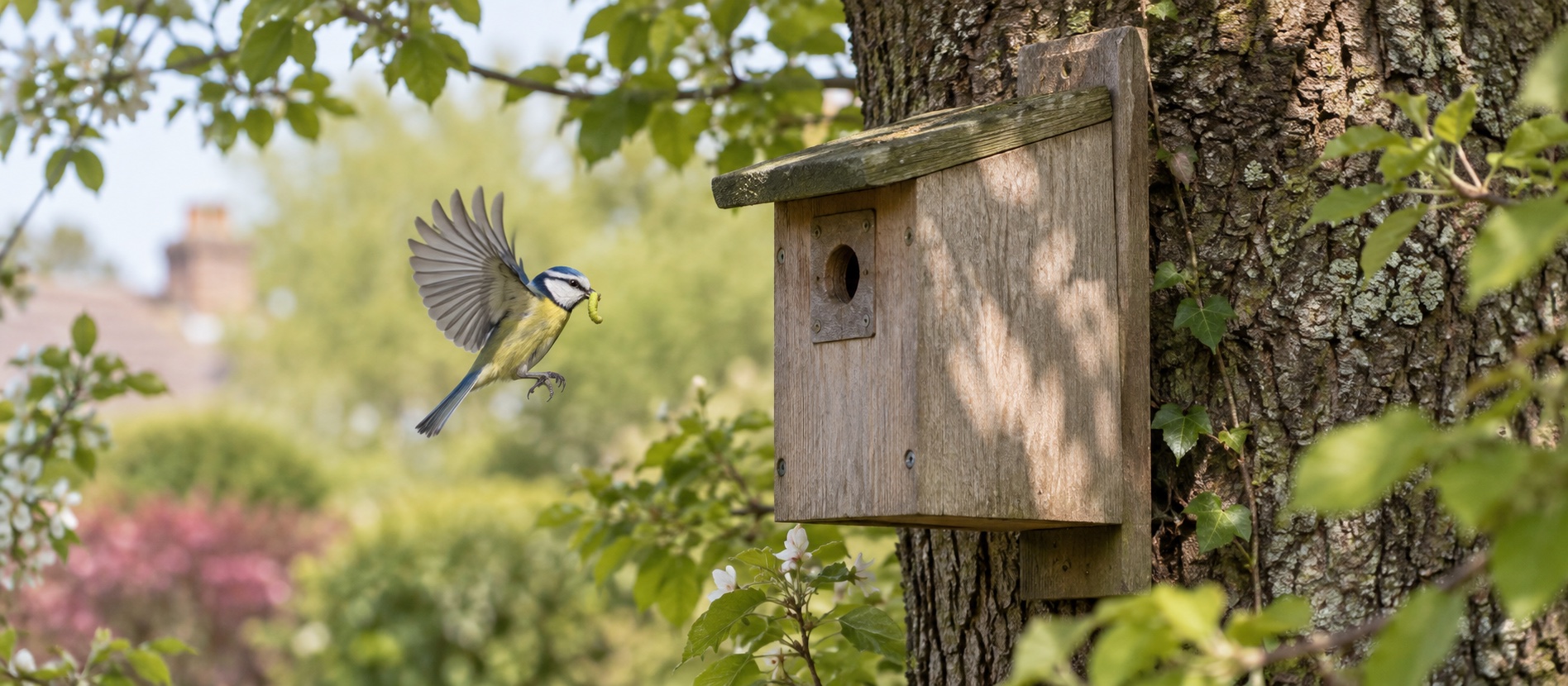
Parents are responsible for feeding their young; do not put food into a chick's beak.
The 1 May seed-and-peanut pause applies through October.
Avoid disturbing active nests or clearing their cover.
What should you feed birds during the breeding season? Put habitat first: flowering plants, invertebrates, safe cover and fresh water. If you continue supplementary feeding, use clean contained equipment and small fresh portions. Under the RSPB's current guidance and BTO's feeding FAQs, seeds and peanuts are paused 1 May–31 October. Suitable mealworms or suet can be offered carefully, but adult birds—not people at a feeder—decide what to bring to their young.
The seed-and-peanut period returns 1 November–30 April under the same current guidance. That calendar boundary does not tell you exactly when a particular species will nest; observe your garden and keep any occupied nest undisturbed.
Why feeding adults is not the same as feeding chicks
Many nestlings need invertebrate prey supplied by their parents. Watching an adult take food from a feeder does not tell you what it will feed a chick, and a product label does not make an item suitable for hand-feeding young birds. Never push food or water into a bird's beak. If you find a young bird, follow our fledgling guide and seek expert help when it is injured, cat-caught or genuinely orphaned.
The RSPB nesting-season advice and later 2026 RSPB feeding update should be read together: older general food lists may predate the newer May–October seed-and-peanut pause. The current seasonal rule takes precedence here.
A careful routine if you keep a feeder active
Offer a small portion of appropriate food in equipment that is easy to wash, away from occupied nests. Remove leftovers before they turn damp or stale; check more often in warm weather. Dismantle and clean feeders at least weekly, rinse them thoroughly and move feeding positions periodically. Avoid conventional flat bird tables where food and droppings mix. If a sick bird visits, pause feeding and consult the BTO hygiene guidance.
Keep a shallow water source available. Replace water daily and clean the bath at least weekly, more often if it is fouled. Position it with an open view and reachable cover, not beside a cat hiding place. Our bird-bath placement guide explains the trade-offs.
Make the garden better for natural prey
Mixed planting, flowering shrubs, a less-tidy corner and reduced pesticide use support insects. Avoid cutting dense cover where a nest may be active. UK government wild-bird guidance explains the legal protection around active nests; if you are unsure whether a nest is occupied, leave the work until you can establish that it is safe. See native plants for garden birds and a bird-friendly hedge for longer-term habitat changes.
Breeding-season checklist
- Keep the May–October seed-and-peanut pause in mind even if a nest is nearby.
- Let adults find and bring natural food to their young; never hand-feed chicks without specialist direction.
- Keep any supplementary portion small, fresh and away from the nest.
- Change drinking water daily and maintain weekly equipment cleaning.
- Check hedges, shrubs and boxes before gardening work; do not disturb an occupied nest.
Is it safe to offer dried mealworms in nesting season?
They can be offered in modest, fresh portions to adult visitors under current advice. Keep them clean and remove leftovers; do not assume they replace the invertebrates chicks need. The dried-mealworm guide covers practical serving.
Should I put a feeder next to a nest box?
No. A feeding point attracts traffic and potentially predators. Keep nesting and feeding activities separate. Nest-box placement advice covers a quieter location.
Helpful products
Optional support for adult birds
A small, fresh mealworm portion may be offered to adult visitors; a shallow bath supplies water. Neither should be placed beside an occupied nest or used to feed chicks by hand.
Supa dried mealworms (1L tub)
Dried mealworms in a reusable one-litre bucket, sized for smaller portions and straightforward storage.
Best small reusable tub. Drawback: the listing states volume rather than net weight, so price-per-weight comparisons are limited.
Jacobi Jayne AnyPlace ceramic bird bath
A low ceramic dish with sloping sides, a stated 35cm diameter and 1-litre capacity.
For a wide, low water dish on a stable surface. Its listed 35mm overall height is not a measured water depth; check grip and usable shallows before filling.