Practical feeding advice
Why is bird food left uneaten?
Work out why bird food remains, check freshness and access, and use food-specific turnover limits, smaller refills and proper cleaning.
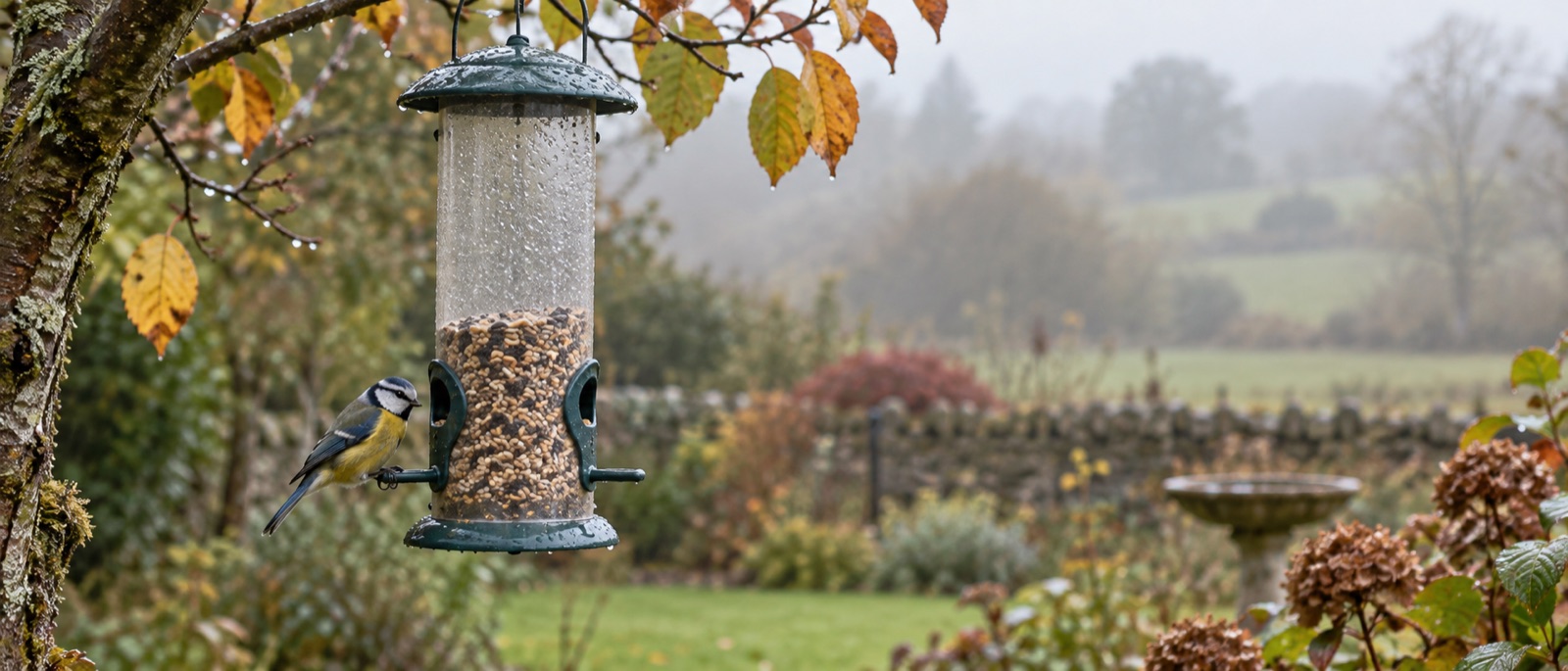
Bird food is often left uneaten because the portion is too large, the food does not suit the visitors or birds cannot reach it easily. Dampness, stale stock and plentiful natural food can also reduce demand. Remove spoiled leftovers first, inspect the feeder, then try a smaller fresh portion rather than topping up the same food.
The key question is whether birds never visit, or visit and leave particular food behind. If the whole feeding position is quiet, start with our general feeder troubleshooting guide. Here, the focus is the food remaining in the feeder.
What kind of leftovers are you seeing?
Before changing products, note what remains. Whole grains, empty shells and dry-looking material trapped above a port can look similar from the kitchen window, yet need different responses.
| What remains | What to investigate | What to do next |
|---|---|---|
| Most of every fresh portion | Too much food or very few visits | Reduce the next portion and watch turnover |
| One ingredient in an otherwise used mix | Food preference or an unsuitable blend | Try a small compatible change |
| Food above an empty lower section | Bridging, moisture or blocked ports | Empty and clean before refilling |
| Clumps, an unusual smell or visible mould | Spoilage | Discard the food; do not mix it into fresh stock |
| Food after a new feeder arrives | Unfamiliar equipment, placement or access | Check the setup without increasing the fill |
| Food left when natural sources are plentiful | Seasonal demand | Reduce or pause supplementary feeding |
You do not need to keep poor food outdoors to establish why birds refuse it. Condition comes before diagnosis.
Remove damp or spoiled food straight away
Check after rain, not just on your weekly cleaning day. Look inside the base and around drainage holes where moisture and fragments collect. A dry upper layer does not establish that the bottom is sound.
Discard food that is wet, clumped, mouldy or otherwise spoiled. Do not dry it out for reuse, blend it with a new bag or scatter it in the garden. Our wet and mouldy seed guide explains the equipment and storage checks that come next.
Food left in the bag also deserves inspection. Keep dry supplies cool and sealed indoors, avoid condensation and check dates and instructions on the pack. A bargain sack is poor value if your garden cannot use it before quality declines.
How long should food remain outside?
Use the food type and its condition, not a single rule for every product. The RSPB’s format-specific guidance gives these turnover targets:
| Food | Target turnover | If it is not being used |
|---|---|---|
| Seeds and peanuts in suitable hanging feeders | Within one to two days, in the November–April season | Remove leftovers and make the next fill smaller |
| Mealworms | Eaten or cleared by dusk the same day | Clear promptly; reduce or pause the portion |
| Suet in a suitable hanging holder | Within seven days | Offer less; discard sooner if condition deteriorates |
These are not permission to leave spoiled food until the deadline. Heat, rain, contamination or an unwell bird can require earlier action. Never let a full feeder sit untouched for weeks while waiting for visitors.
Check that food can actually reach the ports
Some feeders appear full while offering nothing usable at the opening. With the feeder empty, check that inserts, bases and any moving parts are fitted correctly. Remove compacted fragments rather than forcing a tool through the opening while the feeder hangs.
A long tube brush can reach residue after dismantling. Check that it fits without scraping or forcing delicate parts, and follow with the proper wash, disinfect, rinse and dry routine. A brush is not a disinfectant.
For a weight-activated model, make sure the shroud moves freely and is not stuck shut. Follow the manufacturer’s instructions rather than adjusting a spring by guesswork.
Make the next fill deliberately smaller
Use the measuring cup or a small scoop to give yourself a repeatable starting portion. Watch what is actually consumed and increase only when it is being cleared appropriately. Our quantity guide covers refill frequency and seasonal demand in more detail.
The DEAYOU 2.8-litre pour container is useful for indoor portion storage, not outdoor pest protection. Keep the rim clean, the lid closed and old outdoor food separate. Do not use its full capacity as your daily feeding allowance.
If only one ingredient remains, a small trial of a suitable alternative can be worthwhile. Change the food or feeder setup one at a time so you can see which change helped. Avoid building a row of extra feeders to compensate for poor turnover in the first.
Consider the season and the birds nearby
The RSPB’s 2026 feeding advice pauses seeds and peanuts from 1 May through 31 October. Unused seed during that period should be removed, not replaced with a more tempting blend.
During the appropriate winter season, nearby birds still have different feeding habits. A robin foraging below a tube does not establish that it can or will use that tube. Match food, access and the actual garden visitors rather than assuming all wild-bird foods suit all birds.
Natural food can also make a supplementary feeder unnecessary for a while. A pause is reasonable; birds are not obliged to empty a portion because we put it out.
When leftovers need a different response
Repeated overnight loss is a different problem from food refusal: see what empties a feeder at night. Bird food accumulating below the feeder needs prompt cleanup even if the tube itself seems to be working.
If you see an unwell or dead bird, stop ordinary troubleshooting and follow the sick/dead-bird guidance. Do not switch to richer food or add medicine in an attempt to treat the flock.
Frequently asked questions
Should I keep topping up food birds have not eaten?
No. Check its condition and age first, remove leftovers and use a smaller fresh portion. Topping up hides old material and poor turnover.
Why do birds leave fat balls?
Possible causes include unsuitable condition, limited demand or difficult access to the holder. Check the food and position before buying a larger quantity.
Can I return leftovers to the original bag?
No. Keep used outdoor food away from fresh stored supplies and dispose of waste where wildlife cannot reach it.
Is a quiet feeder a reason to buy premium food?
Not on its own. Inspect food freshness, port access, season and visitor behaviour first; a price label cannot fix an unsuitable setup.
Helpful products
Make small refills and cleaning easier
A smaller fill usually costs less than throwing out another full tube. These tools help you portion fresh food and reach residue before washing.
Smaller measured fills
DEAYOU 2.8L bird-seed pour container
A 2.8L clear plastic dry-food container with a three-sided locking lid, silicone seal, handle, measuring cup and pour spout.
An indoor 2.8-litre pour container with a measuring cup for smaller, repeatable portions. Do not mix old outdoor leftovers back into stored food.
Reach inside the tube
Jacobi Jayne long bird feeder cleaning brush
A long-handled natural-bristle brush made for reaching inside bottle-shaped and tubular bird feeders.
A long brush for loosening residue inside a dismantled tube. Check the opening and material compatibility; brushing alone does not disinfect a feeder.