Feeder buying guide
Best bird feeders for finches in the UK
Compare nyjer and sunflower-heart feeders for goldfinches, greenfinches and other finches, with the current November–April seed-feeding advice.
Our recommendations
Three finch-feeder choices
The food and port size must agree. A nyjer feeder is not interchangeable with a general seed tube.
Jacobi Jayne Bird Lovers medium niger feeder
A 1L dedicated niger feeder with click-off seed ports and a twist-off base for tool-free dismantling.
Best balanced niger feeder for an average garden. Drawback: a full litre may be excessive where goldfinch visits are still infrequent.
RSPB Premium easy-clean nyjer feeder (9 inch)
A two-port nyjer feeder with an aluminium top and base, a UV-stabilised polycarbonate tube and removable components for cleaning.
Best compact RSPB option. Drawback: two feeding ports serve fewer birds at once than the larger six-perch alternative.
RSPB Classic easy-clean seed feeder (small)
A simple 500ml, two-port feeder with a polycarbonate tube and plastic fittings that come apart without tools.
Best straightforward alternative. Drawback: RSPB warns that squirrels and parakeets may damage the plastic parts.
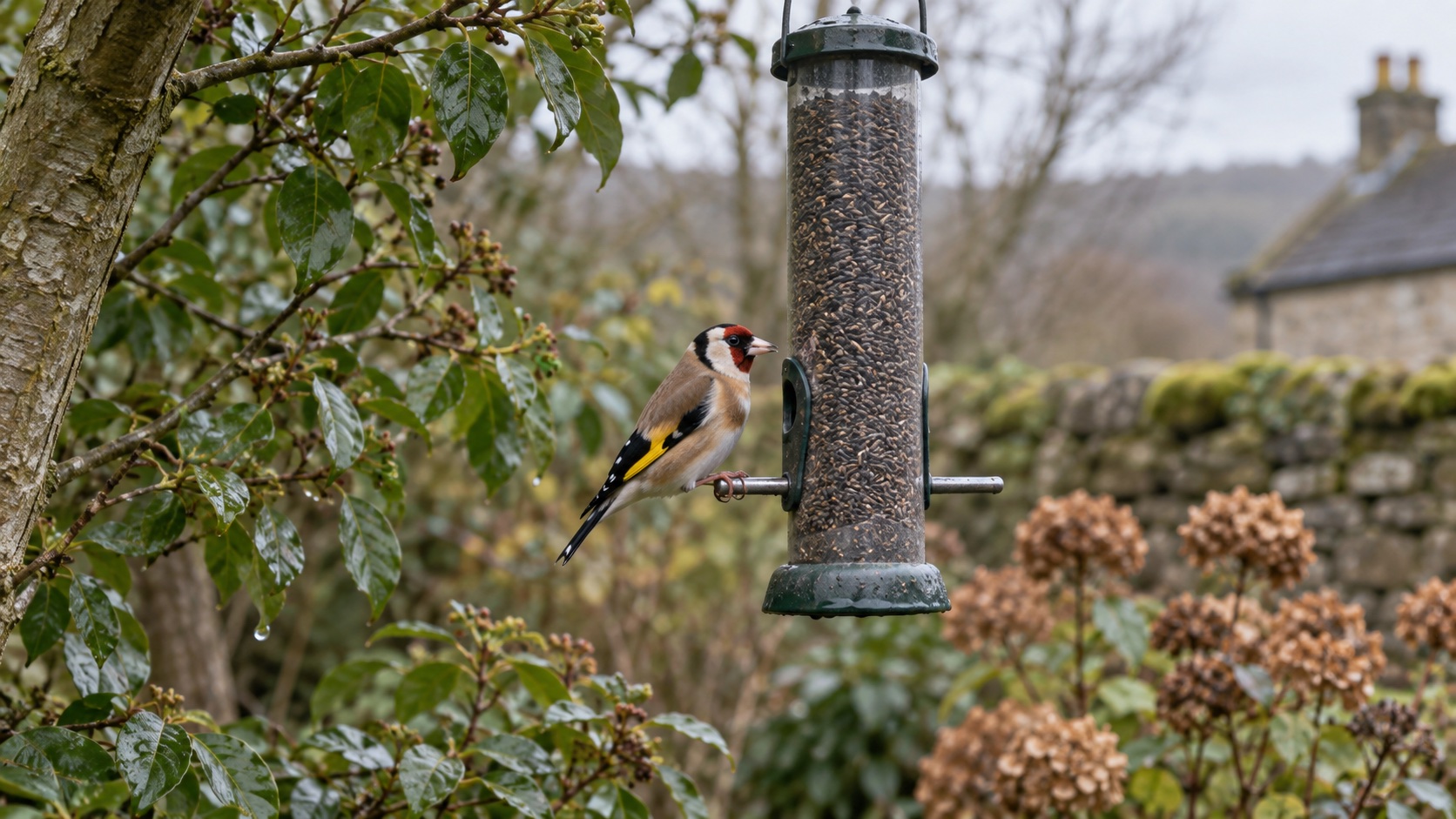
Finches are not one feeding type. Goldfinches often take tiny nyjer seed; greenfinches may use sunflower hearts in a conventional tube; chaffinches are frequently seen foraging below rather than balancing at a port. Match the feeder to the birds and food you actually see, rather than buying the largest tube marketed for “all finches”.
Which feeder should you choose?
Jacobi Jayne Bird Lovers nyjer: compact fine-seed choice
The medium Bird Lovers model has dedicated small ports and a quick-release base and perches. That is a useful combination for goldfinches: the ports help contain fine nyjer, while the dismantling features make the hidden seams reachable. Its one-litre maximum is more than a quiet garden may use promptly, so only part-fill it. Fine, damp seed can bridge inside a tube even when the top looks dry.
RSPB Premium nyjer: metal fittings
The nine-inch Premium nyjer feeder is another purpose-made fine-seed option. Its metal fittings may appeal if ordinary plastic ports are being damaged. The trade-off is that several metal joints still need brushing, and the product does nothing to protect a poorly positioned station from cats or squirrels. Read the exact model's disassembly instructions before buying.
RSPB Classic: sunflower-heart alternative
If birds favour sunflower hearts rather than nyjer, the small Classic seed tube is a better fit. Its two ordinary ports and removable plastic fittings make it simple to service, but those ports are too broad for loose nyjer. It has no large-bird or squirrel guard. Try a small quantity of the food you intend to use and observe spill before increasing it.
Why the season matters more for finches
The BTO's updated feeding advice specifically cites finch trichomonosis risk in the post-breeding period. It recommends seed and peanuts from November to April, then pausing them from May to October. RSPB gives the same seasonal split and recommends hanging rather than flat feeders. These are not minor housekeeping details on a finch page: they change when these products should be filled.
During the seed season, put out only what birds clear within a day or two. Clean and disinfect feeders at least weekly, move feeding spots regularly and clear waste beneath. Never leave a half-empty nyjer tube untouched for weeks because it still contains food. Our nyjer-feeder guide covers slot styles and leakage; the sunflower-hearts guide covers that alternative food.
What if finches keep feeding on the ground?
Fallen seed attracts birds to a shared surface and can mix with droppings. Do not fix this by adding a broad catch tray: BTO says flat-surface feeders are best avoided. Instead, reduce the amount in the tube, use the correct port for the food and sweep the ground. If the mix contains unwanted grain, a better-matched food may reduce flicking.
Chaffinches may continue to forage naturally on the ground even when a tube is available. That is normal behaviour, not proof that you need a ground feeder. Leave seed-bearing plants and undisturbed areas as natural food sources.
Signs to act on immediately
A finch that is fluffed up, slow to fly, drooling or struggling to swallow needs distance, not another feeder. Stop feeding, remove the food and follow BTO's disease response and hygiene steps. Report suspected disease where appropriate. Do not diagnose from a photograph alone.
Common questions
Can nyjer go in a normal seed feeder?
Usually not reliably. Fine seed can escape ordinary ports or become trapped at the fittings. Use a dedicated nyjer design.
Will one feeder attract every finch?
No. Food preference, posture and local habitat differ. A small nyjer feeder and a separate compact sunflower-heart tube cover more possibilities than a large mixed-seed hopper, but only where demand justifies both.
Should I fill finch feeders in September?
Under the current BTO/RSPB guidance, pause seed and peanut provision until 1 November. Prepare and clean equipment now, then start with small amounts in the recommended season.