Garden bird guide
Greenfinches: food, identification and safer garden feeding
Recognise a UK greenfinch, understand its seed diet and follow current seasonal and hygiene advice to reduce finch disease risk.
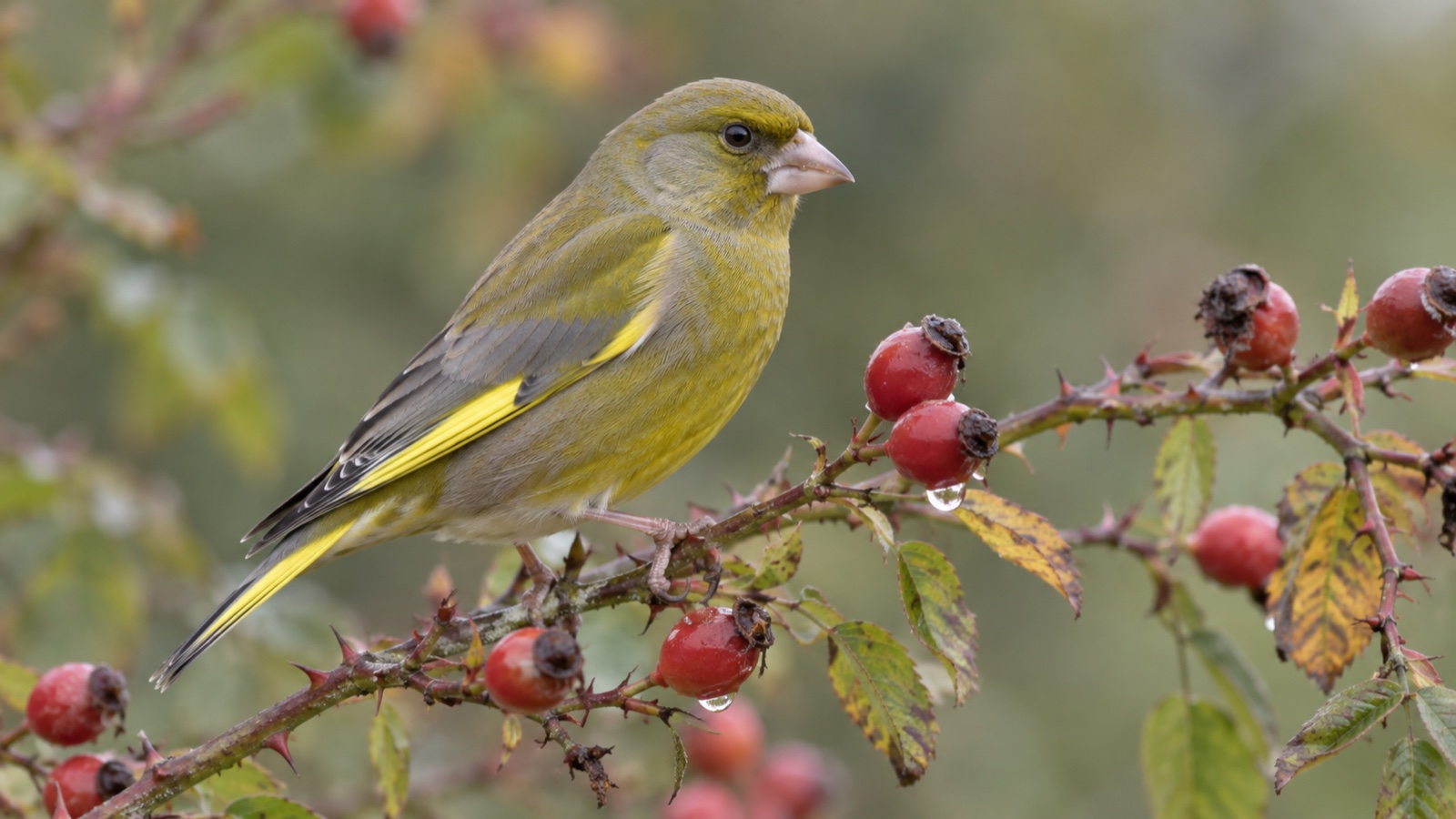
What do greenfinches eat? They take seeds from a variety of plants, including natural garden seedheads, and can use seed feeders. Sunflower hearts may be taken during the November-to-April supplementary feeding window. The RSPB's natural-food guide also notes seeds in rosehips and other spent flowers. From May to October, current BTO guidance recommends pausing seed and peanuts in gardens to reduce disease risk.
Greenfinches have suffered serious declines associated with trichomonosis. Seeing one is a pleasure, but concentrating several at a poorly maintained feeder can work against the bird you wanted to help. Clean feeding matters more than putting out a larger selection of products.
How do you identify a greenfinch?
An adult has a robust conical bill, greenish body and bright yellow on the edges of the wings and tail, especially noticeable in flight. A female or young bird can look browner and duller, but the yellow flashes still help. A goldfinch is smaller and finer-billed, with a red adult face and bold yellow wing bar. The RSPB greenfinch profile provides photographs and its distinctive wheezy song.
Do not identify a sick bird by its stillness alone. A healthy bird can rest quietly; a concerning bird may also be unusually fluffed up, slow to move or repeatedly unable to swallow. Treat suspected illness as a reason to change your feeding behaviour, not as a photo opportunity close to the bird.
Why does feeding advice differ from older articles?
RSPB and BTO reviewed evidence about finch trichomonosis and announced a seasonal change in 2026. Their current feeding FAQ advises supplementary seed and peanuts only from November through April, with a pause May through October. It applies to everyone feeding UK garden birds, not just gardens known to host greenfinches. Mealworms and suitable fat foods may continue for other species, provided hygiene and spoilage are managed.
Older web pages may still describe year-round sunflower hearts or black sunflower seeds. Check the publication date and the latest conservation guidance before following them. Natural seed on a plant is not the same as repeatedly filling a shared feeder. Letting teasels, sunflowers and other suitable plants set seed is a practical way to support natural foraging without creating a permanent high-contact station.
If you feed in winter, what makes a safer setup?
Choose a small feeder that can be fully dismantled. Fill only as much as birds will clear quickly, remove old food before refilling and keep the area beneath free of dropped seed. A compact seed tube is easier to monitor than an oversized reservoir. Sunflower hearts produce no husks, but they can still become wet and contaminated; our sunflower-heart guide covers those limitations.
Clean and disinfect feeders at least weekly, sooner if they are visibly dirty. Rinse and dry thoroughly. Replace water daily and clean bowls or baths regularly. The BTO's hygiene instructions and our feeder-cleaning routine give the practical sequence. Never add a fresh layer of seed over damp leftovers.
Avoid a broad bird table or other flat feeding surface where droppings and food mingle. The RSPB's current health advice explains why this is particularly risky. More feeders are not automatically safer; every additional unit adds another surface to monitor.
What should you do if a finch looks sick?
Stop supplementary feeding immediately. Remove food and water, prevent other animals accessing the contaminated area, and consult current BTO disease advice and RSPB guidance. Do not keep putting out food while trying to identify the illness yourself. Avoid handling a sick or dead wild bird with bare hands.
Trichomonosis can make swallowing difficult and spreads through contaminated food and water. It is not restricted to greenfinches, which is why the seasonal feeding pause is a whole-garden precaution. Resume only in line with the latest official recommendations and after the feeding area has been properly addressed.
What helps greenfinches without a feeder?
Leave suitable seedheads, fruiting shrubs and dense cover. A garden with varied plants can provide natural food and insects over time. Maintain a shallow water source if you can change it daily and clean the vessel; a neglected bath is not a benefit. If you cannot keep up the routine, focus on planting and habitat rather than buying a larger food bag.
Do greenfinches eat sunflower hearts?
Yes. Offer them only during the current November–April supplementary seed window, in small fresh amounts, and keep the feeder and ground beneath it clean.
Does a greenfinch always look bright green?
No. Females and young birds can be much duller brown-green. The chunky bill and yellow wing and tail edges help, but use several features and a reliable field guide rather than colour alone.
Helpful products
Keep any winter seed setup small
These products suit controlled winter fills only. If you cannot inspect food and clean the feeder regularly, natural seedheads are the better route.
RSPB Classic easy-clean seed feeder (small)
Best for: Offering a small, observable winter seed portion
A simple 500ml, two-port feeder with a polycarbonate tube and plastic fittings that come apart without tools.
Keep in mind: Clean thoroughly at least weekly and stop feeding if disease is suspected.
RSPB sunflower hearts (900g)
Best for: Small November-to-April fills rather than a bulk bag
A small 900g bag of husk-free sunflower kernels, suited to testing demand before buying a larger pack.
Keep in mind: Pause seed during May–October and never top up contaminated food.