
Brand comparison
Contains affiliate links
Birdfy smart feeders compared: which camera feeder suits your garden?
Compare three Birdfy smart bird feeders by camera, solar power, housing, cleaning access and app costs before choosing one for a UK garden.
Our recommendations
Three Birdfy feeder designs
Check whether the feeder includes a solar panel and which AI features its app plan includes. Similar-looking models can come with different bundles.
Birdfy 2K smart feeder camera
A smart feeder with a 2K camera, motion clips, app live view and wireless outdoor operation.
Best established all-round smart feeder. Drawback: it uses 2.4GHz Wi-Fi and has no consumer microSD playback.
Birdfy solar smart feeder camera
A solar-assisted feeder camera with automatic capture, alerts and live viewing in the Birdfy app.
Best familiar entry model. Drawback: identification may require payment depending on the exact variant.
Birdfy wooden smart feeder camera
A wooden smart feeder with a 1080p camera, solar charging, live view and automatic clips.
Best natural-looking smart feeder. Drawback: cleaning access and current cloud terms matter as much as image quality.
What is the difference between these Birdfy smart feeders?
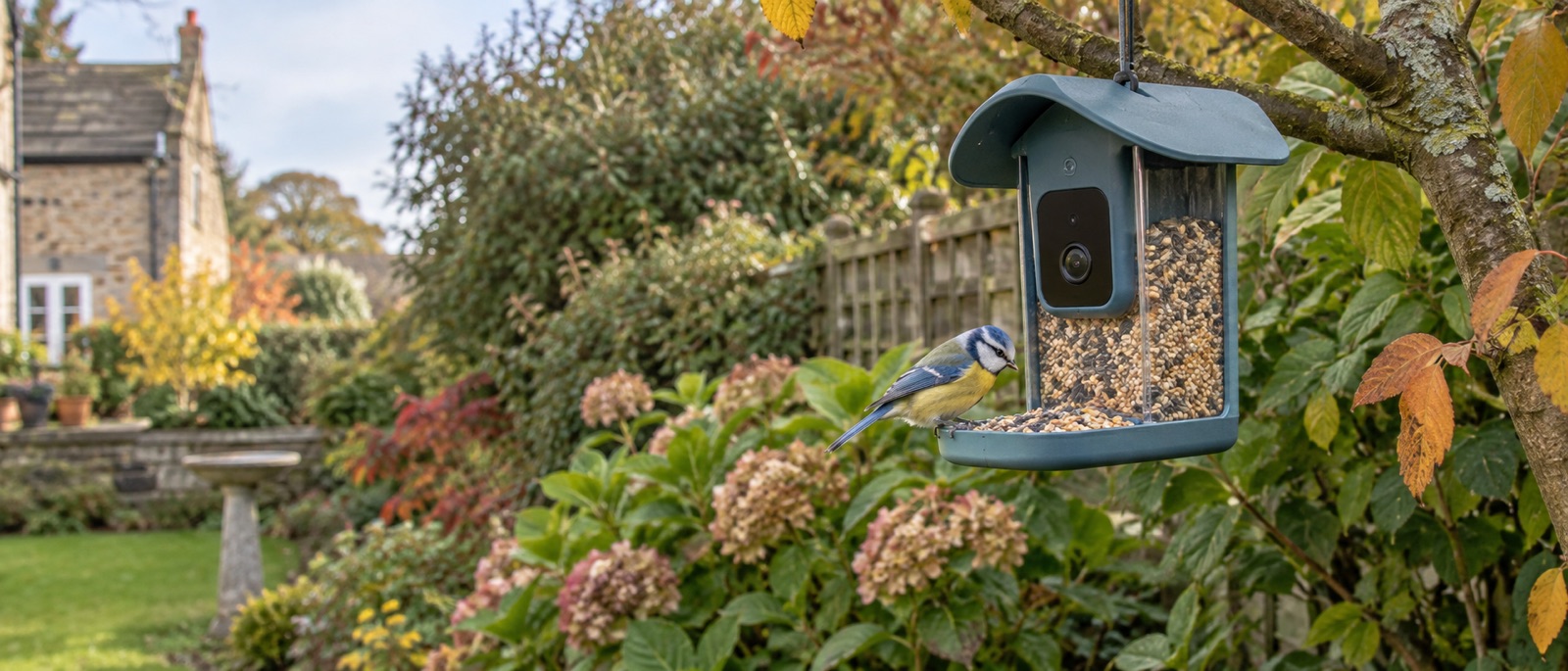
These three feeders do the same broad job: bring visiting birds close to a camera, send alerts and clips to the Birdfy app, and let you look in from your phone. The useful differences are physical. The 2K-labelled blue feeder puts the camera specification first; the blue solar feeder adds a charging panel; the wooden feeder changes the housing and cleaning routine. None is a substitute for good siting or fresh food.
| Model in this guide | Why choose it | Main compromise |
|---|---|---|
| Birdfy 2K blue feeder | Familiar close-up camera-feeder format | Charging and exact AI package need checking on the selected offer |
| Birdfy blue solar feeder | Panel can top up the battery in useful daylight | A shaded or north-facing position may still need manual charging |
| Birdfy wooden smart feeder | Timber appearance suits a softer garden setting | Wood and joints need especially careful drying and inspection |
The marketing name is not enough to establish app terms. Birdfy's current membership guide describes a Free tier with limited stored Moments and AI identifications; older “lifetime AI” bundles can differ. Read the variant on the actual product page, then look at our no-subscription camera guide for what the free account currently does.
Birdfy 2K: the simplest camera-led choice
The blue 2K model makes sense if you care more about the close feeder view than a built-in solar package or timber styling. Motion-triggered short visits are more useful than a distant garden-wide view when you want to distinguish a blue tit from a great tit. You still need a stable outdoor 2.4GHz connection and a mount that will not twist or swing.
Do not infer that “2K” guarantees sharp footage in low light. Motion blur, poor Wi-Fi and a dirty lens can matter more. Check exactly which camera generation and AI offer the listing includes. Most Feeder 1-family Birdfy products are app-first, rather than local SD-card recorders; the maker's model help is the place to confirm a particular one.
Blue solar feeder: fewer charging interruptions, not zero maintenance
The solar model is appealing when the feeder has a bright position and the panel can face useful daylight. In a UK winter, short days, cloud, leaves and panel grime reduce charging. The camera may need a manual top-up, especially with frequent alerts or live viewing. Avoid moving the feeder into exposed wind just to chase the sun.
Its tray and food chamber still require attention. A larger hopper does not mean you should fill it to the top if the birds take days to clear the seed. Use small portions and check for dampness; our camera-feeder cleaning guide covers the electronics separately from the food-contact pieces.
Wooden smart feeder: attractive, with a different care burden
The wooden model blends into planting more readily than blue plastic. That aesthetic is a reasonable reason to choose it, but check the roof, drainage, camera fit and cleaning access before ordering. Damp timber and trapped husks need more scrutiny than a smooth removable tray. Let every cleaned part dry thoroughly before refilling.
The wooden model shown here includes solar assistance and an app view, but its camera and AI package may differ from the blue 2K model. If easy disassembly is your first priority, favour the feeder that lets you reach all food-contact corners.
Placement matters more than a model upgrade
Put the feeder where you can reach it safely for a weekly clean and where birds have a nearby escape route without giving a cat a launch point. Test live view with the camera held at the intended location before drilling or buying a special pole. Check the panel angle separately from the feeding angle. Our camera-positioning guide explains the trade-offs; the wider feeder-camera comparison includes other brands.
The RSPB's September 2026 feeding advice recommends seed and peanuts only from 1 November to 30 April, cleaning and moving feeders weekly, and clearing old food beneath them. A smart camera does not relax those rules. Outside that season, you can still position and test the camera without offering seed.
Frequently asked questions
Does Birdfy need a monthly subscription?
Its current help describes free basic app features, with limits on stored clips and AI identifications. Paid and legacy lifetime-AI offers vary by model and bundle. Check the exact offer at checkout.
Is a solar Birdfy feeder fully self-powered in winter?
Do not count on it. Solar can extend time between charges, but shade, low winter sun and heavy app use can reduce the gain. Plan a safe charging routine.
Can I put one on any pole?
No. Check the base fitting, loaded weight and exposed wind load against the pole and bracket. A camera feeder that swings gives poorer footage and can spill food.