Practical advice
Contains affiliate links
How to clean a tube bird feeder properly
Reach old food at the base and around the ports of a tube bird feeder, then disinfect, rinse, dry and refill without leaving damp seed behind.
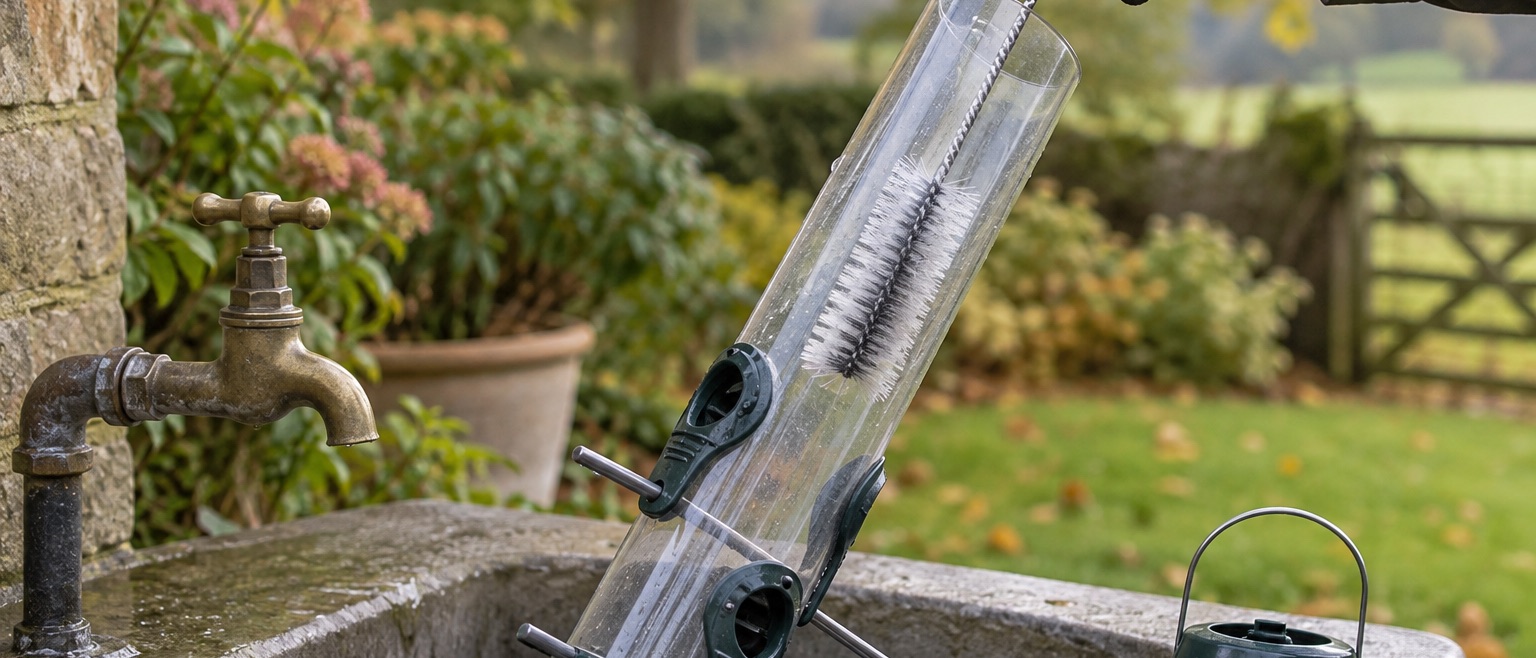
Use a long brush reserved for bird-feeding equipment.
Check drainage and the underside of perches.
Refill modestly so food turns over promptly.
To clean a tube bird feeder, empty and dismantle it, then scrub inside the entire tube and around every feeding port before disinfecting. The bottom is the trouble spot: old seed dust, husks and moisture can sit there while the upper tube still looks clear. Rinse and air-dry it fully before a fresh fill.
The BTO's bird-feeding hygiene guidance recommends a weekly cleaning routine, with earlier action when food becomes contaminated. The RSPB's September 2026 guidance also advises moving feeding positions and cleaning weekly.
Clean the tube in seven steps
- Take the feeder down after birds have left. Wear gloves and empty all old food outdoors. Do not pour old seed into the new-food bag.
- Remove the lid, base, tray and ports only where the maker intends them to detach. Our disassembly guide helps you work through unfamiliar fittings.
- Dampen dusty deposits, then wash with hot soapy water. A long, narrow brush should reach the full inner wall without scraping it.
- Scrub the bottom lip, drainage holes, port backs and perch joins individually. A brush pushed straight down once is not enough.
- Apply a bird-equipment disinfectant according to its label, including contact time. Choose a suitable disinfectant rather than guessing a bleach mix.
- Rinse thoroughly and let the tube and parts air-dry. Look through it for remaining film or water droplets.
- Rebuild, test the base lock and hanger while empty, then add only a small amount of appropriate fresh food.
What a dirty tube is telling you
| What you notice | Likely cause | Better response |
|---|---|---|
| Clumped food at the bottom | Rain ingress or slow turnover | Discard the whole fill; check shelter and drainage |
| Dark ring below a port | Moisture and seed dust trapped at a joint | Remove the port if designed to detach and brush behind it |
| Husks around the base | Food sitting after birds take their preferred pieces | Smaller portions or a more suitable food mix |
| Repeated dampness after cleaning | Tube or cap not sealing, or no usable drain | Reposition or replace the faulty component |
Do not dry damp seed for reuse. Our wet-seed guide explains why disposal is the safer answer. If your feeder is too large for the birds visiting, read how much food to put out before buying another large tube.
Is an easy-clean tube worth replacing a sealed one?
It can be. A removable base and accessible ports reduce the places you cannot inspect. But check the exact model: a product page may call a feeder “easy fill” while its lower joint is fixed. The easy-clean feeder guide compares the features that matter for the weekly job.
Frequently asked questions
How often should I clean a tube feeder?
At least weekly under current RSPB/BTO advice, sooner if food is wet, mouldy or contaminated. Inspect it each time you visit or refill.
Can I just wipe the outside?
No. The food and bird-contact surfaces inside, under the base and around the ports need washing. A clean-looking outer tube does not tell you what is happening below the seed line.
Should I use a bottle brush from the kitchen?
Use a dedicated outdoor brush for bird-feeding equipment. Keep it separate from kitchen utensils and let it dry after use.
Helpful products
Reach the bottom of the tube
A purpose-length brush is useful when a hand cannot reach the base. If your present feeder traps residue, a removable-base design may be easier to maintain than another cleaning gadget.
Jacobi Jayne long bird feeder cleaning brush
A long-handled natural-bristle brush made for reaching inside bottle-shaped and tubular bird feeders.
Best for cleaning the length of feeder tubes. Drawback: a smaller detail brush may still be useful around ports and threads.
Kingsyard six-port easy-clean tube feeder
A hard-plastic six-port tube feeder with tool-free removable base and perches, drainage holes and a stated two-pound capacity.
Best removable-base multi-port option. Drawback: two pounds is a large fill and should be reduced wherever turnover is slow.