Garden bird guide
Chaffinches: ground feeding, seed choices and disease-aware care
Identify male and female chaffinches, understand why they forage beneath hedges and avoid unsafe ground-feeding habits in UK gardens.
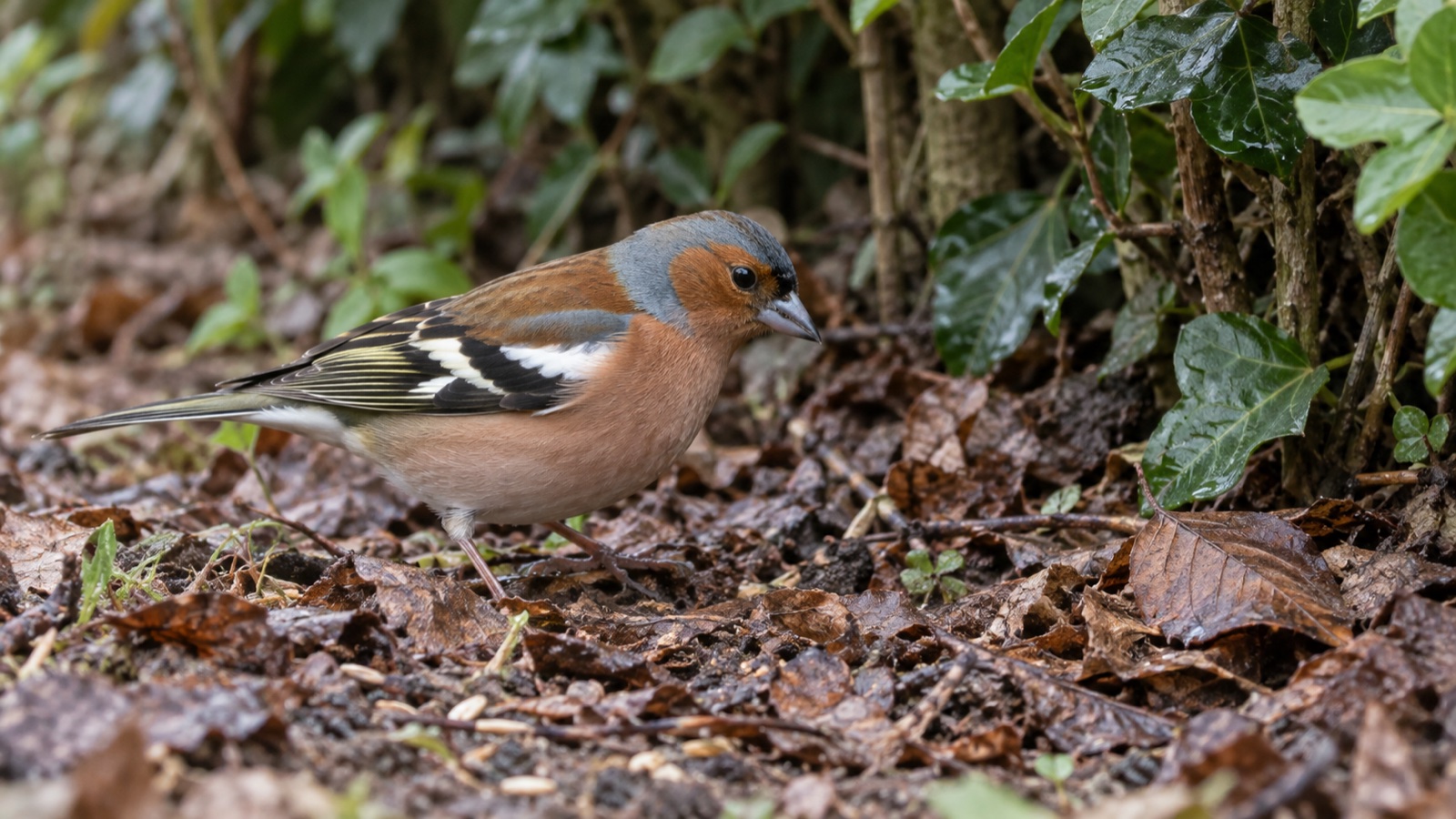
What do chaffinches eat? Seeds are important, alongside insects and other small invertebrates. In gardens, chaffinches often forage on the ground or under hedges and may appear beneath a feeder rather than on its perches. The RSPB species account notes this behaviour. It does not make a permanent layer of spilled or deliberately scattered seed a safe feeding method.
For supplemental food, the current BTO guidance allows seed and peanuts from November to April and recommends a pause during May to October. Chaffinches are among the finches affected by trichomonosis, so freshness and hygiene are central to any feeding decision.
How do you identify a chaffinch?
The male has a blue-grey crown and nape, warm pinkish breast, chestnut back and contrasting white wing markings. The female is more subdued brown and buff but still shows white on the wings. Both may reveal bright white wing bars and outer tail feathers in flight. Compare several features rather than relying on colour alone; a brown female bird under a hedge can be overlooked easily. The RSPB chaffinch profile offers reliable photographs and song.
A house sparrow has a stockier, more uniform appearance and often arrives socially near buildings. A dunnock has a finer bill and greyer head, and tends to creep quietly close to cover. Watching the white flash as a chaffinch moves can be more decisive than trying to judge a partly hidden back.
Why is it below the feeder instead of on it?
Chaffinches can use feeders, but many are shy of the busiest feeding ports and collect food on the ground. That is a natural-looking behaviour with an important risk: dropped seed, husks and droppings accumulate beneath a station. The right response is not to encourage a larger spill. Clean underneath feeders regularly, use modest fills and consider a feeder that wastes less food. Our no-mess feeding guide covers practical adjustments.
The RSPB's garden-bird health advice discourages flat feeding surfaces that mix food and droppings. If you cannot keep a ground area clean, favour natural seedheads and habitat instead of a purchased ground feeder. The bird may still visit for natural food even if it never touches a product.
Which seeds are worth considering?
In the November–April window, a small, clean seed feeder containing sunflower hearts can serve finches and other species. Hearts have no outer husk, though dropped food must still be cleared. A bulky mix that leaves unwanted grain on the ground is a poor fit. See sunflower hearts and bird-seed mixes for the differences.
Do not overfill a tube in hopes of drawing chaffinches from elsewhere. Watch what is actually eaten within a day or two, remove the old food, then adjust. Pause seed and peanuts May–October even if the only finch you see is a chaffinch. The risk is shared across the whole feeding area, including water.
How does trichomonosis change the advice?
This infection can make swallowing difficult and can spread through contaminated food or water. The RSPB's disease Q&A explains why finch populations are a particular concern. Check for lethargic birds, ruffled feathers or food stuck around a bill; do not try to diagnose from a single symptom alone. If illness is suspected, stop supplementary feeding, remove food and water and follow official advice.
Even without signs of disease, BTO hygiene guidance calls for small portions, removing old food before refilling, cleaning feeders at least weekly and changing water daily. A clean feeder with an unclean pile beneath it is not a clean setup.
Can your garden help without a seed feeder?
Yes. Leave some seedheads standing, maintain shrubs and hedges, and support insects through varied planting. The RSPB's natural-food guide explains how flowers and later seedheads provide food. Fresh shallow water is helpful too, provided it is changed daily and the vessel is cleaned regularly. A chaffinch's absence from a feeder does not make the garden useless to it.
Is it safe to feed chaffinches on the ground?
Avoid creating a persistent patch of seed or a flat shared tray. It is difficult to keep food separate from droppings and attracts unwanted visitors. Natural foraging under cover is different from managing a permanent feeding station there.
Do chaffinches eat sunflower hearts?
They can. If you offer them, do so only in the November–April seed-feeding window, in small fresh amounts at a clean feeding point. Do not assume that a chaffinch will move from the ground to a particular feeder.
Helpful products
If you already feed seed in winter
A small pack of sunflower hearts is easier to keep fresh than a bulk bag. It is not an invitation to scatter seed under a hedge.
RSPB sunflower hearts (900g)
Best for: A modest winter seed option if birds use your garden
A small 900g bag of husk-free sunflower kernels, suited to testing demand before buying a larger pack.
Keep in mind: Do not create a permanent spill patch under a feeder to attract ground-feeding chaffinches.