Practical food advice
Which kitchen scraps are safe for garden birds?
A cautious guide to kitchen scraps for garden birds: plain fruit and foods to consider, unsuitable leftovers and current feeding-surface advice.
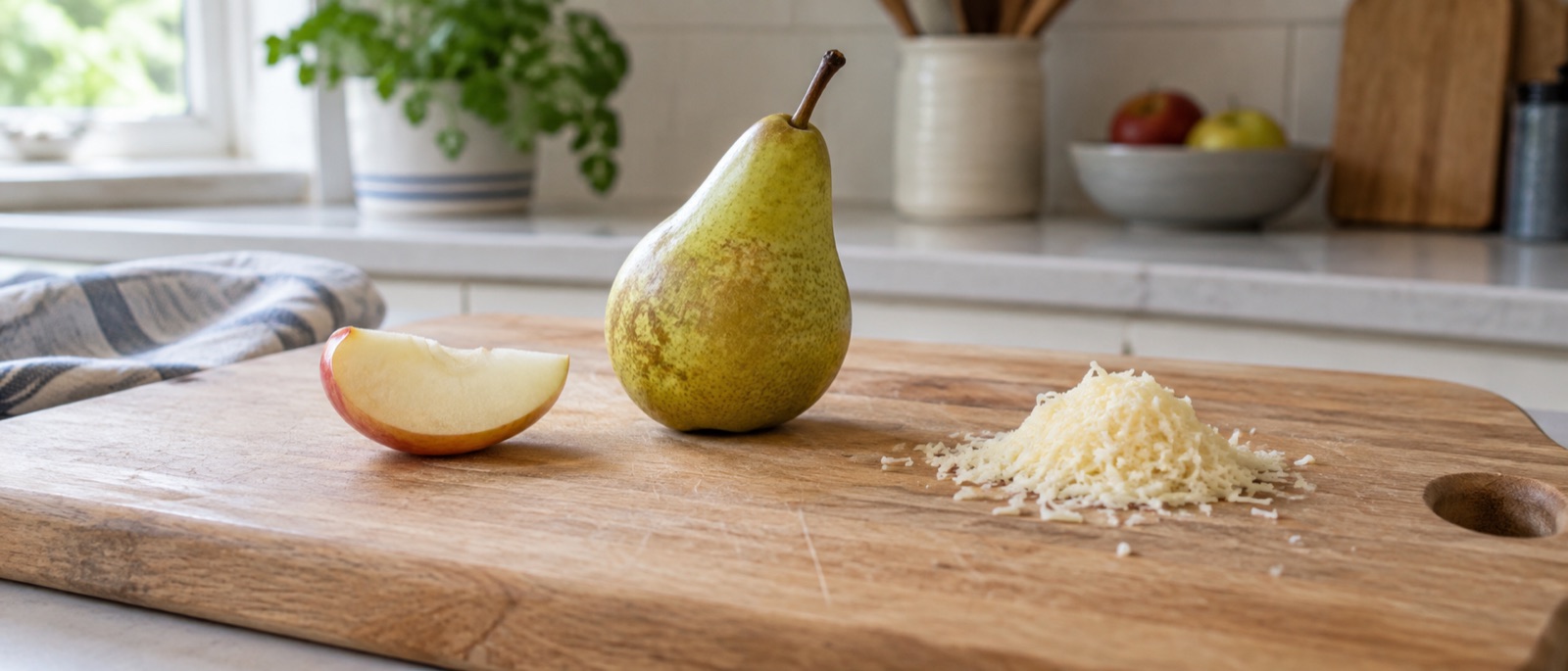
Some plain kitchen foods can be eaten by garden birds, but leftovers are not automatically suitable bird food. Sound apple or pear is a useful starting point; small amounts of plain cooked starches or finely grated mild hard cheese are other recognised options. Avoid salty, mouldy, greasy or heavily seasoned food.
Keep scraps occasional. If offering them requires a shared plate or permanent food pile, choose a purpose-made food with a suitable feeder—or leave that part of the routine out.
Kitchen scraps: a cautious shortlist
| Food | What makes it a possible option | Why it may be better left out |
|---|---|---|
| Apple or pear | Sound fruit with no mould or added syrup | Spoiled fruit or a holder that drops pieces |
| Plain cooked rice or pasta | Cooled, unsalted and without sauce | Perishable; difficult to offer without a flat surface |
| Plain boiled potato | A little plain cooked flesh | Butter, gravy or seasoning changes the food |
| Mild hard cheese | A tiny amount, finely grated | Not a staple; do not substitute milk |
| Bread | Not a useful regular food choice | Low priority nutritionally; dry bread can be unsuitable for chicks |
| Roast drippings, chips and takeaway leftovers | Do not offer | Cooking juices, salt, grease and uncertain ingredients |
RSPCA's current garden-bird advice recognises some household foods, but it also says to stop using flat feeders. A food being edible does not make every way of presenting it sensible.
Start with fruit rather than the dinner plate
An apple with a small bruise or a ripe pear can be useful if the fruit is otherwise sound. A dedicated holder lets you offer a small amount without setting out a dinner plate.
Check the whole fruit, not just the exposed flesh. Sticky leakage, a fermented smell, mould or soft collapse means it belongs in the appropriate waste stream, not outside for birds. Our safe-fruit guide covers fruit holders and the particular hazard grapes and dried vine fruit pose to dogs.
Do not convert jam, fruit yoghurt, canned syrupy fruit or sweet pastry into a “fruit” recommendation. These are different foods with different ingredients.
Plain cooked foods need more judgement
Plain cooled rice, pasta or boiled potato can be edible, but much of what is left after dinner is no longer plain. Salted cooking water, butter, pesto, gravy and meat juices all make the decision less straightforward.
You do not need to offer every technically edible scrap. Soft starches are difficult to contain in a non-flat feeder, become wet readily and need prompt removal. For most gardens, that makes them a poor routine choice compared with a modest amount of purpose-made food.
A bird table is not an exception because it has a roof, and a plate is not an exception because you wash it daily. Current guidance addresses contaminated shared food as well as dirty equipment.
Cheese is not milk
A little finely grated mild hard cheese is a recognised supplementary food. That is a narrow suggestion, not permission to put out a cheeseboard, processed salty cheese, dairy desserts or a bowl of milk.
As with cooked starches, suitable presentation matters. Do not make a spread of loose grated cheese on a flat feeding surface. If you cannot offer and clear it appropriately, there is no disadvantage in choosing a simpler food instead.
Birds obtain a varied diet from natural foods. One household ingredient is not a replacement for that diet and does not need to appear in your garden every day.
Why bread and cooking fat are poor choices
Bread is not a universal bird poison, but it offers little reason to choose it over appropriate bird food. Dry hard pieces are particularly unsuitable during the nesting season. Avoid treating leftover loaves as a cheap way to keep a feeder continuously full.
Do not use fat or juices from roasting tins. RSPCA food-safety advice excludes cooking fat. It is not the same as clean suet made for bird feeding: it can contain salt and other cooking residues and produce a greasy, perishable mixture. Nor should you pour cooking oil onto seed or rub greasy leftovers onto a perch.
Our foods-to-avoid guide separates genuinely unsuitable foods from foods that are simply poor routine choices.
An easier alternative to unsuitable leftovers
A small pack of purpose-made suet cakes gives you a clear format and a compatible rigid cage. The RSPB three-cake mealworm pack is a modest starting point rather than an invitation to leave several blocks out at once. Its mixed recipe is not pure mealworm, and condition still needs checking.
If sound fruit is the food you actually have, the light Burgon & Ball apple holder is the more relevant purchase. You do not need either item if natural habitat and a clean water source already suit your garden better.
See the suet-block guide for food choices and best wild bird food for the broader menu.
Keep an occasional treat genuinely occasional
Offer only what can be used promptly, avoid topping up old scraps and clear leftovers before evening. Keep used feeder equipment away from kitchen preparation surfaces. Stop feeding if sick birds appear, and use the cleaning guide before restarting.
Seed-based household cereals and peanuts are not summer substitutes for paused bird seed. Follow the seasonal food guide rather than labelling a food “scraps” to bypass its ingredients.
Frequently asked questions
Can birds eat cooked rice?
Plain cooled rice is recognised as an edible household food. That does not make a bowl or table of rice a suitable feeding setup under current flat-feeder guidance.
Can I give birds leftovers to reduce waste?
Only when the food and presentation are both appropriate. Composting or food-waste collection is preferable to making wildlife responsible for spoiled or unsuitable food.
Are all kitchen scraps harmful?
No. The problem is broad advice that treats plain fruit, salted leftovers and greasy roast juices as interchangeable. Be selective and do not make scraps the staple.
Helpful products
Simple alternatives to unsuitable leftovers
These are optional aids to the advice above, not a reason to offer more food than birds will use.
Burgon & Ball Sophie Conran house apple feeder
A house-shaped powder-coated steel hanging holder with a leather cord for a single apple or other suitable soft fruit.
Best lightweight metal apple holder. Drawback: the cord and exposed fruit need frequent inspection and the house-shaped frame is decorative rather than protective.
RSPB mealworm suet cakes (3 × 280g)
Three individually wrapped mealworm suet cakes for trying the block format without buying a large box.
Best smaller block pack. Drawback: the recipe includes peanuts and seeds, so check ingredients and current feeding guidance.