Practical food advice
Safe fruit for garden birds
Which fruits can garden birds eat? Choose sound apple and pear, avoid mould and dog-toxic vine fruits, and use suitable fruit holders.
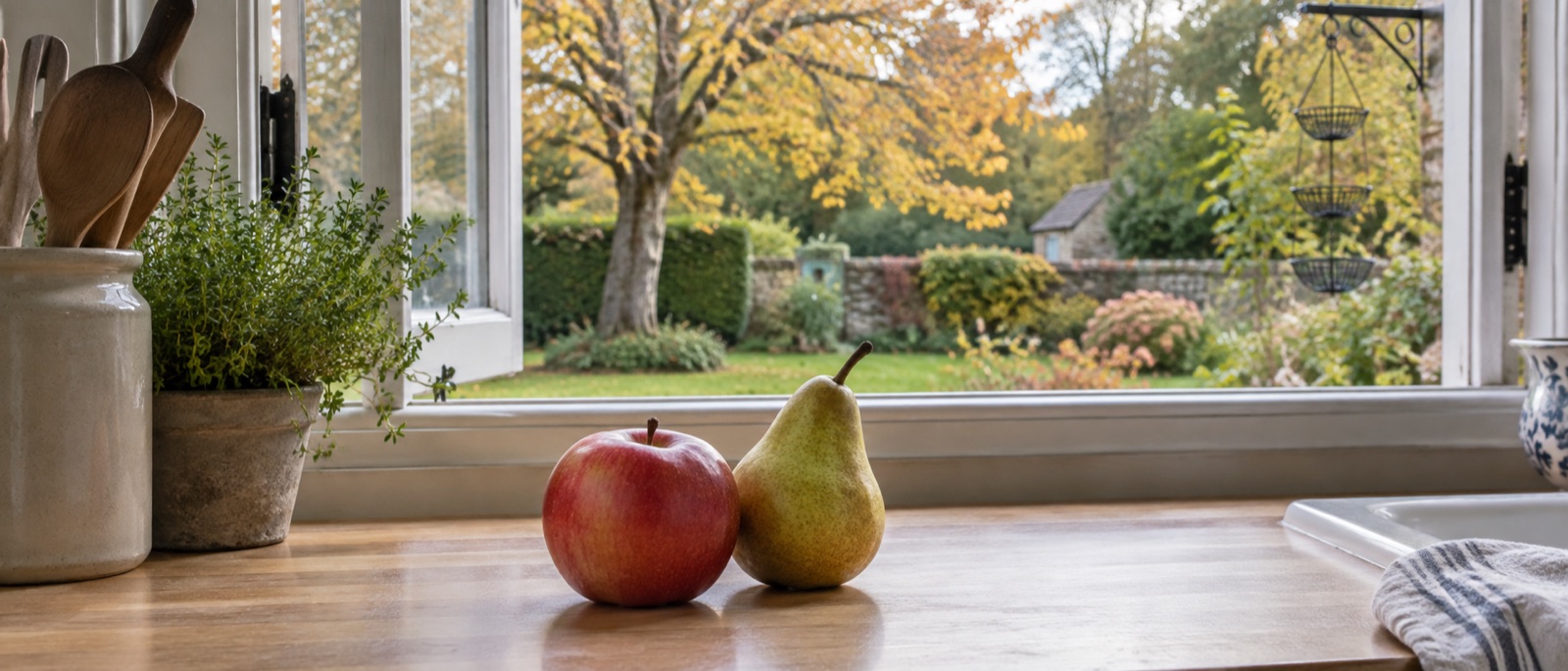
Fresh apples and pears are the simplest fruit choices for UK garden birds, especially blackbirds and visiting winter thrushes. Offer a little sound fruit, remove it when spoiled and avoid creating a shared feeding tray. Bruised fruit can be useful; mouldy or fermenting fruit should be discarded.
Grapes, raisins, sultanas and currants are dangerous to dogs. Do not put them where a dog could reach them or where falling pieces could become accessible.
Which fruit is worth offering?
| Fruit or format | Sensible use | Important limit |
|---|---|---|
| Fresh apple | Expose some flesh in a suitable fruit holder | Check daily and remove spoiled remains |
| Fresh pear | A ripe but sound fruit that a holder can secure | Soft fruit may collapse or fall quickly |
| Natural berries on shrubs | Let birds forage as fruit ripens | Leave for wildlife; do not assume every berry is edible for people |
| Grapes and dried vine fruit | Not a good choice in dog-accessible gardens | Toxic to dogs, including fallen pieces |
| Mouldy or fermented fruit | Do not offer | Cutting away the visibly bad patch is not a feeding solution |
RSPB includes bruised apples and pears among suitable foods. Keep the distinction between bruising and decay: a small bump in otherwise fresh fruit is not the same as spreading mould, slime or a sour smell.
Which birds eat apples and pears?
Blackbirds are the obvious garden visitors to watch for. Redwings and fieldfares may also arrive when weather and local fruit supplies bring them into gardens. A cold spell can change your visitor list, but fruit does not guarantee an unusual bird will appear.
Some feeder users may ignore fruit completely. Do not let it sit for days while waiting for a tit to change its diet. Our winter-thrush food guide covers the seasonal visitors, while the blackbird page explains the everyday resident's behaviour.
For birds picking through soil and leaf litter, preserving foraging habitat is often more useful than buying another feeding accessory.
Prepare a small amount, not a fruit buffet
Wash off dirt, check the whole piece and expose some flesh so birds can reach it. Use only the amount a holder can secure properly. Very ripe pears can slip apart; if the fruit cannot stay attached, choose a firmer piece rather than catching the remains in a tray.
Keep preparation tools in the kitchen separate from used feeder-cleaning tools. Take fruit outside only when it is ready to offer, and wash your hands after collecting any contaminated remains.
Do not add sugar, honey, jam or syrup. Fruit already supplies its own food value, and turning it into a sticky mixture makes handling and cleanup harder.
A hanging holder rather than a flat table
The Burgon & Ball house apple holder is a light, decorative way to secure one suitable fruit. Its frame is not a weatherproof enclosure, and its hanging cord needs inspection. Pick it for manageable fruit presentation, not predator protection.
The cast-iron heart holder is heavier and needs a reliable hook. Check how firmly it grips the actual fruit and whether you can remove every scrap when cleaning. Its weight and decoration do not make it more attractive to birds by themselves.
Neither guarantees a blackbird will use it. Position the holder so birds can approach, see around them and leave safely, without placing it beside a cat's waiting ledge. Compare more detail in our fruit-holder guide.
Why we avoid a shared fruit tray
Current RSPB advice rejects flat-surface feeders because contaminated food can be shared between birds. A plate of fruit on a table is still a flat feeding surface, even if you do not put seed on it.
Do not solve falling fruit by fitting a food-catching platform. Clear dropped pieces instead, and stop using a holder that cannot retain its contents. For gardens where a safe position is not possible, leave supplementary fruit out of the routine and support natural berries and insect-rich habitat.
The ground-feeder alternatives guide explains why elevation alone does not make a broad feeding dish appropriate.
Dogs, pests and leftovers
Avoid grapes and dried vine fruits in a garden used by dogs. Moving them a little higher does not remove the risk of falling fruit. If a dog may have eaten them, contact a vet immediately rather than waiting for symptoms.
Fruit can also attract rodents and insects. Begin with a small amount, inspect during the day and clear leftovers before they accumulate. Do not throw contaminated fruit into a wildlife-accessible garden corner.
Use food-storage advice for the dry foods in your routine and pest advice if fallen food is already a problem.
Winter fruit and the rest of the menu
Fruit is a supplement, not a complete diet for a blackbird. The winter feeding hub brings fruit together with appropriate food, hygiene and water choices.
Fresh water matters when local sources freeze, but keep it separate from food and replace it daily if you provide it. Do not drop fruit pieces into a bird bath: a bath should not become a soaking tray for leftovers.
Frequently asked questions
Can garden birds eat bruised apples?
Yes, sound bruised apples can be offered. Reject fruit that is mouldy, fermenting or otherwise spoiled.
Are raisins safe for birds?
Some birds eat them, but they are toxic to dogs. Fresh apple or pear is a simpler garden choice and avoids introducing that particular pet hazard.
Should I peel apples and pears?
Peeling is not necessary for a sound fruit. Exposing a little flesh can make access easier; the more important checks are freshness, secure presentation and cleanup.
Helpful products
Holders for a small amount of winter fruit
These are optional aids to the advice above, not a reason to offer more food than birds will use.
Burgon & Ball Sophie Conran house apple feeder
A house-shaped powder-coated steel hanging holder with a leather cord for a single apple or other suitable soft fruit.
Best lightweight metal apple holder. Drawback: the cord and exposed fruit need frequent inspection and the house-shaped frame is decorative rather than protective.
Cast-iron heart hanging fruit feeder
A black cast-iron heart-shaped fruit holder measuring approximately 17cm wide and 22cm high with a 44cm hanging chain.
Best larger all-metal holder. Drawback: it is heavier than the other options and only nine units were shown in stock when checked.