Hot-weather care
How to help garden birds during a heatwave
Practical UK heatwave steps for garden birds: shallow fresh water, safe shade, food spoilage, cleaning and when a bird needs expert help.
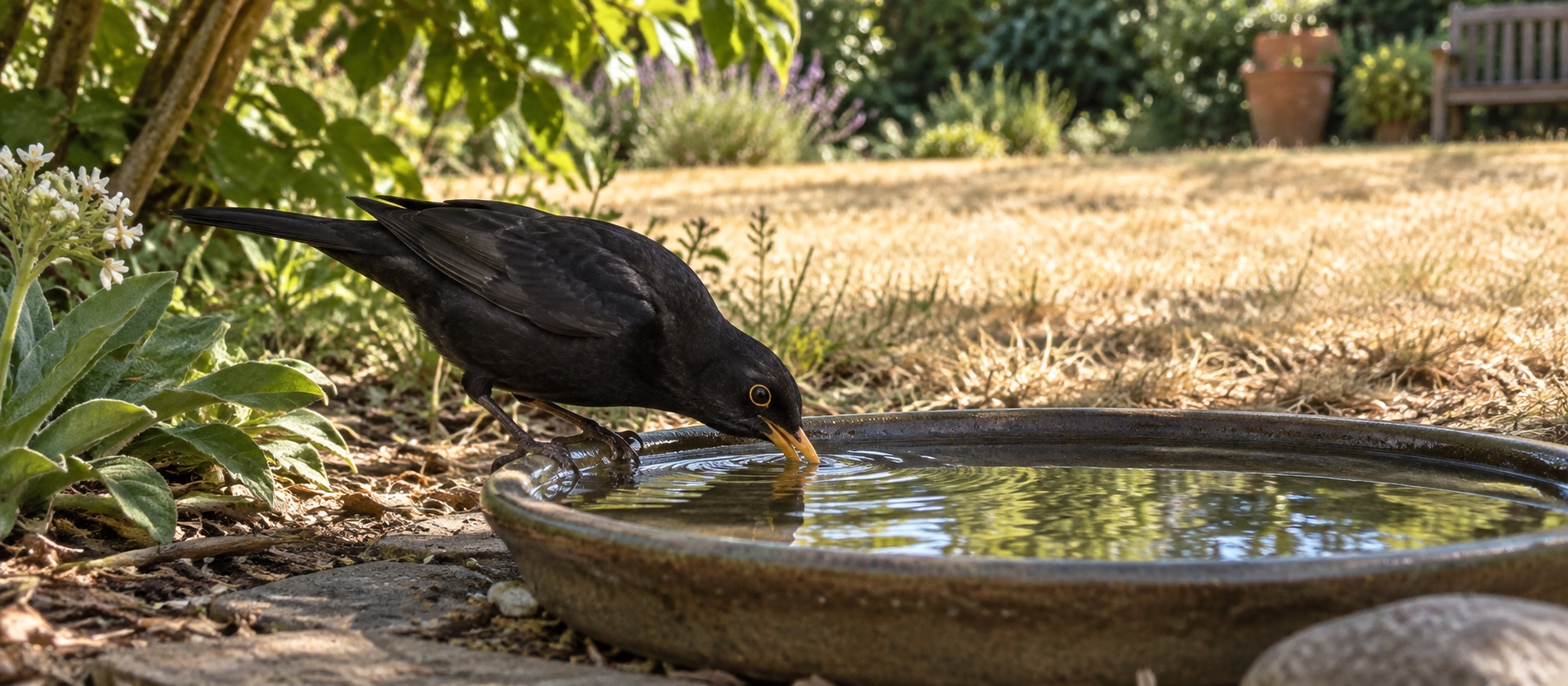
Refill a shallow, stable water point daily and check it again in intense heat.
Keep cover available but avoid positioning water beside a cat ambush point.
Remove heat-damaged food and seek expert help for an injured bird.
How can you help garden birds in a heatwave? Start with a shallow, accessible supply of fresh water and keep it clean. Replace water at least daily, and check it again during exceptional heat or heavy use. Leave natural shade and insect-rich planting in place. If you feed birds, remove anything that softens, smells or sits uneaten; summer is not a reason to refill a dirty feeder. The RHS garden-bird guide recommends fresh water daily and a weekly bath clean as a baseline.
Set up a water point birds can use safely
Choose a stable shallow bath or bowl with a gentle edge and a surface birds can grip. Very deep or slippery containers are less useful; add clean stones only if they are stable and do not make cleaning difficult. Put the bath where birds can see danger and retreat to cover, but not beside dense cover that lets a cat wait unseen. The bird-bath placement guide helps choose between a patio, border and raised position.
Empty, rinse and refill each day. On hot days, check the level later if practical. Move a portable bath out of strong midday sun where this does not create another hazard. Do not use additives or chemicals in drinking water. Scrub and rinse a soiled vessel immediately, and clean it thoroughly at least weekly. The seasonal cleaning schedule gives a simple routine.
Keep natural shade and food available
Shrubs, small trees, flower borders and leaf litter offer cover and support insects. Avoid heavy pruning during a hot spell, and check for active nests before any necessary work. Do not assume that more supplementary food is the answer to heat. The RSPB's current feeding advice pauses seed and peanuts May–October; small amounts of other suitable food demand careful monitoring for spoilage. Our summer-feeding guide covers the wider food choice.
Fat products can soften in sun; mealworms or other food can deteriorate rapidly if they remain untouched. Move food away from direct heat where safe, use tiny portions, and remove it when its condition changes. Clean the feeding point and ground beneath rather than topping up. If you cannot check it reliably, pause feeding and maintain the water point instead.
If a bird looks distressed
First observe from a distance. A bird resting in shade or opening its beak on a hot day is not by itself proof that it needs handling. But a bird that cannot stand, has a visible injury, has been caught by a cat or is otherwise clearly in trouble needs expert help. Follow RSPCA advice on young birds and RSPB injured-bird guidance; contact a wildlife rescue or vet as appropriate. Do not pour water into a bird's beak or try to feed it without expert instruction. Our fledgling guide helps avoid rescuing a healthy youngster unnecessarily.
Heatwave checklist
- Refill clean shallow water in the morning; check again later if it dries or becomes dirty.
- Check bath position for direct sun, cats and safe escape routes.
- Remove soft or stale feeder food, wipe spill and reduce future portions.
- Keep existing shade and insect-supporting plants intact, especially near occupied nests.
- Seek specialist advice promptly for a genuinely injured or cat-caught bird.
Should I put ice in a bird bath?
The priority is fresh, shallow water that birds can access safely. Ordinary cool tap water is sufficient; do not add chemical cooling products or leave a bath with a slippery frozen surface.
Is a bird bath enough without a feeder?
It can be a useful water source, while the garden itself supplies natural food and cover. A feeder is optional, especially when hot weather makes food hard to keep fresh.
Helpful products
Practical water and cleaning options
A shallow bath can provide a refillable water point; a cleaner may help maintain washable equipment. Use the manufacturer's directions and rinse thoroughly.
Jacobi Jayne AnyPlace ceramic bird bath
A low ceramic dish with sloping sides, a stated 35cm diameter and 1-litre capacity.
For a wide, low water dish on a stable surface. Its listed 35mm overall height is not a measured water depth; check grip and usable shallows before filling.
Inspired Bird Feeder Cleaner and Sanitiser
A ready-to-use 500ml trigger spray sold specifically for cleaning feeders, bowls and feeding-station equipment.
Best as the cleaning solution in a regular feeder-hygiene kit. Drawback: it must be used exactly as directed and rinsed thoroughly.