Practical advice
Contains affiliate links
A bird-bath cleaning schedule for every season
A practical daily and weekly bird-bath cleaning schedule, with extra checks for summer heat, autumn leaves and winter freezing.
Check small baths again on hot or windy days.
Remove leaves and algae before the scheduled weekly clean.
Never add chemicals, salt or antifreeze to drinking water.
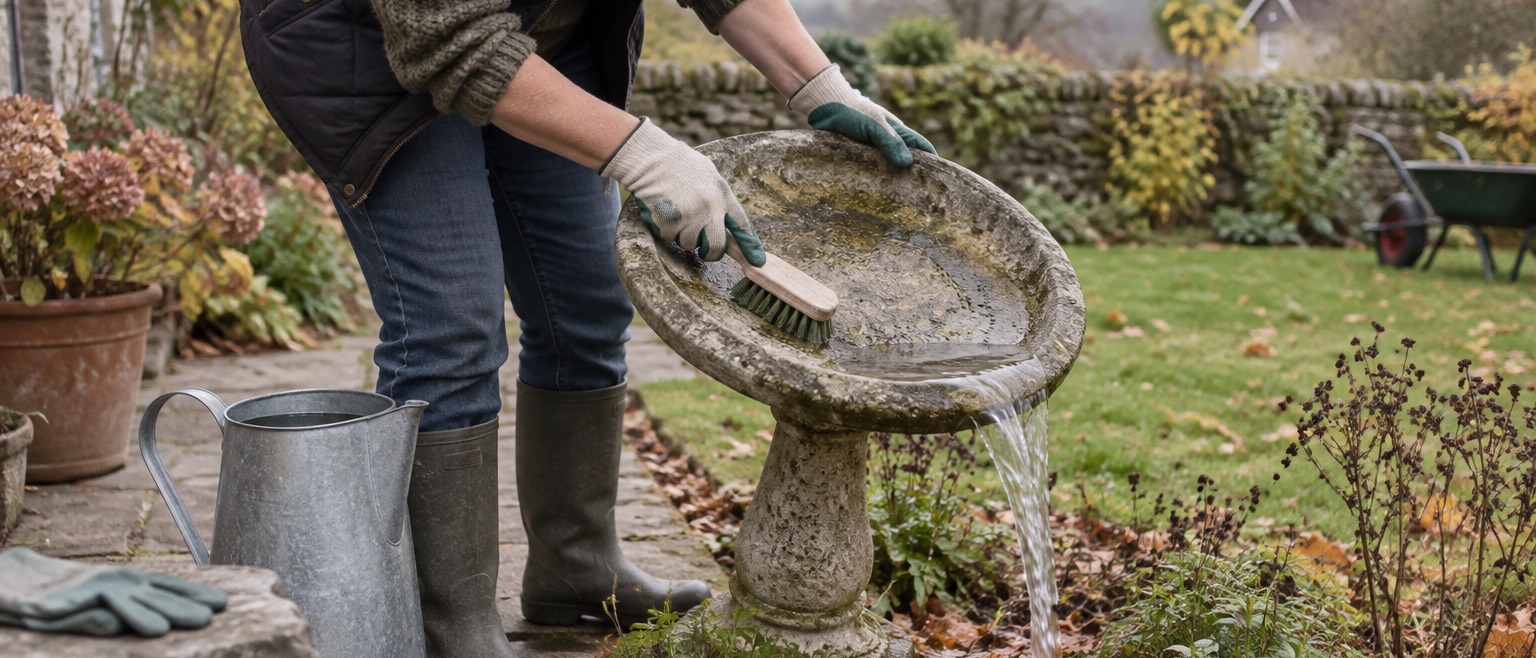
The simplest bird-bath schedule is fresh water every day and a full wash and disinfection at least once a week. Bring the full clean forward whenever you see droppings, slime, algae or cloudy water. A regular routine matters more than waiting for the bowl to look dirty.
The RSPB's current guidance advises daily clean water and weekly bath disinfection. The BTO hygiene guide says remove dirt first, disinfect, rinse and let equipment dry.
The year-round baseline
| When | What to do |
|---|---|
| Every day | Empty old water, remove obvious debris, rinse and refill with plain fresh water |
| At least weekly | Empty, brush away film, wash, disinfect as labelled, rinse thoroughly and dry before refilling |
| Immediately | Clean after droppings, a dead animal, cloudy water or a slippery coating; stop providing water and check official advice if disease is suspected |
Keep a dedicated brush and gloves outside. Never clean a wildlife bath in a kitchen sink or leave disinfectant residue in water. Our step-by-step bird-bath cleaning guide explains the full method.
What changes with the seasons?
Spring: pollen, blossom and nesting activity
Skim fallen blossom and debris each day. If birds are using the bath heavily, a midweek scrub may be needed. A shallow, accessible bowl is easier to refill without disturbing nearby nesting sites. Keep the water clean regardless of whether you are feeding birds.
Summer: heat and faster water loss
On hot days, check the water level again later in the day. Warm, still water and shade can both affect how quickly film appears; clean when it does, not merely on the next calendar date. Avoid placing a bath where you cannot reach it for daily changes. See where to put a bird bath.
Autumn: leaves and first frosts
Falling leaves can settle in the bowl overnight. Remove them during the daily water change and inspect the rim for slime. If nights turn cold, move a lightweight bath to a safe position before it freezes; do not pour boiling water onto cold ceramic or stone.
Winter: ice and limited daylight
Offer plain fresh water each day when possible, clear ice gently and check for cracks before refilling. Do not use salt, antifreeze, glycerine or chemical ice treatments. Our winter water guide covers safe approaches, and how to stop a bath freezing addresses the practical options.
If you cannot keep to the schedule
A complicated fountain or a heavy fixed basin may look attractive but be difficult to empty. A smaller bowl you can actually clean daily is preferable to a neglected large one. If illness is suspected around the bath, pause water provision and consult the latest BTO guidance before returning it.
Frequently asked questions
Can I top up rather than change the water?
No. Topping up leaves old water and contamination in place. Empty, rinse and refill.
Should I leave a cleaner in the water to stop algae?
No. Cleaning products belong on the empty bowl, followed by thorough rinsing. Provide plain water only. If algae keeps returning, see how to prevent algae in a bird bath.
Helpful products
Make the routine easier to keep
A bird-equipment cleaner is for the emptied bowl only and must be rinsed away. A manageable bath is easier to empty than a heavy basin; choose by access and cleaning effort, not just appearance.
Inspired Bird Feeder Cleaner and Sanitiser
A ready-to-use 500ml trigger spray sold specifically for cleaning feeders, bowls and feeding-station equipment.
Best as the cleaning solution in a regular feeder-hygiene kit. Drawback: it must be used exactly as directed and rinsed thoroughly.
Wildlife World Aristotle Oasis bird bath
A low-level bath and drinker with stepped access, made from Wildlife World's recycled plastic-and-clay composite and supplied with a stated ten-year guarantee.
Best low-level wildlife-friendly design. Drawback: ground-level water needs particularly careful siting away from places where cats can hide.