Practical feeding advice
How long does it take birds to use a new feeder?
Why there is no fixed wait for a new bird feeder, what visiting behaviour tells you, and how to check position and hygiene without overfilling.
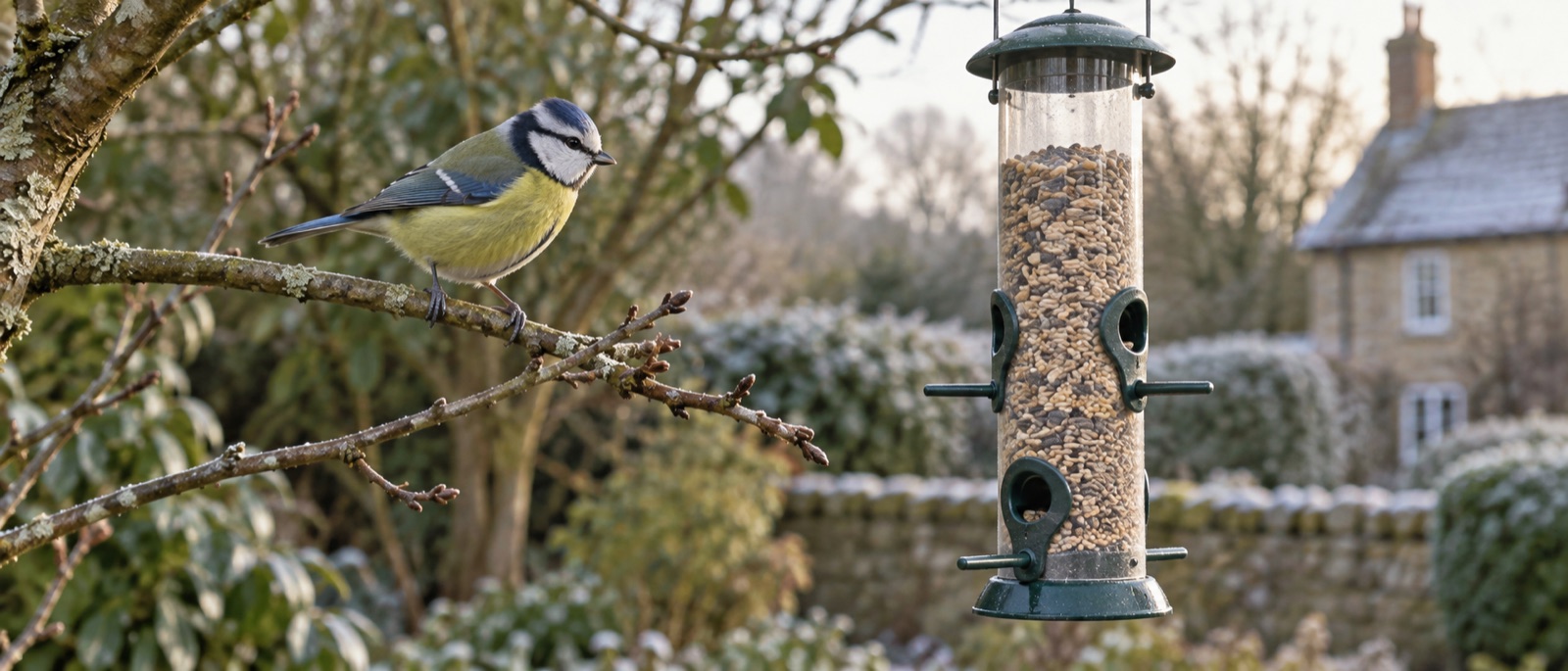
There is no reliable number of days for birds to start using a new feeder. They need to find it, approach safely and reach suitable fresh food. Keep the position steady unless it has an obvious problem, use small portions and clean normally. Do not leave ageing food in place while waiting for the first visit.
A feeder can be ready before the local birds are. The useful signs are birds approaching, trying a perch and taking food—not whether the tube is empty by a particular deadline.
What changes how quickly birds find it?
An established garden feeding position is different from a completely new one. Birds already moving through nearby cover may investigate sooner than birds with no reason to visit that part of the garden.
Food, port shape, shelter and disturbance also affect whether an approach turns into feeding. A visiting robin may forage nearby without adopting a seed tube; that does not prove the feeder is defective.
The RSPB’s feeding-position guidance emphasises sheltered positions, nearby retreat cover and avoiding places that let predators lurk. A quiet period needs checking in that context, not measuring against a promised “three-day” result.
Read the behaviour, not just the food level
| What you see | What it may mean | What to check |
|---|---|---|
| Birds use nearby shrubs but avoid the feeder | Caution, unfamiliarity or an awkward approach | Sightlines, disturbance and access |
| Birds land but leave without feeding | Unsuitable food or a blocked opening | Ports, assembly and food freshness |
| One bird takes food briefly | The feeder has been found and used | Keep the setup manageable rather than adding more food |
| Birds feed while you are away | Visits are being missed | Watch from indoors at another daytime moment |
| Food drops but you see no birds | Wind, damage or another animal | Equipment and the actual timing of loss |
| No birds are seen anywhere nearby | Limited local activity or plentiful food elsewhere | Avoid buying several extra feeders immediately |
A short approach is progress, not a reason to crowd the bird for a photograph. Observe from indoors or further away and keep pets clear.
Set it up once, then give birds a chance
Choose a quiet site with a clear approach and useful retreat cover, but not dense hiding places directly beneath the feeding point. Keep it out of roof runoff and away from an obviously hazardous window reflection.
Hang the feeder securely and check that it stays upright. Inspect the ports and any moving guard after assembly. A seed tube with a blocked lower opening may look full while offering nothing a bird can take.
The feeder-choice guide helps match format to visitors. If your present feeder already suits the food and birds, replacing it with a more complicated model is unlikely to answer the waiting-time question.
Keep fills small while visits are sparse
Put in a modest amount of suitable food, not the maximum the tube can carry. Check it daily and remove leftovers according to the food type and condition. Do not repeatedly pour fresh seed over a little-used older layer.
For seeds and peanuts, the current RSPB seasonal advice is November–April, with the pause from 1 May to 31 October. Buying a new seed feeder in autumn does not mean filling it before the seasonal restart.
Appropriate mealworms and suet use different formats and turnover limits; they are not interchangeable with seed simply because you want to attract a bird quickly. Do not scatter extra seed under the tube or add a flat tray.
A small two-port RSPB Classic feeder is manageable for a first winter seed position. Its capacity is not a portion recommendation, and plastic fittings are unsuitable where squirrels are already gnawing equipment.
Waiting should not mean skipping cleaning
Inspect after wet weather and follow the weekly feeder-cleaning routine even if the feeder is rarely used. Residue, moisture and contamination can collect without a busy flock.
A dedicated long brush can make a tube easier to wash, but it is an aid to cleaning rather than an attraction tool. Keep it outside, separate from household utensils, and rinse and dry equipment properly before refilling.
Take down a feeder with damaged ports or insecure fittings. There is no benefit in leaving unsuitable equipment up merely to avoid interrupting the settling-in period.
When to move a new feeder
Move it if you identify an actual problem: a busy doorway, cat hiding place, exposed support, roof runoff or dangerous glazing. Make that change promptly rather than waiting for birds to accept a poor position.
Otherwise, avoid daily moves. Changing the location, food and feeder together makes it difficult to tell which adjustment mattered. Try one useful change, observe visits at different daytime moments and keep ordinary hygiene in place.
Position rotation for hygiene is different from moving the feeder repeatedly in frustration. When you rotate, check the new position’s sightlines, stability and wildlife access too.
When to use the wider troubleshooting guide
If birds used the feeder and suddenly stop, that is not just a new-feeder settling-in question. Changes in weather, natural food, disturbance and equipment condition need checking. Use why birds are not visiting for the broader diagnosis.
If you see a sick or dead bird, stop waiting for improvement and follow the health guidance. Do not increase food or move it elsewhere to keep birds gathering.
For a genuinely new setup, starter-kit choices can help you keep the equipment modest. More hooks, food types and capacity mean more upkeep, not a guarantee of earlier visitors.
Frequently asked questions
Should birds use a new feeder within a week?
There is no dependable deadline. Check food, access and position instead of treating a quiet week as proof that the feeder has failed.
Will brightly coloured feeders attract birds faster?
Do not buy on an unsupported speed claim. Practical access, food suitability, safe placement and maintainable equipment are more useful criteria.
Should I put the new feeder beside an old one?
An already familiar safe position may be useful, but avoid overcrowding or creating a busy shared feeding point. Keep quantities and cleaning manageable.
Should I keep food out until birds arrive?
Not the same ageing food. Check condition, replace or remove leftovers appropriately and pause if you cannot maintain the setup.
Is it worth buying a bigger feeder?
Only if actual use justifies it. A larger capacity can leave more food standing untouched while you wait.
Helpful products
Keep a first setup small and easy to maintain
If you already own a suitable feeder, there is no reason to replace it just because it is quiet. These are manageable options for a first setup or an awkward cleaning job.
A manageable first feeder
RSPB Classic easy-clean seed feeder (small)
A simple 500ml, two-port feeder with a polycarbonate tube and plastic fittings that come apart without tools.
A small two-port tube for a first winter seed position. Fill only a little while visits are sparse; plastic parts are unsuitable where squirrels are chewing fittings.
Keep waiting hygienic
Jacobi Jayne long bird feeder cleaning brush
A long-handled natural-bristle brush made for reaching inside bottle-shaped and tubular bird feeders.
A dedicated long tube brush for the weekly cleaning routine while the feeder is quiet. It cannot make birds arrive sooner and needs rinsing, drying and outdoor storage.