Starter buying guide
Best bird feeder starter kits for UK gardens
Build a practical first bird-feeding setup with a small seed tube, a separate suet holder and cleaning equipment—without an unsuitable flat tray.
Our recommendations
A build-your-own starter set
These are three separate Amazon products, not a bundled retail kit. Start with one feeder and add the second only if local birds use it.
RSPB Classic easy-clean seed feeder (small)
A simple 500ml, two-port feeder with a polycarbonate tube and plastic fittings that come apart without tools.
Best straightforward alternative. Drawback: RSPB warns that squirrels and parakeets may damage the plastic parts.
Jacobi Jayne Bird Lovers small fat ball feeder
A compact hanging feeder that holds up to three suet balls and has a quick-release base for easier cleaning.
Best small-capacity easy-clean option. Drawback: the plastic construction offers less chew resistance than an all-metal cage.
Jacobi Jayne long bird feeder cleaning brush
A long-handled natural-bristle brush made for reaching inside bottle-shaped and tubular bird feeders.
Best for cleaning the length of feeder tubes. Drawback: a smaller detail brush may still be useful around ports and threads.
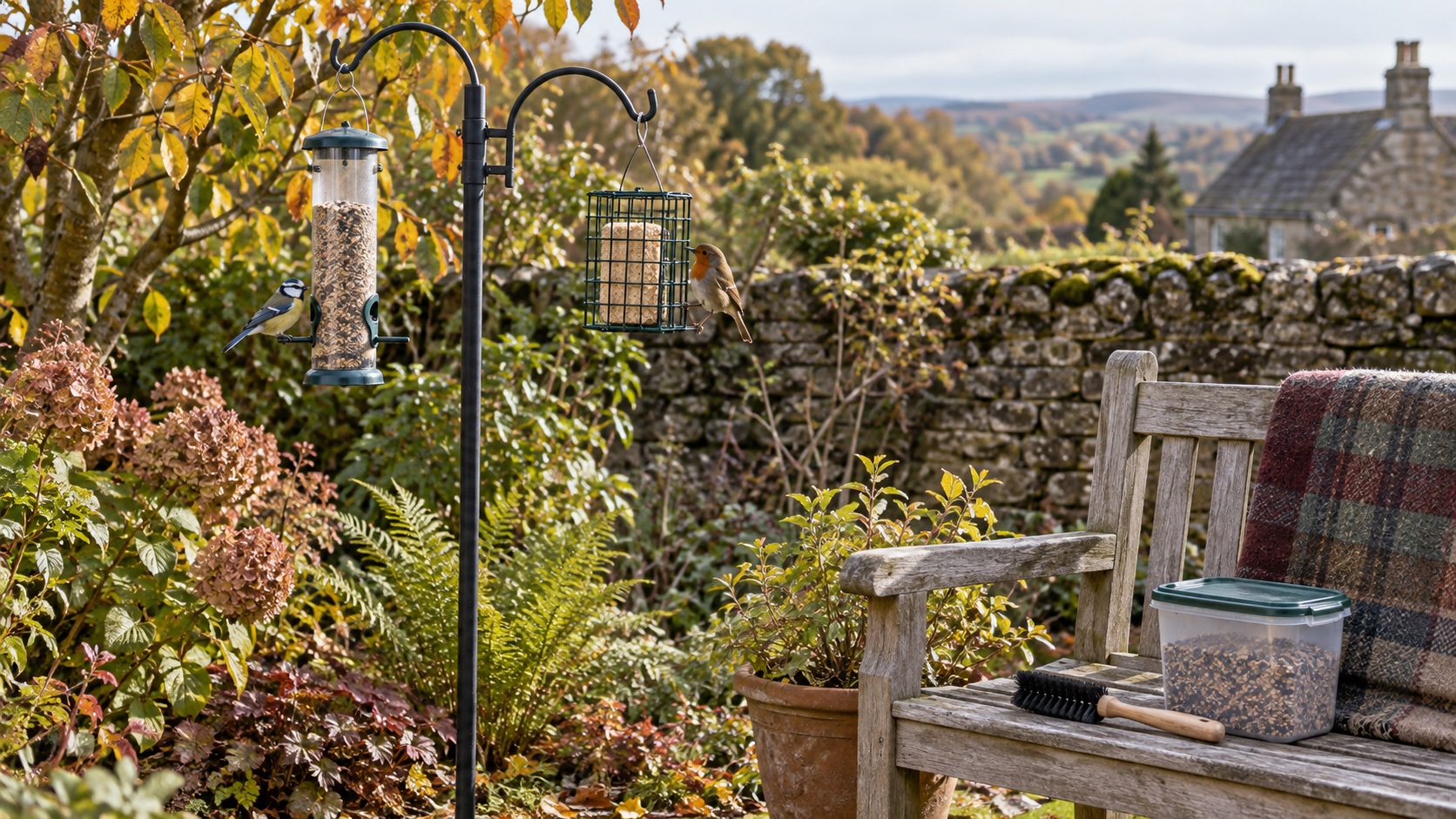
The best first setup is smaller than most “complete” packs. A tall pole with six hooks, several feeders and a tray can create more work, stale food and concentrated bird traffic before you know which species visit. A simple kit lets you learn the garden's pattern and keep every food-contact surface clean.
The three pieces to consider
RSPB Classic seed tube: a modest first feeder
The small two-port Classic is transparent and dismantles without tools. Its compact size encourages small portions, and you can see damp seed rather than discovering it only when a port blocks. Use it for suitable dry seed or sunflower hearts from November through April. It is not squirrel-proof and its plastic parts need regular inspection.
Jacobi Jayne small fat-ball holder: a second food format
The small metal holder takes up to three fat balls, though you can offer fewer. It gives you a separate route for suitable suet, instead of trying to force fatty food into a seed tube. Remove all netting from fat balls. If birds are not taking the food, do not keep replenishing it. The mesh needs brushing at every weekly clean.
Jacobi Jayne long feeder brush: the maintenance piece
A dedicated long brush helps reach inside the tube and around ports. It cannot replace dismantling, hot soapy water, appropriate disinfection, thorough rinsing and drying; it simply makes those steps more practical. Keep it with bird-feeding equipment, not kitchen utensils. If you already have a suitable dedicated brush, reuse it rather than buying another.
What else might you need?
A sound hook, bracket or short pole that supports the filled feeder and lets you remove it without climbing. A sealed dry container for food. A place to wash equipment outdoors and dry it fully. You may not need any of these as new purchases if a safe support and dedicated cleaning kit already exist. The feeding-station placement guide helps choose the site.
Avoid all-in-one bundles with a broad seed tray or table. BTO's latest advice says flat surfaces, including troughs beneath hanging feeders, appear to carry higher disease risk and are best avoided. A cheap “complete” kit is not good value if its key component should not be used.
Set it up in two stages
First, identify a safe hanging point with clear approach, nearby escape cover and no cat ambush location. Clean the feeder before first use. From November through April, offer a small amount of seed in the tube and check it daily. Give birds time to discover it; an empty first week is not proof the product is wrong.
Second, if local birds are interested and you can maintain another feeder, add the suet holder at a separate position. This spreads visitors rather than building a single busy station. RSPB's 2026 guidance says seed and peanuts should pause May–October, while small amounts of mealworms and suet may continue with hygiene. Follow the current guidance for the season, not the month printed on a food pack.
Clean at least weekly and move feeders periodically. Remove any dropped food and use portions birds will finish. See how much food to put out and our cleaning walkthrough.
Common questions
Is a feeding station necessary?
No. One safe hook for one small feeder is enough to begin. Add hardware only when it solves a real access or placement problem.
Should I buy seed and suet together?
You can buy both, but keep them in their correct holders and follow the seasonal advice. Do not open a large food bag that will sit damp or unused.
What if no birds visit?
Check safe cover, disturbance, food freshness and whether birds already have plenty of natural food. Our quiet-feeder checklist is a better next step than buying a bigger kit.