Practical feeding advice
Why do birds throw seed out of feeders?
Tell empty husks from wasted seed, check food mixes and feeder ports, and reduce edible spills without adding a catch tray.
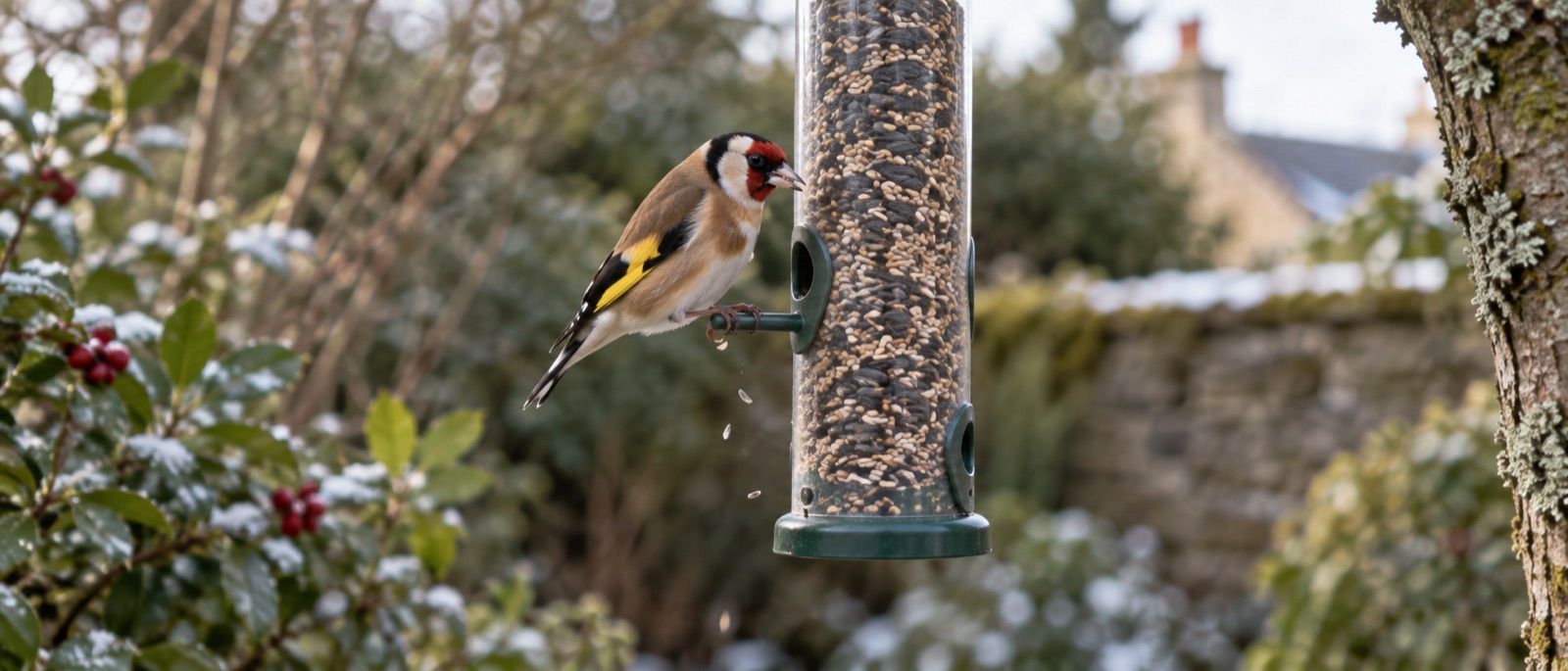
Birds may drop empty husks, pick preferred ingredients out of a mix or spill seed as they feed. First check whether the mess is empty shells or edible food. Reduce oversized fills, match the seed to the ports and clear spills. A husk-free food can reduce shell litter, but it will not make a feeder waste-free.
The difference matters: a neat pile of empty sunflower shells suggests a different fix from whole grains pouring out whenever a bird lands.
Is it waste, or just the shell?
Inspect a small sample when cleaning, without handling droppings bare-handed. An empty split shell is the part a bird has discarded after taking the kernel. Whole pale grains, broken hearts and lumps of mixed food still contain edible material.
Watch a few visits from indoors. Does a bird lift out a seed, open it and drop the shell? Is it flicking several ingredients aside? Or does the tube discharge food when it swings? These observations can narrow the cause without needing to identify every visitor.
| What falls below the feeder | Likely explanation to check | Useful change |
|---|---|---|
| Empty sunflower husks | Normal shell removal | Consider husk-free hearts for the winter seed season |
| Mostly one uneaten ingredient | Selective feeding from a mix | Try a small suitable food change, not a larger bag of the same mix |
| Whole seed after wind or landing | Port size, hanging angle or movement | Check the feeder assembly and support |
| Fine crumbs below a blocked port | Broken food or unsuitable particles | Clean the feeder and use compatible seed |
| Large amounts with squirrel visits | Access or equipment damage | Fix the route or damaged fitting before changing food |
This is a troubleshooting table, not a species diagnosis. Several causes can occur at the same feeder.
Why mixed seed is sometimes picked over
A mix can contain ingredients that the birds using your feeder do not readily take. Even a good mixture may be a poor match for one garden’s visitors or for a small-port tube.
Look at the ingredient list rather than judging solely by the size of the bag. Avoid repeatedly topping up while the same unwanted ingredient collects at the bottom. That hides poor turnover and makes it harder to tell how much food is actually being eaten.
Our seed-mix guide explains feeder blends and ingredient choices. Trial a modest amount in the appropriate season before buying bulk quantities.
Would sunflower hearts reduce the mess?
They remove one source of litter because the outer husks have already been taken off. The 900g RSPB pack is a manageable alternative to a large sack when you are checking whether a food change helps.
Hearts can still be dropped, broken or rejected. They also need a feeder whose openings suit them and a cleaning routine that removes fallen pieces. A husk-free label does not mean uneaten food can safely remain below the ports.
The sunflower-heart guide covers suitable formats and storage. Follow the current RSPB seed-feeding season, November–April, rather than taking year-round retailer wording as wildlife guidance.
Check the feeder before changing the food
Take it down, empty it and inspect the ports. Look for cracked surrounds, missing inserts and parts reassembled in the wrong position after washing. Make sure the tube hangs upright and the support does not twist it into a steep angle.
Use the food specified for the feeder. Tiny nyjer needs an appropriate small-port feeder; a general seed tube is not a substitute merely because the food fits into its top. Conversely, oversized pieces can bridge above a port instead of flowing properly.
A simple two-port RSPB Classic feeder gives you a manageable feeding position to observe. It is not sold here as a no-spill cure, and its plastic fittings are a poor choice where squirrels are chewing equipment.
Less food often means less waste
Start with less than the tube’s full capacity. Capacity tells you what the feeder can hold, not what your garden needs. Adjust the next portion to actual turnover rather than filling to the lid every morning.
Keep visits, weather and waste in mind together. A cold spell may increase demand, but persistent leftovers still call for smaller fills. For practical quantities, use how much bird food to put out.
Never keep topping fresh seed onto old food that has become wet or clumped. Remove it and clean the feeder before making another food comparison.
Why a catch tray is not the answer
A tray can make spilled seed look tidier while creating another shared feeding surface. Current RSPB advice is to avoid flat feeding surfaces. Do not add a tray or scatter the fallen seed elsewhere for ground-feeding birds.
Collect waste and dispose of it where wildlife cannot reach it. Keep paving, joints and the area directly beneath feeders free from accumulated food and droppings without raising contaminated dust.
“No mess” and “no grow” also describe different things. Removing husks reduces shell litter; processing seed can reduce germination. Neither removes the need to clear spills. Our no-mess feeding guide and seed-sprouting guide explain that distinction.
Frequently asked questions
Are birds throwing seed because it is poor quality?
Not necessarily. Shell removal, ingredient selection, unsuitable ports and movement can all produce a mess. Check the type of material falling before blaming the food.
Why do birds eat some seeds but leave others?
The mix may not suit the visitors using that feeder. A small, appropriate food trial is more useful than repeatedly adding more of a rejected blend.
Does no-mess seed stop all waste?
No. It can remove husks and reduce some litter, but birds can still drop edible pieces and feeders can spill.
Should I leave the spilled seed for robins?
Do not use fallen seed as ground food. Clear it and follow the current ground-feeding guidance rather than creating a second crowded feeding spot.
Helpful products
Two practical options for reducing waste
Husk-free seed can reduce shell litter; a manageable feeder helps you watch the ports. Neither removes the need to clear edible spills.
Husk-free 900g pack
RSPB sunflower hearts (900g)
A small 900g bag of husk-free sunflower kernels, suited to testing demand before buying a larger pack.
Husks are already removed, so there is less empty-shell litter. Birds can still drop edible pieces; use a suitable hanging feeder November–April and buy only what your garden uses.
Two-port seed feeder
RSPB Classic easy-clean seed feeder (small)
A simple 500ml, two-port feeder with a polycarbonate tube and plastic fittings that come apart without tools.
A compact two-port tube for watching what birds actually select. Plastic fittings are not squirrel-resistant, and port shape is not a guarantee of spill-free feeding.