Practical advice
How to clean a bird table and feeding station
A weekly outdoor routine for feeders, poles, hooks and the ground below, plus what to do with an old wooden table.
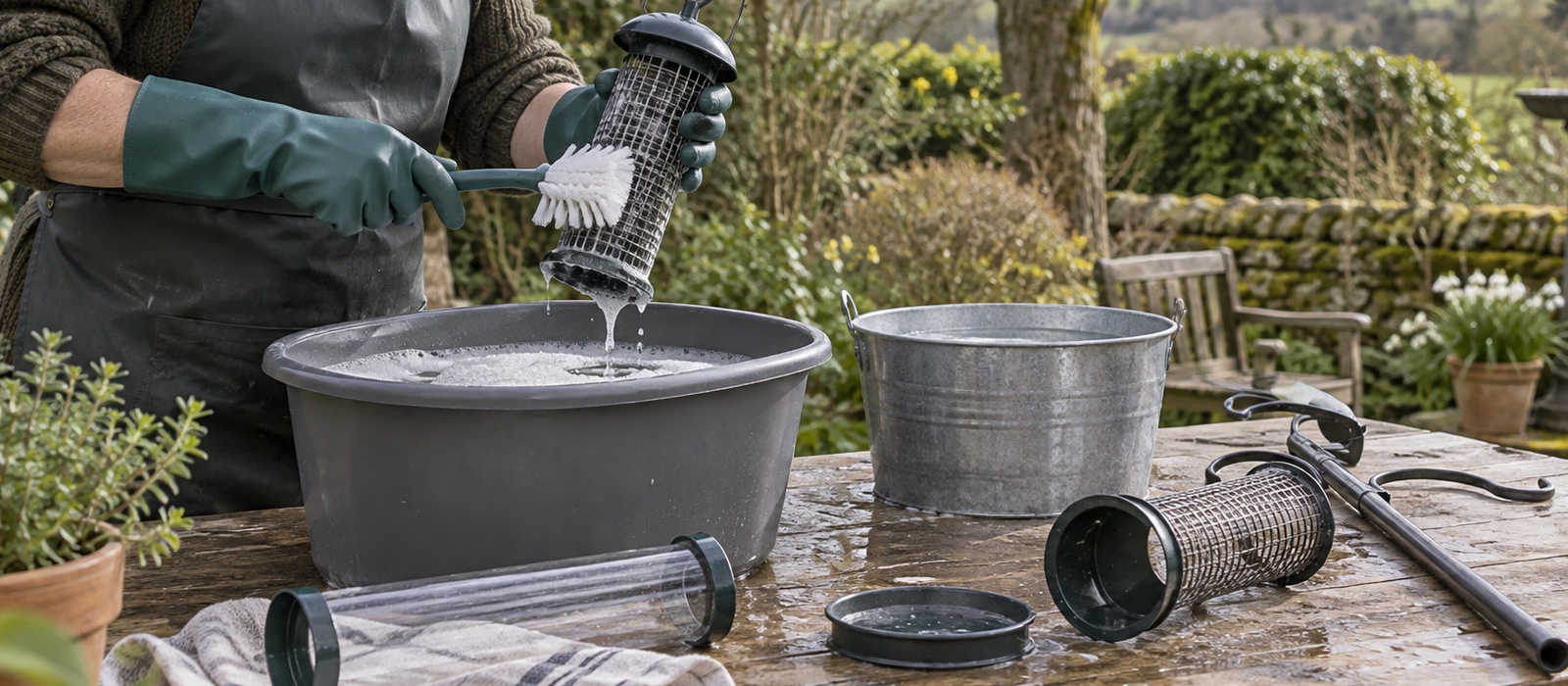
Work outdoors with gloves and dedicated equipment.
Remove dirt before disinfecting, then rinse and dry fully.
Stop feeding immediately if sick birds are present.
A feeding station is a collection of contamination points: feeder ports, perches, hook ends, bowls, pole joints and the ground beneath. Cleaning only the most visible tube leaves old food and droppings elsewhere in the setup.
The RSPB advises cleaning feeders at least weekly. Its current guidance also says to avoid flat feeders, including bird tables. If you still own a table, stop spreading food across it and clean it while you move towards contained removable feeders.
What you will need
- Waterproof gloves
- A bucket of hot soapy water
- A dedicated sponge and long feeder brush
- Animal-safe disinfectant suitable for bird equipment
- Clean water for rinsing
- A dustpan and brush or rake kept for the area below
- An outdoor drying surface
Work outside and keep this equipment away from food-preparation areas. Follow the disinfectant label for dilution and contact time, and never mix cleaning products.
Clean the hanging feeders first
1. Remove and discard old food
Take every feeder down. Put leftover food in an outdoor household bin; do not reuse or compost it. If seed is damp, clumped, mouldy or smells stale, discard the entire fill.
2. Dismantle fully
Remove bases, ports, perches, lids and inner tubes according to the instructions. Photograph an unfamiliar mechanism before taking it apart if that will help with reassembly. Do not force plastic clips in cold weather.
3. Wash away visible dirt
Scrub the parts in hot soapy water with the dedicated brush. Washing comes before disinfecting because food residue can protect contamination and reduce the disinfectant's effect.
4. Disinfect, rinse and dry
Apply a suitable disinfectant exactly as directed. Rinse every groove and hollow with fresh water, then leave parts to air-dry completely before reassembly. Do not refill a damp feeder.
Clean the station hardware
Wipe and wash hooks, brackets, the upper pole and any removable arms. Pay attention to joints where droppings and old food lodge. Remove a squirrel baffle if its design allows, clean both surfaces and check that the clamp remains secure.
Wash a water dish separately and replace its water every day. A dish beneath active feeders is easily contaminated; move it to a separate position if husks or droppings repeatedly land in it.
Remove a broad mesh food tray rather than cleaning and refilling it. The current recommendation against flat feeding surfaces applies even when a tray came in the station box.
What to do with a wooden bird table
Brush off all debris and wash accessible surfaces outdoors. Disinfect only with a product and method suitable for the material, rinse thoroughly and allow the table to dry.
Inspect the roof, platform, drainage channels and joints. Split, soft or deeply cracked timber can retain contamination beyond the reach of a brush. If the structure cannot be cleaned or has sharp and trapping points, retire it instead of sealing dirt beneath paint or preservative.
Do not apply timber treatment while birds can access the table, and do not return loose food to the platform. Our current bird-table guide explains contained alternatives.
Clear the ground below
Sweep paving or rake soil to remove husks, discarded food and droppings. Wear gloves and avoid creating airborne dust. Bag the waste for an outdoor household bin rather than composting it.
Move the station periodically where practical. A permanently bare or foul-smelling patch is evidence that too much food is being supplied or the ground is not being managed often enough. See our full guide to cleaning under bird feeders.
How often should you clean it?
- Inspect food and contact surfaces every day.
- Clean and disinfect feeders at least weekly.
- Change water daily and clean its bowl weekly.
- Clear the ground whenever waste appears.
- Clean immediately after heavy contamination or spoiled food.
If a sick or dead bird appears, stop feeding, empty bird baths and follow the latest RSPB and BTO advice. The RSPB currently advises stopping for at least three weeks when disease is suspected.
Restart with less food
Once everything is dry, refill only the contained feeders you need. Small quantities should be eaten before they become stale. Current BTO guidance recommends seed and peanuts from November to April, with a pause from May to October.
Cleaning becomes much quicker when a station carries two maintainable feeders rather than every accessory supplied in the box.
Helpful products
Useful equipment for a thorough clean
A purpose-made cleaner, a long feeder brush and a dedicated dustpan set cover different parts of the job. Follow product labels and keep all equipment outside and separate from household cleaning tools.
Inspired Bird Feeder Cleaner and Sanitiser
Best for: Purpose-made cleaner
A ready-to-use 500ml trigger spray sold specifically for cleaning feeders, bowls and feeding-station equipment.
Best as the cleaning solution in a regular feeder-hygiene kit. Drawback: it must be used exactly as directed and rinsed thoroughly.
Jacobi Jayne long bird feeder cleaning brush
Best for: Long brush for narrow feeders
A long-handled natural-bristle brush made for reaching inside bottle-shaped and tubular bird feeders.
Best for cleaning the length of feeder tubes. Drawback: a smaller detail brush may still be useful around ports and threads.
Spear & Jackson dustpan and hand brush set
Best for: Dedicated ground-cleaning set
A deep outdoor dustpan with a reinforced front edge and a wooden-handled brush with stiff bassine bristles for collecting seed husks and light garden debris.
Best for sweeping hard surfaces beneath a feeder. Drawback: it is not suitable for disinfecting soil, grass or planted areas.