Practical bird bath advice
How to prevent algae in a bird bath
Reduce green water and slippery algae with daily water changes, debris removal, weekly cleaning and a sensible position—without dosing wildlife drinking water.
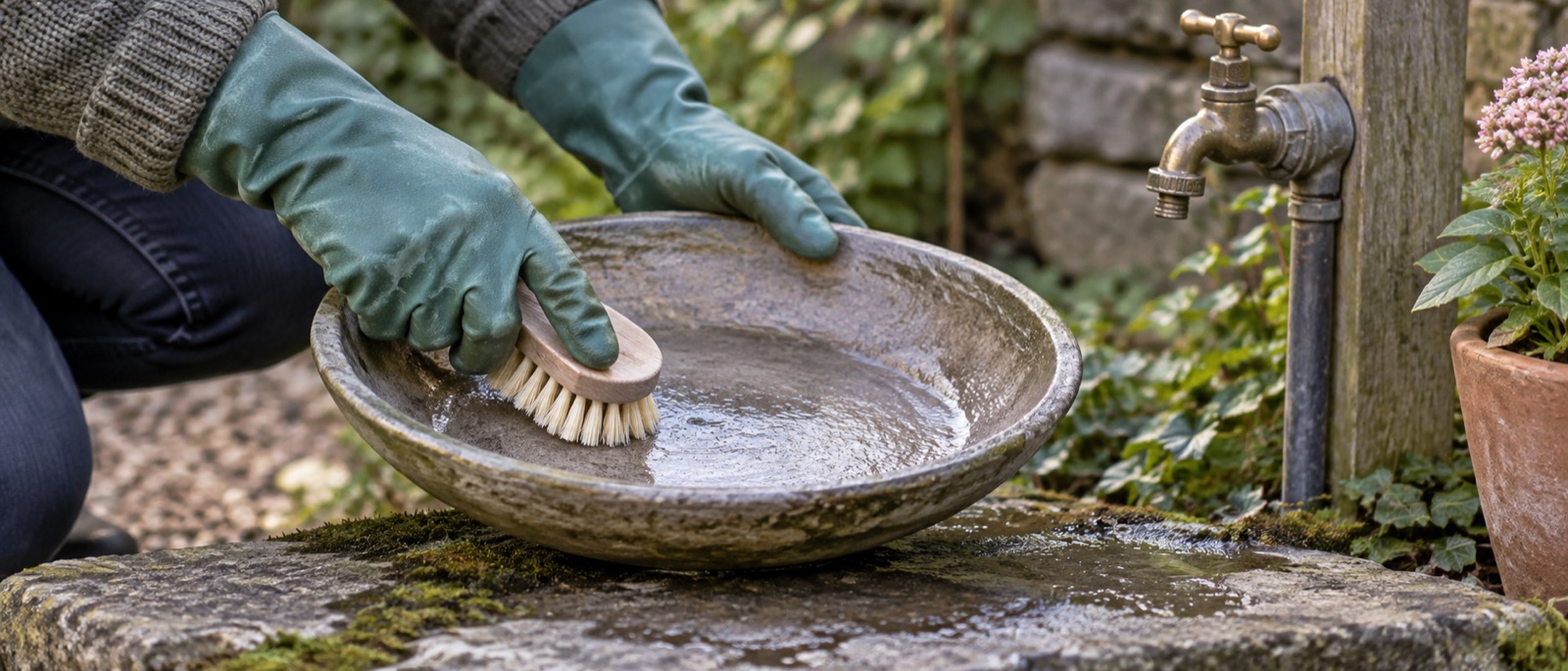
To reduce algae in a bird bath, replace the water daily, remove leaves and other debris promptly, and scrub and disinfect the emptied bowl at least weekly. A position with some shade can help reduce the time water sits warm in strong sun. Do not add pond algaecides, copper treatments or household chemicals to water birds drink.
Green water and a slippery film are signs to empty and clean the bath, not simply pour in a little fresh water. The bird-baths hub links the wider water and maintenance guides.
Work out why it keeps returning
| Likely contributor | What to look for | Practical response |
|---|---|---|
| Water repeatedly topped up | Old water remains beneath each refill | Empty fully and replace |
| Strong sun | Warm water and rapid evaporation | Consider a suitable partly shaded position |
| Organic debris | Leaves, droppings, soil or food | Remove contamination and review nearby sources |
| Film on bowl or stones | Slippery surfaces even after a refill | Scrub the bowl and every foothold |
| Awkward container | Hidden channels or a surface you cannot reach | Simplify the setup or choose a manageable bowl |
You do not need to identify every organism before responding to dirty water. If the bowl is slimy, contaminated or difficult to inspect, clean it and review the conditions.
Stop topping up contaminated water
A refill can make green water look diluted without removing the dirt or film. Empty the bowl completely before adding fresh suitable water.
In warm or windy conditions, check the level more often. The fact that a dish loses water quickly is not a reason to leave the remaining contents sitting for days. Visible contamination also calls for action before the next scheduled weekly wash.
Keep a separate watering or emptying routine for the bath rather than use the same dirty bucket repeatedly. For ground-level bowls, follow the water-source distinction in our ground-bath guide and current RSPB water advice.
Clean the surface, not just the water
Algae can remain attached to the bowl after it has been drained. Scrub the rim, sides, bottom and any stable stones used for access.
RSPB cleaning guidance describes washing away grime and algae before rinsing. Use a brush suited to the bath's finish; a metal scraper may damage a coating or glaze and make the surface harder to maintain.
Disinfection comes after physical cleaning. Follow the actual cleaner's directions, including any stated contact time and compatibility limits. Do not make a stronger mixture because the green film looks stubborn.
Our full cleaning guide covers dedicated tools, rinsing and drying. Keep used wildlife equipment away from kitchen utensils, wear gloves for the job and wash your hands afterwards.
Use a cleaner only on the empty equipment
The Inspired 500ml product is sold as a ready-to-use trigger spray for bird-care equipment, including bowls. It is not a concentrated solution that should be diluted by an invented ratio.
Choose it if its current label is suitable for your bowl material, then follow that label exactly. After cleaning, rinse thoroughly and let the equipment dry as directed before returning it to use.
A cleaning product does not make treated water suitable to leave in the bath. Never spray it into a filled bowl, add a little between refills or describe it as a drink-safe algaecide.
If a product's instructions are unclear, ask the manufacturer rather than improvise. An easy-to-scrub bowl and a dedicated brush remain more important than assembling a shelf of chemicals.
Adjust light without creating a predator problem
A bath in all-day strong sun may be harder to keep cool and full. Some shade can be useful, but moving it into a dense dark corner may trade a water-maintenance problem for a cat-access problem.
Consider clear sightlines, nearby escape cover and what falls into the bowl. A spot directly beneath a leaf-shedding branch may reduce sun but add organic debris.
Use the placement guide to assess the whole position. Do not move water beside a concealed approach simply because it stays shaded there.
Keep food and ornamental treatments out
A feeder above the bowl can drop husks and food into it. Move the bath away from that fall line and keep it as a water station, even if the retailer markets the same dish as a feeder.
Do not add copper pennies, discs, vinegar, bleach or ornamental-pond treatments to standing drinking water. Claims about algae reduction are not proof that an additive is suitable for this wildlife use.
A fountain is not a steriliser either. Pumps and nozzles need their own cleaning, and moving water can still become contaminated. Our solar-fountain guide explains that extra maintenance.
Know when to stop using the bath
If birds appear sick or you find a dead bird nearby, empty the bath and consult current BTO hygiene guidance. Do not confuse disease precautions with an ordinary green-water cleanup.
Remove a bowl with a sharp broken edge, peeling coating or damage that prevents proper cleaning. The ceramic, metal and resin guides describe material-specific checks.
Frequently asked questions
Is green water harmless because algae is natural?
Do not use that as a reason to leave dirty water in place. Empty and clean a green or slimy bath, and maintain a reliable fresh-water routine.
Will a copper coin keep a bird bath clean?
We would not use coins or metal additives as a substitute for cleaning. Fresh water and removal of contamination are the straightforward approach.
How often should I scrub the bowl?
At least weekly as part of the full routine, and sooner if it is dirty or slippery. Daily water replacement remains a separate job.
Can I use washing-up liquid?
A cleaning routine may include suitable washing followed by thorough rinsing, but never leave detergent in drinking water. Follow the bath and cleaner instructions rather than add soap to a filled bowl.
Helpful products
For cleaning an emptied water bowl
Use this ready-to-use spray only as directed for cleaning the empty equipment. Rinse before refilling; it is not an additive for drinking water.
For cleaning the empty bath
Inspired Bird Feeder Cleaner and Sanitiser
A ready-to-use 500ml trigger spray sold specifically for cleaning feeders, bowls and feeding-station equipment.
For washing an emptied bowl as directed on its label. Rinse thoroughly before refilling; this is not a treatment to add to drinking water.